Detailed Explanation of Caoguo (Amomum tsaoko) Planting Techniques and Management Methods
Caoguo (scientific name: Amomum tsaoko Crevost et Lemarie) is a perennial herbaceous plant of the ginger family (Zingiberaceae) and the genus Amomum. Its stems grow in clumps and can reach up to 3 m in height. The whole plant has a pungent aroma. The leaves are long-elliptic or oblong, with acuminate tips and narrowed bases, dry membranous margins, and smooth, hairless surfaces on both sides. The ligule is entire with a bluntly rounded tip. The spicate inflorescence is unbranched, with as many as 30 flowers per inflorescence.
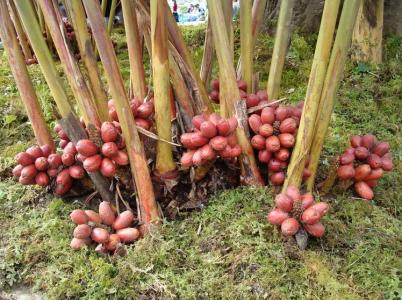
Caoguo Planting Techniques
1. Site selection and land preparation: Choose fertile valleys or streamside areas, cut down excessive trees, keep shade at 50%, clear weeds, and turn and break up the soil.
2. Propagation methods: Use seed propagation and division propagation. For seed propagation, select robust, high-yielding mother plants and harvest when the fruit skin turns purplish red and the fruit is fully ripe. Peel the harvested fruit, soak the seeds for about 10 hours, rub them with coarse sand to remove the gelatinous layer on the surface, and then sow. Division propagation can also be done by taking 1-year-old bud-bearing rhizomes from the mother plant.
3. Shading and weeding: Remove the mulch immediately after Caoguo seedlings emerge. If the canopy density is insufficient, set up a simple shade shed for shading. After planting, carry out intertillage and weeding once each from April to June every year. During the last weeding, cut off the old plants that died after fruiting and diseased plants.
4. Timely topdressing: In production areas where conditions permit, apply topdressing multiple times each year. In early spring, mix dry, fine chicken manure with plant ash and scatter it around the plants. In summer, just as flowering begins, scatter plant ash on the leaf surfaces before the morning dew dries as a foliar topdressing. In early winter after harvesting the fruit, place barnyard manure and burnt soil around the roots. Topdressing can also be applied in ring-shaped trenches combined with intertillage and weeding.
5. Earthing up to strengthen buds: After Caoguo is planted and before flowering, earth up the soil to make the young buds grow robustly. After flowering, earthing up should not be done, so as to avoid smothering and damaging the flower buds, causing rot and no fruiting. During each weeding, if fibrous roots are found exposed on the surface, add a small amount of humus soil at the fibrous roots to help the roots absorb nutrients.
6. Drainage and irrigation: When spherical flower buds appear at the roots and drought occurs, irrigate promptly. When there is too much rain, attention should be paid to drainage to avoid damaging the flower buds. At the same time, remove debris around the flower buds to provide ventilation and light, so as to prevent flower drop and fruit rot.
7. Adjusting canopy density: Throughout its growth and development stages, Caoguo requires a certain amount of shade. When tree growth causes insufficient light transmittance in the forest, appropriate thinning or pruning should be carried out so that canopy density is kept at 50%-60%, to facilitate the growth of new plants.
8. Post-planting care: For field management after planting, carry out intertillage and weeding 2-3 times each year in dry and autumn periods. During autumn weeding, cut off dead plants, diseased plants, and old plants that have already fruited. Combine intertillage and weeding with topdressing, applying green manure, compost, and phosphate fertilizer, etc., in ring-shaped trenches. Carry out earthing up before flowering to promote robust growth of young buds.
9. Harvesting and drying: Caoguo fruits begin to mature from October to November. Harvest when they turn reddish brown but have not yet split, then sun-dry or dry over a low fire.