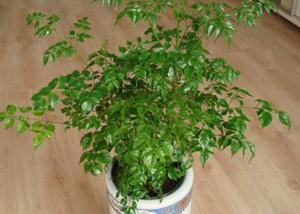
The scientific name of the "China Doll" (happiness tree) is Radermachera sinica. It likes a hot, humid environment with plenty of sunlight. It tolerates high temperatures, fears cold, prefers moisture, and dislikes dryness. For cultivation, use loose, fertile loam and sandy loam that drains well and is rich in organic matter. The flowering period is from May to September, and the fruiting period is from October to December.
Propagation Methods
Around the end of December, when the capsules are close to splitting and the seeds are fully mature, harvest the long strip-shaped capsules. After drying them in the shade, shake out the winged seeds, rub them, and winnow away the membranous fragments of the seed wings, then store them dry until sowing the following spring. Alternatively, soak them for 2 to 3 hours, mix them into moist sand, spread them thinly in a large plastic basin inside a shed or greenhouse, keep the seeds and sand moist, and check frequently to prevent mold. Once the seeds germinate, sow them in the ground. For dry-stored seeds, between March and April, first soak them for 3 to 4 hours, remove them and spread them out briefly to air-dry, then mix them with sandy soil and scatter them on a prepared seedbed, lightly cover with a thin layer of soil, and cover with plastic film to retain moisture. After the seeds sprout, remove the film and set up a light shade frame to block the light. When 2 to 3 true leaves have grown, transplant them with a soil ball at a wider spacing. Alternatively, when 4 to 5 large leaves have grown, pot them or grow them in bags, strengthen water and fertilizer management, and they can be sold as commercial seedlings the same year.
2. Cuttings
Between March and April, when the ambient temperature reaches about 15°C, cut 1- to 2-year-old woody branches about 15 cm to 20 cm long, remove all leaves, and make the bottom cut preferably 0.5 cm below a node. Insert them into a sandy loam seedbed, with the cutting inserted to a depth of about 1/3 to 1/2 of the cutting length. During the period when the bottom cut is healing and rooting, spray water to keep the seedbed moist. Only after a well-developed root system has grown should they be transplanted with a soil ball into pots; preferably 2 to 3 plants should be planted together so they can take shape and be sold sooner.
Between March and April, on a 2-year-old vigorous branch or stem, perform ring barking below a node, with the width of the bark removed generally 2 to 3 times the diameter of the stem being layered. Below the ring-barked opening, tie a piece of plastic film measuring 15 cm x 20 cm. Using clean, moist peat soil or sandy loam, press and shape a soil ball 8 cm to 10 cm in diameter around the ring-barked area. Then wrap the soil ball well with plastic film, leave an opening at the top for water, and tie it against a thick main trunk to prevent it from drooping and breaking in the wind. By late autumn, after the ring-barked opening has grown a fairly well-developed root system, cut it away from the mother plant and pot it separately.
Cultivation Techniques
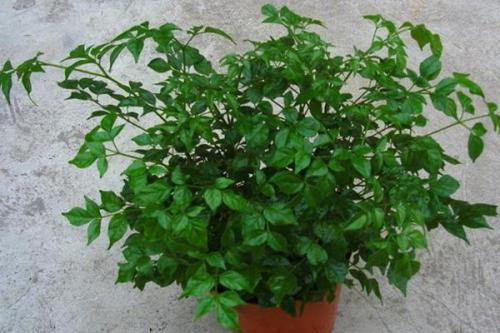
Radermachera sinica likes a warm, hot environment, with an optimum growth temperature of 20°C to 30°C. During the intense heat of midsummer, when the ambient temperature reaches above 30°C, provide shade appropriately by building a frame, increase watering of the environment and foliage, or move it to a shaded, ventilated, cool place for the summer. When late autumn arrives and the ambient temperature drops to about 10°C, it should be moved into a shed or greenhouse in good time. During overwintering, it is best to maintain a shed or greenhouse temperature of no less than 8°C, and it must not fall below 5°C, so as to avoid cold damage to the leaves or leaf drop. For household potted plants, it can be moved indoors to a room with air conditioning or an electric heater, ensuring the room temperature is no lower than 8°C so that it can pass the winter safely.
Radermachera sinica is a light-loving plant, and it can also tolerate shade to some extent; full sun and semi-shade environments are both acceptable. Its seedlings are relatively shade-tolerant, and in summer a shade frame should be set up. For potted plants, during indoor display they should be placed in front of a window with ample light or indoors. If they are placed in a dimly lit room for a long time, leaf drop is likely to occur. For household potted plants, during overwintering they can be placed in front of a window or in a higher position in front of a balcony so that they receive as much light as possible.
Cultivating Radermachera sinica requires a relatively moist soil and display environment. During the seedling stage, keep the seedbed moist; in the hot, dry season after summer arrives, even more attention should be paid to water supply. For potted Radermachera sinica, in order to keep it from growing too tall, watering can be appropriately controlled when new shoots emerge in spring, keeping the potting soil relatively moist. For potted plants displayed indoors, in addition to keeping the potting soil moist, the plants should also be sprayed with water 2 to 3 times a day during hot seasons. For plants placed outdoors for care in summer and autumn, watering of the plants and the surrounding micro-environment must be strengthened to create a cool, moist, suitable environment for them. For plants placed indoors in winter, since the general indoor temperature is below 10°C, the plants enter a dormant state, and they should not be watered too much, to avoid water accumulation and root rot. Every 2 to 3 days, around noon on a clear day, spray the plants once with slightly warm clean water to maintain their fresh appearance and also increase environmental humidity. In addition, Radermachera sinica can also be grown hydroponically.
For potted Radermachera sinica, use a loose, fertile growing medium that drains and breathes well and is rich in organic matter. Usually mix 5 parts garden soil, 3 parts leaf mold, 1 part decomposed organic fertilizer, and 1 part river sand. You can also use currently available imported substrate, or use domestically produced peat soil plus perlite and vermiculite, so that the final substrate has a pH of 5.5-6.0 and an EC value of 1.0-1.5 mS/cm. Pots are generally 15-24 cm, and the size of the pot used can be determined according to the size of the final cultivated plant. The cultivation method popular on the market now is to grow one or two plants per pot, with each pot's plant height above 70 cm. During the growing season, loosen the soil once a month to ensure the root area is always in a well-aerated state. In the plum rain season, for potted plants placed in the open air, check the potting soil promptly after each heavy rain; if water accumulation is found in the pot, drain it as soon as possible, and after the potting soil dries out, repot and change the soil. In general, for small and medium household potted plants, repot once a year in early April when they are brought out, to meet their soil fertility needs for the whole year's growth.
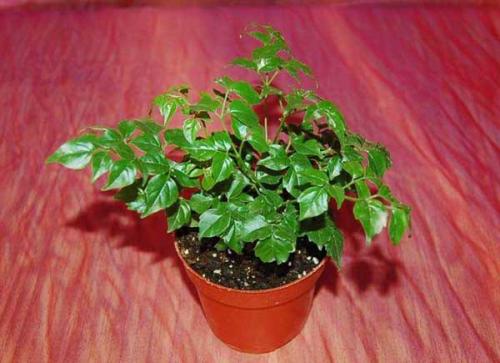
For potted Radermachera sinica, in addition to adding an appropriate amount of decomposed cake fertilizer and 3% multi-element compound fertilizer to the growing medium, topdressing should also be given continuously. During the growing season, apply a quick-acting liquid fertilizer once a month, usually decomposed cake fertilizer water. For a small number of household potted plants, or for large potted plants displayed in public places for a long time, a small amount of multi-element slow-release compound fertilizer granules can be buried and applied regularly, or a mixed solution of 0.2% urea plus 0.1% potassium dihydrogen phosphate can be applied. For potted plants in northern regions, after the Mid-Autumn Festival, apply 0.3% potassium dihydrogen phosphate solution 2 to 3 times in succession to increase the plant's cold resistance, which is beneficial for its safe overwintering. When the summer temperature is above 32°C, or after the temperature drops below 12°C in late autumn and early winter, topdressing should be stopped. The fertilizer required by the China Doll is N : P : K : Ca : Mg = 100 : 9 : 87 : 53 : 12. The EC value of the fertilizer can be 1.6-1.7 mS/cm, and during the plant's rapid growth period it can be increased to 1.9 mS/cm.
The high-quality China Dolls popular on the market now generally have a height of about 70 cm, a crown width of about 60 cm, internodes of about 1-3 cm, and leaf diameters of about 5-7 cm, with relatively short petioles, dense leaves, bright color, and extremely high ornamental value. To achieve this standard, growth regulators must be used; the most commonly used is paclobutrazol, at a concentration of 5-50 ppm, applied once every about one week. The concentration and frequency can be adjusted according to the weather and the plant's growth conditions, ultimately achieving a reasonable and attractive plant shape.
The China Doll likes relatively moist soil and a relatively moist cultivation environment. Air humidity should generally be maintained between 70% and 80%, and should not exceed 85%. If kept in the home, the plant can be sprayed frequently with slightly warm clean water to maintain its fresh appearance and also increase environmental humidity.