Planting Techniques and Management Methods for Hedyotis diffusa
Hedyotis diffusa (scientific name: Hedyotis diffusa) is an annual sprawling herb, 15-50cm tall. The root is slender and branched, with white flowers. The stem is slightly square or flat-cylindrical, smooth and hairless, sending out many branches from the base. The flowering period is in spring. The seeds are brownish-yellow, tiny, and have 3 angular edges.

Sowing and Cultivation
Site Selection
Hedyotis diffusa prefers a warm, humid environment; it is not tolerant of drought and also fears waterlogging. It is not demanding about soil, but a loose, fertile, well-drained loam rich in humus is best. Overly heavy clay, overly sandy soil, and low-lying areas prone to water accumulation are not suitable for planting. Therefore, for planting Hedyotis diffusa, you should choose loam with relatively low terrain, ample sunlight, convenient drainage and irrigation, and a loose, fertile texture. Apply 500 kg of various decomposed farmyard manure or 100 kg of compound fertilizer per mu as base fertilizer, spread the base fertilizer evenly into the soil, shallow plow and harrow finely, open furrows and make beds, with a bed width of 1 m and a furrow depth of 30 cm, and shape the bed surface like a turtle shell to facilitate drainage and irrigation.
Sowing Time
Generally sown from early March to early April, and harvested from September to October.
Propagation of Hedyotis diffusa
Seed propagation is used, either by direct sowing or by raising seedlings and transplanting. The row spacing is 15-20cm, and the plant spacing is 10-15cm. Because the seeds are tiny, sowing is mostly done by broadcasting mixed with soil.
Seed Treatment Before Sowing
To increase the germination rate, seeds should be treated before sowing. Place the fruits of Hedyotis diffusa on a cement surface, gently rub them with a wooden stick wrapped in rubber or cloth to remove the fruit skin and the waxy layer on the outside of the seeds, then mix the tiny seeds with several times their volume of fine soil to facilitate even sowing.
Sowing Methods
Sowing of Hedyotis diffusa is divided into drilling and broadcasting. For drilling, the row spacing is 30 cm; for broadcasting, evenly sow the seeds mixed with fine soil on the bed surface, press lightly or pat gently with a bamboo broom, and after sowing cover thinly with a layer of rice straw, shading during the day and uncovering at night, until the seedlings emerge and grow 4 leaves, or after sowing cover the bed surface thinly with pigpen manure while leaving some space, which both shades and keeps the soil loose, helping seedling emergence; spray water once in the morning and evening to keep the bed surface moist, but do not let water accumulate. For autumn sowing, the bed surface should be covered with rice straw to prevent scorching sun from affecting seedling emergence; when the seedlings have 4 leaves, remove the covering straw. In autumn, if roots are kept for propagation, no shading is needed, and the furrows should be filled with water, with the bed surface kept moist without water accumulation being best.
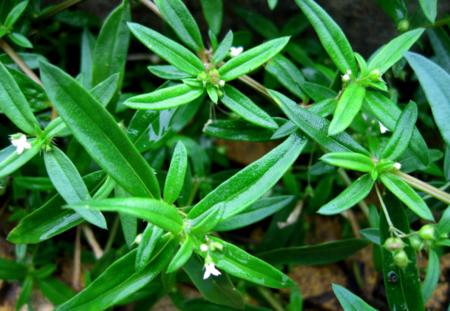
Management During the Seedling Stage
Because the seeds are tiny and have weak pushing power through the soil, the seedlings grow slowly. After full emergence or after transplanting has established, carry out 1 shallow loosening of the soil and weeding, but be careful not to damage the roots. After loosening the soil, apply 1 application of dilute human and livestock manure water, 1500 kg per mu, or 15 kg of urea, to promote robust seedling growth. Before the rows close, pay attention to weeding and always keep the field free of weeds to avoid weed infestation. During the seedling stage, combine soil loosening with appropriate topdressing until the plants close the rows. After the rows close, stop loosening the soil and fertilizing.
After sowing, water frequently to keep the soil moist and facilitate seedling emergence. In the rainy season and after each irrigation, promptly drain excess water. Water demand is relatively high during the seedling stage, so watering can be done in the evening on clear days or in the early morning, and attention should be paid to drought resistance and protecting the seedlings. Watering can be stopped during the fruiting stage.
Harvesting
Harvesting is generally done in autumn from September to October after the fruits mature, cutting the aboveground stems and leaves level with the ground, removing impurities and soil, and when half-dried, tying them into small bundles and continuing to sun-dry until completely dry to become a commodity. In terms of quality, dry material with stems and branches bearing fruit spikes and a greenish color is considered best. Generally, one mu can yield 300-350 kg of dried product.
In addition, in areas south of the Yangtze River, Hedyotis diffusa can be harvested 2 times a year depending on sowing time; the harvest period for spring sowing is in mid-to-late August, and the harvest period for autumn sowing is in early-to-mid November. The first harvest is in mid-to-late August, when some fruits are ripe, cutting the aboveground part level with the ground, removing impurities and soil, and sun-drying it as a commodity. The second harvest is in early-to-mid November, waiting until the fruits are ripe, then cutting the aboveground part, removing impurities and soil, and sun-drying it.