Detailed Explanation of Lotus Planting Methods and Key Technical Points
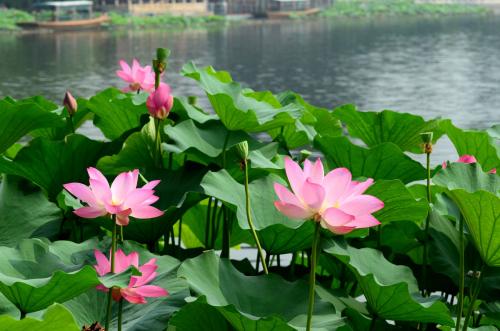
The lotus (Lotus flower) belongs to the order Proteales, family Nelumbonaceae, and is the collective name for two species in the genus Nelumbo. Also known as the lotus and water hibiscus, among other names. It is a perennial aquatic herbaceous flower of the genus Nelumbo. The underground stem is long and thick, with long nodes, and the leaves are shield-shaped and round. The flowering period is from June to September, with flowers borne singly at the tip of the peduncle. The petals are numerous, embedded in the cavities of the receptacle, and come in red, pink, white, purple and other colors, sometimes with colored markings or fringed edges. The nut is elliptical, and the seed is ovate.
Cultivation Techniques
Cultivation Environment
In the context of agritourism, lotus cultivation techniques require management to begin from the early stage of division and planting. The soil layer of lakes and ponds must be deep, and lotus planting is suited to environments with a stable water level. Moreover, in the early stage of division and planting, the water should not be too much, and the water quality should preferably not be seriously polluted. This not only ensures the growth of the lotus but also does not affect visitors' viewing. Since the lotus is a strongly sun-loving flower, the planting site must maintain sufficient sunlight. Lotus is easily eaten by fish and other organisms, so harmful fish must be removed before planting to prevent fish from wandering in and invading.
Water and Fertilizer Management in the Lotus Pond
Lotus in a lotus pond generally does not require fertilization. In order to effectively improve people's viewing experience of the lotus, fertilizer may be applied to the lotus. When applying fertilizer, a moderate amount should be the priority, otherwise the lotus seedlings will be damaged, and the fertilizer requirements of bowl lotus must especially be controlled. During the growth of the lotus, if the leaves appear withered and yellow or lack luster, a small amount of fertilizer may be appropriately applied.
Scientific Management of the Lotus Pond
After several years of growth, the area beneath the lotus pond has long become intricately interconnected, which affects the growth of the lotus to a certain extent, leading to problems such as yellowing leaves and delayed flowering. Therefore, it is necessary to dig up lotus roots from the pond for harvest. During the process of digging lotus roots, as many as possible should be dug to increase considerable income, but certainly not all lotus roots can be dug out; they will naturally sprout and grow again the following year, so regular and effective cleaning of the lotus pond is sufficient.
Pest, Disease and Weed Control
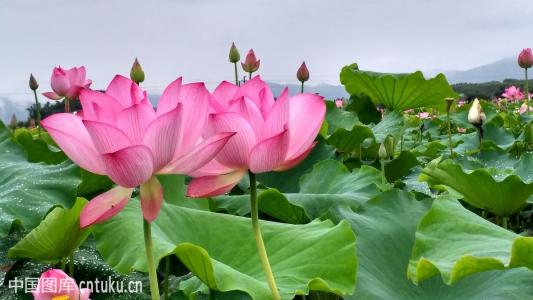
Leaf spot is one of the diseases with the greatest impact on ornamental lotus. It breaks out during the full blooming period of the lotus (June-September) and has a very large impact on the growth of lotus leaves. In the early stage of the disease, small spots appear on the lotus leaves, and over time the spots gradually enlarge, possibly causing the entire leaf to wither and die. For leaf spot, a broad-spectrum systemic low-toxicity fungicide can be sprayed over a large area. The operation should be carried out before the disease becomes severe, and it should be detected as early as possible and controlled immediately.
The tobacco cutworm and aphids are the main pests harming lotus. In the past, the control of these two pests relied on powerful pesticides for elimination; however, uncontrolled use of pesticides will harm the health of tourists, so it is best to use them as little as possible, and adopting an integrated pest management strategy for pest and disease control is the wise choice.
What affects the viewing effect of the lotus pond the most is the weeds in the pond. These weeds, with quite strong reproductive capacity, spread very quickly, so fast that the lotus finds it hard to resist their invasion; herbicides can be selected for control.
Our country is a major agricultural country. In order to effectively promote the development of rural ecological agriculture, lotus cultivation techniques in the context of agritourism precisely meet the needs of ecological agriculture development. Leisure and sightseeing agriculture, it is believed, will display even more charming elegance on the development path of the new socialist countryside. For lotus cultivation techniques, in addition to daily prevention and control, it is even more necessary to rely on the power of science and technology to breed excellent lotus varieties, thereby effectively enhancing the natural viewing effect and adding momentum to the emerging agritourism.