A Detailed Guide to the Planting Methods and Key Technical Points for Garlic Sprouts
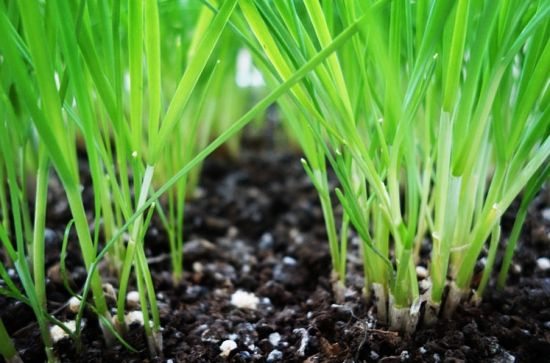
Garlic sprouts, also called green garlic (when kept out of light they become garlic yellow). Good-quality garlic sprouts should be tender, with a plant height of about 35 cm, fresh green leaves that are neither yellow nor rotting, white fibrous roots that are not withered, and a fairly strong pungent flavor.
Planting Methods
1. Variety Selection
Choose early-maturing varieties with strong disease resistance and stress tolerance, a short growth period, wide and tender leaves, and high quality and yield, such as Zhongnong No. 1, Zhongnong No. 3, and Quanzhou Meat Garlic; the garlic sprouts they produce are thick and high-yielding.
2. Land Preparation and Fertilization
Choose a plot that is flat, has good water retention, is easy to irrigate and drain, and has loose, fertile soil, preferably a plot whose previous crop was a grain crop or a non-allium vegetable. Before land preparation, apply 1500 kg of decomposed organic fertilizer and 50 kg of 45% three-element compound fertilizer per mu, then plow deep, level the soil, and make beds 100-120 cm wide and 20 cm high.
3. Seed Treatment
Before sowing, carefully select plump, round garlic heads with uniform cloves, no disease spots, and no damage as seed garlic. Before sowing, first soak the garlic cloves in clean water for 12 h, then remove them and soak them for 30 minutes in a 200-fold solution of 60% benziothiazolinone-imidacloprid suspension seed coating agent + a 500-fold solution of 98% potassium dihydrogen phosphate, then remove and dry them. They can then be sown, which can effectively kill pathogens on the seed garlic and promote uniform and strong seedlings, thereby improving the disease resistance and stress tolerance of the garlic sprouts.
4. Timely Sowing
The sowing date can be determined according to the time of marketing; new garlic has a 3-month dormancy period, and sowing can be carried out successively from mid-to-late September to early October. Open furrows at a row spacing of 10--15 cm, insert the garlic cloves into the soil at a plant spacing of 3-5 cm and a depth of 2-3 cm, then cover with soil and firm it. About 200 kg of seed garlic is needed per mu. After sowing, water to keep the soil moist; before emergence, cover with 1.4 m wide silver-black dual-color plastic film.
5. Fertilization Techniques
2. Topdressing. For garlic sprouts grown in greenhouses, when sufficient base fertilizer is applied, topdressing is generally not needed. However, if growth is affected by a lack of nitrogen fertilizer, ammonium phosphate can be dissolved in water and splashed on, applying 225-300 kg per hectare. Chemical fertilizer must not be broadcast directly and then watered. To promote rapid growth of the garlic sprouts, when the seedlings are 20 cm tall, they can be irrigated once with a 200-fold ammonium nitrate fertilizer solution, using 75-90 kg of ammonium nitrate per hectare; potassium dihydrogen phosphate, yield-increasing agents, urea, and the like can also be used for foliar topdressing. After each foliar topdressing, spray with clean water twice to avoid fertilizer burn.
5. Field Management
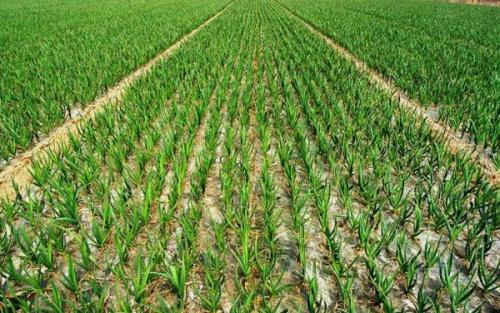
1. Break the film in time: after the garlic emerges, break the film in time to ensure normal growth of the garlic.
2. Water and fertilizer management: on the basis of sufficient base fertilizer and sufficient bottom water, generally no further watering or topdressing is needed in the early stage. When the garlic sprouts grow to about 15 cm, about 10 kg of urea per mu can be applied along with watering; in the later stage, a foliar spray of 0.3% urea + 30 mg/kg gibberellin solution can be used.
3. Build small arched sheds: as the temperature continues to drop, in the late growth stage, around Frost's Descent, small arched sheds should be built in time and covered with plastic film to ensure normal growth of the garlic sprouts.
6. Timely Harvesting
Generally about 70 d after sowing, when the garlic sprouts have grown to more than 30-50 cm in height, they can be harvested in batches at the appropriate time according to market conditions.