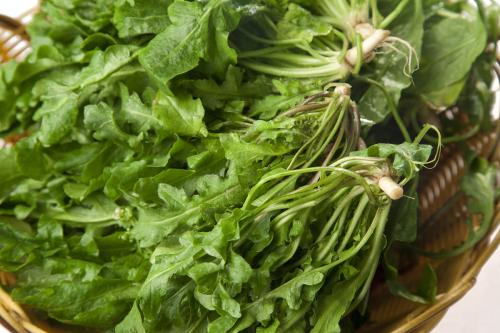
Shepherd's purse (Capsella bursa-pastoris), a name used in traditional Chinese medicine. This product is the whole plant with roots of shepherd's purse, a plant of the cruciferous family (Brassicaceae). Harvest from March to May, wash clean, and dry in the sun. Its functions and indications are: harmonizing the spleen, promoting diuresis, stopping bleeding, and improving eyesight. Treats dysentery, edema, gonorrhea, chyluria, hematemesis, hemafecia, metrorrhagia, menorrhagia, and red painful eyes.
Cultivation Techniques
Land Preparation
Shepherd's purse seeds are tiny, so choose a plot with few weeds, and it must be leveled and finely worked. When preparing the land, also make deep furrows and high beds to facilitate drainage and irrigation. The bed width is generally about 1.5m (including furrows), with a deep furrow between every two beds.
Sowing
(1) Sowing period: For spring cultivation, sow from late February to late April; for summer cultivation, sow from early July to late August; for autumn cultivation, sow from early September to early October.
(2) Sowing rate: Per 667 sq m, 0.75-1 kg for spring sowing, 2-2.5 kg for summer sowing, and 1-1.5 kg for autumn sowing.
(4) Site selection and land preparation: Shepherd's purse is highly adaptable. Besides using prepared land for block planting, it can also be planted on field ridges, vacant beds behind windbreaks, and field edges. For block planting, for autumn sowing it is best to choose land previously cropped with tomatoes or cucumbers; for spring sowing, garlic sprouts are suitable as the previous crop, and continuous cropping should be avoided. After selecting the plot, plow deeply 15 cm, apply sufficient base fertilizer, work finely and rake level, and make high beds about 2 m wide.
(4) Sowing method: Shepherd's purse is always broadcast sown, striving for evenness. After sowing, gently tread once over the bed surface with your feet so that the seeds make close contact with the soil, which helps the seeds absorb water and emerge earlier. When sowing in summer and autumn, the land can be watered (or flooded) 1-2 days before land preparation, then prepare the land and make beds. If newly harvested seeds of the current year are used for sowing in summer and autumn, since the seeds have not yet emerged from dormancy, they should be placed at a low temperature of 2-7°C (refrigerator) for pre-germination before sowing.
Management
After emergence, strengthen fertilizer and water management. Spring and summer sowings have a short growth period, and generally require 2 topdressings; autumn sowing has a long growth period and requires 4 topdressings, each time applying 1500-2000 kg of dilute human and livestock manure per 667 sq m. Shepherd's purse is planted at high density and needs plenty of water, so irrigate frequently to keep the soil moist. In summer and autumn, after thunderstorms, if mud splashes onto the leaves or hearts of the plants, use a watering can to wash off the mud in the early morning or evening, otherwise growth will be affected. After emergence, weed 1-2 times: pull small weeds by hand and cut large weeds with a knife. Aphids are the main pest of shepherd's purse and should be controlled promptly.
Harvesting
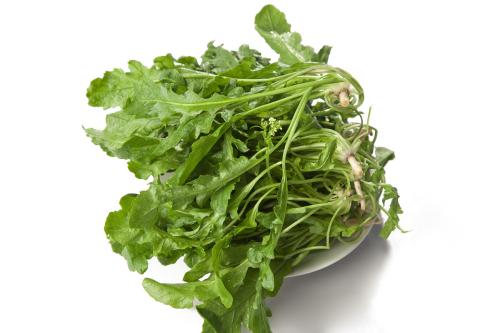
For spring-sown and summer-sown shepherd's purse, from sowing to harvest generally takes 30-50 days, with 1-2 harvests. Autumn-sown shepherd's purse is sown once and harvested multiple times. To increase yield and extend the supply period, harvest carefully and frequently, taking more from dense areas and less from sparse areas, so that the remaining shepherd's purse grows evenly.
Seed Saving
To cultivate shepherd's purse, a seed-production field should be established; never save seed in the main field. The sowing period for the seed-production field is generally early October, with a sowing rate of about 1 kg per 667 sq m. After sowing and emergence, thin 3-4 times, removing off-type and weak seedlings. In the early stage before bolting, make a final selection, removing small seedlings that bolt early, and evenly retain seed-production plants, setting them at 12 cm square spacing. The seed-production field should appropriately control nitrogen fertilizer, increase phosphorus and potassium fertilizer, and promptly control aphids.
Timely seed collection is the key technique for saving shepherd's purse seed. The appropriate seed-collection period is when the seed pods turn from green to yellow and are 70-80% mature. For seed collection, choose a sunny day around 10 a.m., cut the seed plants and spread them in place to dry, then spread a sheet in the field and rub out the seeds. After winnowing the seeds clean, continue drying for 3 days, but avoid exposure to blazing sun. After the seeds are fully dry, store them in a very dry container (preferably a crock or tile jar), and place a desiccant in the container.