Red Clover Planting Methods and Key Technical Points
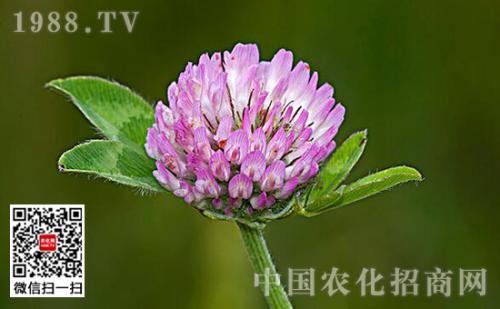
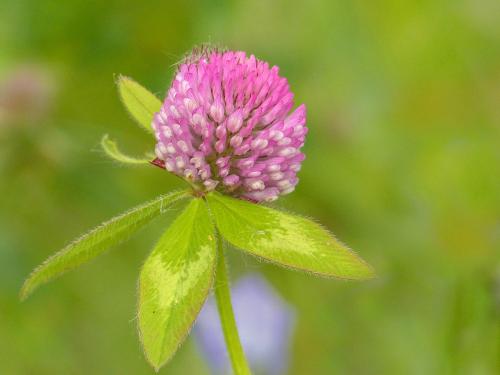
Red clover, also known as red clover (Trifolium pratense), Latin name: Trifolium pratense , is a herbaceous plant of the genus Trifolium in the Fabaceae family. It is native to Asia Minor and southwestern Europe and is one of the most important forage grasses in oceanic climate regions such as Europe, the eastern United States, and New Zealand. It is cultivated in Yunnan, Guizhou, Hunan, Hubei, Jiangxi, Sichuan, Xinjiang and other provinces and autonomous regions in China, and also occurs in a wild state.

Characteristics and Traits
Red clover is a short-lived perennial herbaceous plant of the genus Trifolium in the Fabaceae family, generally used for 2 to 4 years, with a plant height of 50 cm to 80 cm. The main root does not penetrate deeply. The lateral roots are well developed, mostly distributed in the top 20 cm of the cultivated layer, with strong branching ability. It has 10 to 15 or even more than 30 branches. The stem is round and hollow, prostrate at the lower part and upright at the upper part, belonging to the tall-growing type. Red clover is a long-day plant that prefers a warm and humid climate, with an optimum growth temperature of 15°C to 25°C. It has strong moisture tolerance and prefers neutral or slightly acidic to slightly alkaline soil, with a pH of 6 to 7 being suitable. Well-drained, fertile clay loam rich in calcium is ideal. It is not suitable for growth in strongly acidic, strongly alkaline areas or areas with a high groundwater table. In areas with annual rainfall of less than 1000 mm, certain irrigation conditions are required for planting.
Cultivation Techniques
Red clover seeds are small, requiring fine seedbed preparation. Apply about 2 tons of barnyard manure per mu. In places with heavy clay soil and abundant rainfall, beds should be made to facilitate drainage. For plots planted for the first time, rhizobium inoculation is required. For inoculation or seed dressing, apply 20 kg to 30 kg of calcium magnesium phosphate per mu. Sowing can be done in spring, summer, or autumn. The sowing rate of 0.5 kg is appropriate.
For hay meadows, single-species sowing by drilling with a row spacing of about 25 cm is appropriate. It is suitable for mixed sowing with ryegrass and cocksfoot, with a grass-to-legume ratio of 1:1 being ideal. Since perennial varieties grow slowly at the seedling stage, field management such as weeding should be strengthened during the seedling stage. Red clover requires large amounts of phosphorus, potassium, and calcium nutrients, applied as base fertilizer or top dressing.
Land Preparation
Soil tillage and fertilization: Red clover should not be continuously cropped and is not tolerant of flooding. At least 4 to 6 years must pass before it can be planted again on the same land. Ditches should be opened in waterlogged plots to facilitate drainage at any time. It prefers to grow in deep, fertile, neutral or slightly acidic soil, with a suitable pH of 6 to 7, and grows best on fertile clay loam. Red clover seeds are small and seedlings emerge poorly, so the sowing land must be deeply plowed and finely prepared to make the cultivated layer loose and the soil clods fine, facilitating emergence. The land should be plowed promptly after the previous crop is harvested in the previous year, stubble removed and weeds controlled, water stored and moisture conserved, and sowing done the following year. In irrigated areas, winter water should be applied sufficiently, and base fertilizer applied generously in conjunction with deep plowing and land preparation, with 1500 to 2500 kg of organic fertilizer and 20 to 30 kg of superphosphate per mu. For seed fields, appropriately apply additional quick-acting nitrogen fertilizer at sowing time.
Sowing
For seed used in seed fields, Grade I seeds as specified in national or provincial forage seed quality standards must be used. For seeds used in forage production, Grades I, II, and III seeds are all acceptable. As for sowing time, in warm and humid areas, autumn sowing is preferable; in higher altitude areas, spring and summer sowing are better. For autumn sowing, seedlings must have more than 1 month of growth before winter. Sowing methods can be drilling, broadcasting, mixed sowing, or single-species sowing. Seed fields should use single-species sowing by drilling with a row spacing of 30 to 40 cm; for hay or grazing land, broadcasting and drilling can be used with a row spacing of 20 to 30 cm. After sowing, the land should be harrowed and compacted. The sowing rate for seed fields is 0.4 to 0.5 kg per mu, and for forage land 0.6 to 0.75 kg per mu. Sowing depth is 1 to 2 cm. The principle is that when soil moisture is poor and land preparation quality is low, the sowing rate should be larger and the soil cover deeper; otherwise, smaller and shallower. Sowing too deep will cause the nutrients stored in the seeds to be exhausted, making emergence difficult. When red clover is mixed with gramineous forage grasses, in colder and humid areas, mixing with timothy is better; in warm and humid areas, mixing with perennial ryegrass is suitable; in warm and slightly arid areas, mixing with cocksfoot is better. The mixing ratio is generally 1:1.
Field Management
Red clover seedlings grow slowly and are easily harmed by weeds. During the seedling stage, loosen the soil and hoe weeds promptly to facilitate seedling growth. If soil crusting occurs due to water before emergence, use a spike-tooth harrow or toothed ring roller to promptly break the crust layer to facilitate emergence. When sown under a cover crop, harvest the cover crop promptly to reduce suppression. The stubble height for cutting the cover crop should be above 15 cm to facilitate snow accumulation in winter and protect overwintering. For grassland grown for more than 2 years, harrow and loosen the soil before greening in early spring and after each cutting or grazing to improve soil permeability, with a depth of 2 to 3 cm. During growth, red clover requires relatively large amounts of phosphorus, potassium, calcium and other elements. In conjunction with harrowing, apply 20 kg of superphosphate, 15 kg of potassium fertilizer, or 30 kg of plant ash per mu as top dressing. For seed fields, spraying a 4% nitrogen, phosphorus, and potassium salt solution at the full flowering stage for foliar top dressing can increase seed yield. In irrigated areas, irrigation should be applied after each cutting or grazing use, 2 to 4 times per year. Red clover has few pests and diseases. A common disease is sclerotinia, which easily occurs after early spring rain and mainly infects the root crown and root system. Applying lime and spraying carbendazim can control it.
Harvest and Utilization
Red clover flowers unevenly and seeds mature irregularly. Harvesting for seed should be done when 70 to 80% of the inflorescences have turned yellow-brown, the flower stems are dark yellow, and the seeds are brownish-yellow. After sun-drying and threshing, dry for another 1 to 2 days, then store in a cool, dry, well-ventilated warehouse, protecting from moisture and rodents. For red clover sown as a single species for hay, cutting for green feed should be done from the bud stage to the early flowering stage, and cutting for hay should be done from the early flowering to full flowering stage; for grazing use, it should begin when the plant canopy height reaches 15 to 20 cm. The stubble height for each grazing or cutting use must not be lower than 3 to 4 cm. Grazing is not suitable in the sowing year. The first cutting should be done after the early flowering stage, and regrowth grass should be used for grazing after the soil is frozen. Regardless of whether for hay or seed, red clover is generally used for 3 to 4 years. When renewing grassland, cut and use the first crop from the bud stage to the flowering stage when root nodule nitrogen fixation activity is highest, then plow and irrigate promptly. After the root stubble has fully decomposed, arrange to replant annual or perennial gramineous forage grasses and other crops to make full use of it.
Pests and Diseases
Diseases
Clover anthracnose caused by Colletotrichum, clover anthracnose caused by Kabatiella, clover black stem caused by Phoma, clover powdery mildew, clover leaf spot caused by Cercospora, clover rot caused by Sclerotinia, clover flower mold, clover ring spot caused by Stemphylium, clover gray mold, clover brown spot caused by Pseudopeziza, clover rust
Insect Pests
Grassland caterpillars, plant bugs, alfalfa seed wasps, white grubs, small cutworms , yellow cutworms, large cutworms, white-margined cutworms, wheat thrips, leafhoppers.