A Detailed Guide to Monstera Planting Methods and Key Technical Points
Monstera (Monstera deliciosa Liebm.) is a perennial woody climbing evergreen shrub of the genus Monstera (Monstera) in the arum family (Araceae). Also known as the Swiss cheese plant, split-leaf philodendron and ceriman, it grows in forests and climbs up trees. The stem is green and thick, ringed around its circumference, and otherwise smooth; the petiole is green; the leaves are large, with a heart-shaped ovate outline, thickly leathery, glossy on the surface, light green above and greenish-white beneath. The spathe is thickly leathery, broadly ovate, boat-shaped, and nearly upright. The spadix is nearly cylindrical and pale yellow. The staminal filaments are linear. The pistil is top-shaped, yellow, and slightly raised. The berry is pale yellow, with blue-purple spots around the stigma. The flowering period is August-September, and the fruit ripens after the flowering period of the following year.
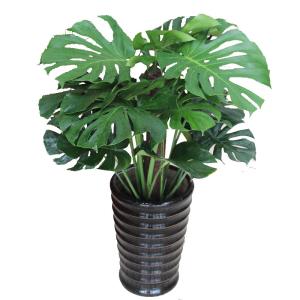
How to grow Monstera
Soil and repotting
Monstera can root from cuttings, and after transplanting into a pot it can be grown in fertile pond mud or black mountain soil.
Monstera grows quickly and needs repotting once a year to provide the plant with sufficient space for growth. Repotting is carried out between March and April each year. When repotting, remove part of the old soil and dead roots, and move it into a pot one size larger. Place some hoof pieces, crushed bone and so on at the bottom of the pot as a base fertilizer, then fill in a growing medium mixed from leaf mold, garden soil and sandy soil at 1/3 each.
Pay attention to the growing environment
Monstera dislikes direct scorching sun. In midsummer, the plant should be placed indoors or under a shade shed, and must not be placed on a balcony with overly strong sunlight; otherwise it easily causes leaf scorch and affects its ornamental value.
Monstera is not cold-tolerant. When the winter temperature drops to 6°C, it should be moved indoors to keep warm, and the indoor temperature should be kept between 15~20°C so the plant can overwinter safely.
Keep the potting soil moist
Monstera likes a moist environment and needs sufficient water and a certain amount of air humidity during the growing period.
For routine watering, once a day is fine; in summer, water once in the morning and once in the evening; when the weather is dry, sprinkle water on the leaves and the surrounding environment to keep the air fresh and moist and the leaves vivid. In winter, water once every 3~4 days and spray the leaves once every 7~10 days, mainly to clean the leaves, keep the plant evergreen and fresh, and improve its ornamental value.
Fertilize appropriately:Monstera is a flowering plant that loves fertilizer. From April to September, fertilize once every 15 days, using diluted cake fertilizer water or fermented animal and plant manure. Only with sufficient nutrients will the leaf color be emerald green and pleasing.
Prune in time:For newly planted plants, set up supports in time so they grow in the intended shape, and prune in time to ensure a beautiful plant form.
Prevent and control pests and diseases:Monitor closely, actively prevent pests and diseases, and once they occur, eliminate them promptly.
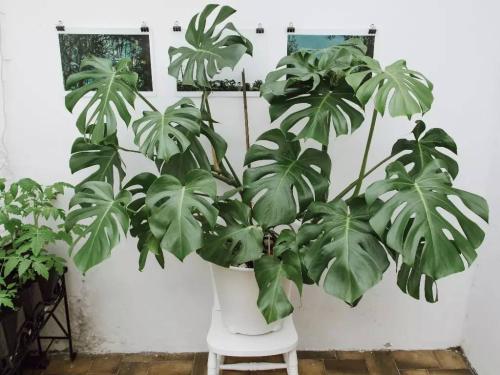
Precautions for growing Monstera
Likes warmth and avoids severe cold:Monstera originates from the tropical rainforests of Mexico. It likes a warm environment and avoids freezing, severely cold weather. It will not suffer cold damage above 5°C, and grows well above 12°C
Likes shade and avoids strong light:Monstera has strong shade tolerance. In a semi-shaded environment it grows quickly, thrives vigorously, develops well-developed aerial roots, and has thick, large leaves with a glossy, deep green color.
Likes moisture and avoids waterlogging:Monstera likes to grow in a moist ecological environment. In the south, where there is a lot of rain, if waterlogging lasts too long, root rot, stem rot and leaf rot will occur.
Likes fertile soil and avoids poor soil:Monstera likes fertile soil, especially fertile sandy loam. Although it can grow in poor red-yellow soil, its growth becomes weaker, its tree form becomes deformed, its leaves become smaller, and its leaf color becomes lighter, affecting the ornamental effect.
Likes manure and avoids chemical fertilizers:Monstera is often given organic fertilizers such as cake fertilizer, artificial organic fertilizer, livestock and poultry manure residue, and farmyard manure. Its growth is then strong, its leaves are as large as platters, its leaf texture is thick and substantial, and its leaf color is deep green and shiny, especially with the turtle-shell pattern even clearer and more distinct.