Detailed Explanation of Belamcanda chinensis Planting Methods and Technical Points
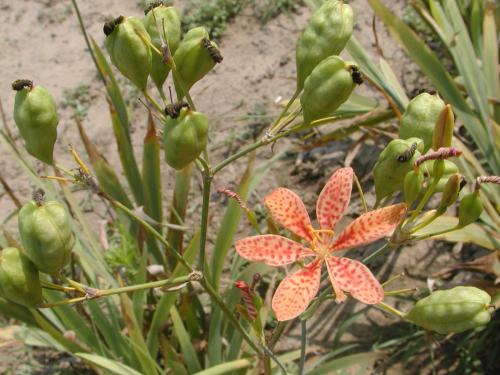
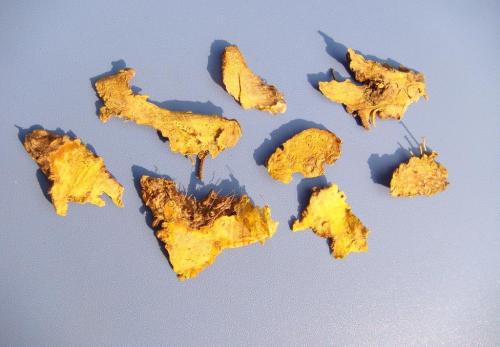
Belamcanda chinensis (scientific name: Belamcanda chinensis (L.) Redoute) is a perennial herb. Its rhizome is irregularly lump-shaped, obliquely spreading, yellow or yellowish-brown; it has numerous fibrous roots, tinged with yellow. The stem is erect, 1-1.5 m tall, solid.
Planting Methods
Land preparation and fertilization: Choose a suitable plot, apply 20000 kg/ha of barnyard manure, spread it over the ground, plow 20 cm deep, and while plowing spread 750 kg/ha each of potassium sulfate compound fertilizer and ammonium dihydrogen phosphate at the bottom of the furrow. Harrow fine, level, and make flat beds 90 cm wide. When the soil is dry, first irrigate the beds, and sow after the surface soil becomes loose.
Propagation methods: seed propagation and division propagation
Seed propagation:
Sowing can be done in both winter and spring. For winter sowing, in late November, open shallow furrows 3 cm deep in the beds at a row spacing of 2 cm. Mix the seeds evenly with 5 times their volume of fine sand, evenly scatter them into the shallow furrows at a sowing rate of 20 kg/ha, cover with fine soil and level, press lightly, and seedlings emerge the following spring. Winter sowing produces earlier seedlings and vigorous growth. Belamcanda chinensis seed germination requires alternating temperature conditions; pretreatment with low temperature and moisture at 5-10 degrees C for 120 d gives a germination rate of 85%.
Spring sowing requires seed treatment. In late November, mix the seeds evenly with 5 times their volume of wet fine sand, put them in a breathable bag, and bury it in a shady soil pit to overwinter. After the thaw the following spring, take them out and place them indoors or in a cellar, keeping them moist; when the seeds begin to show white, sow them in the field, and seedlings emerge in about 15-20 d. When the seedlings are 6-7 cm tall, thin them to a plant spacing of 8-10 cm.
Division propagation: carried out in late November together with harvesting. Select rhizomes free of pests and diseases and bright yellow in color, cut them apart along the natural branches, each rhizome bearing 1-2 root buds and some fibrous roots. Air-dry briefly to let the wounds heal, then in the beds open holes 6 cm deep at a row spacing of 20 cm x 9 cm, place 1 plant per hole with the bud head upward, and bury for spring emergence.
Field management: loosening soil and watering. For spring sowing, keep the bed surface moist before emergence; after emergence, loosen the soil and weed in time, and water during drought. The management method for winter sowing is the same as above. For division propagation, water once with freezing water, and after emergence water and loosen the soil at the proper time to keep the soil surface loose, moist, and free of weeds. After the plants close canopy in June, only pull weeds and no longer loosen the soil. Earth up around the roots in time to prevent lodging.
Topdressing: For Belamcanda chinensis more than 2 years old, in early spring open shallow furrows and bury-apply 750 kg of potassium sulfate compound fertilizer and 15000 kg/ha of barnyard manure, then water immediately. Drain waterlogging in time during the rainy season to prevent root rot.
Removing flower buds: seed-propagated plants flower in 2 years; vegetatively propagated plants flower and set seed in the same year. Except for those kept for seed, all flower stems are removed completely at the bolting stage.
Harvesting and processing: seed-propagated plants are harvested after growing for 3 years, and division-propagated plants after growing for 2 years. In late November, harvest when the stems and leaves of the plants wither. Dig out the rhizomes, remove the stems, leaves, and soil, sun-dry until half dry, rub off the fibrous roots, then sun-dry until completely dry and set aside for use. Those with thick, plump, and large rhizomes, yellow color, no soil, and no fibrous roots are considered best.