Detailed Explanation of Horse Chestnut Planting Methods and Techniques
The Hippocastanaceae family, dicotyledonous, 2 genera, more than 25 species, widely distributed in the northern temperate zone. In China, only the genus Aesculus is present. Trees or shrubs, winter buds usually sticky; palmately compound leaves opposite, leaflets usually 5-9, serrate or sometimes entire, stipules absent; panicles or racemes terminal; flowers polygamous, more or less zygomorphic; sepals 5, imbricate, or tubular and split, petals 5 or 4, unequal, clawed, imbricate; disc annular or unilateral; stamens 8-5, inserted within the disc, filaments free; ovary sessile, 3-locular, or reduced to 1 or 2 locules, style usually long, stigma undivided, ovules 2 per locule, superposed, or one ascending and the other pendulous; capsule leathery, smooth or spiny, 3-valved or nearly spherical, loculicidal; seeds usually 1 per locule, nearly spherical, hilum large, seed coat leathery.
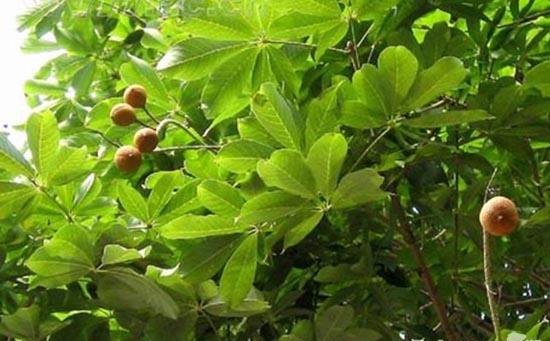
How to plant horse chestnut
May to June
1. Nursery management. Seedlings prefer moisture. After the seedlings emerge fully, build a shade frame in time, spray water to keep the seedbed moist. Loosen the soil and pull weeds, and apply appropriate topdressing. In the rainy season, pay attention to drainage and flood prevention.
2. Young tree tending mainly involves loosening soil and removing weeds, etc.
July to August
1. Nursery management. Seedlings grow slowly; besides loosening soil and removing weeds, apply topdressing 2-3 times. In the dry season, pay attention to watering to keep the seedbed moist. Control pests and diseases in time.
2. Young tree tending, besides loosening soil, removing weeds and earthing up, requires watering.
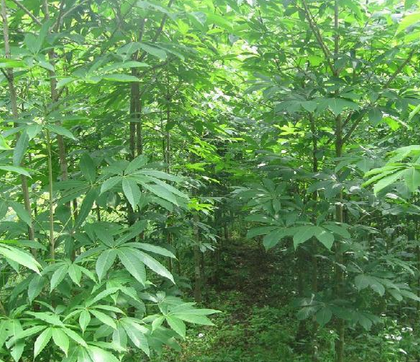
Later-stage management of horse chestnut
In the later stage, to improve the seedlings' ability to overwinter against low temperatures and drought, fertilization should be stopped after mid-September. To benefit transplanting of seedlings the following year, in November to December, at 20-30 cm from the roots, use a seedling-lifting shovel at a 45 degree angle to quickly cut off the main root; this can both control the seedlings' water absorption and promote lignification of the seedlings, and produce more absorbing roots. Horse chestnut is mostly used for courtyard and park landscaping and as street trees, so it needs to be grown into large seedlings for landscaping projects. 1-year-old seedlings are transplanted in spring, and thereafter planted once every other year. Seedlings prefer moisture and fertilizer.
The row spacing for transplanting small seedlings can depend on how long the seedlings remain in the nursery bed; for longer bed stays, the row spacing can be larger, generally 1.5 m x 1.5 m. Before transplanting small seedlings and large seedlings, sufficient base fertilizer should be applied. The transplanting time is generally from after leaf fall in winter until the following spring (before March) when the seedlings have not yet sprouted. When transplanting, a soil ball should be kept; the size of the soil ball is generally 7-10 times the diameter at breast height of the tree (seedling). To prevent the bark from splitting from sunscald, the trunk can be wrapped with straw rope. For adult trees, after leaf fall each winter, dig trenches around the tree and apply fertilizer; organic fertilizer is best, to help produce more branches and flowers the following year.
Uses
The horse chestnut trunk is tall and straight, with a broad, dense crown; in early summer it is covered with flowers, a magnificent sight. It is a world-famous ornamental tree species and one of the four major street trees (abroad, mainly its congeneric species, the European horse chestnut).
In China, the horse chestnut has deep ties with Buddhism, so many ancient and famous temples, such as Lingyin Temple in Hangzhou, Wofo Temple in Beijing, and Dajue Temple, have large trees planted. Horse chestnut seeds are edible, but eaten directly they taste bitter; they must be boiled in alkaline water before eating, and then taste like chestnuts. Starch can also be extracted.