A Detailed Guide to the Planting Methods and Key Technical Points for Dove Trees
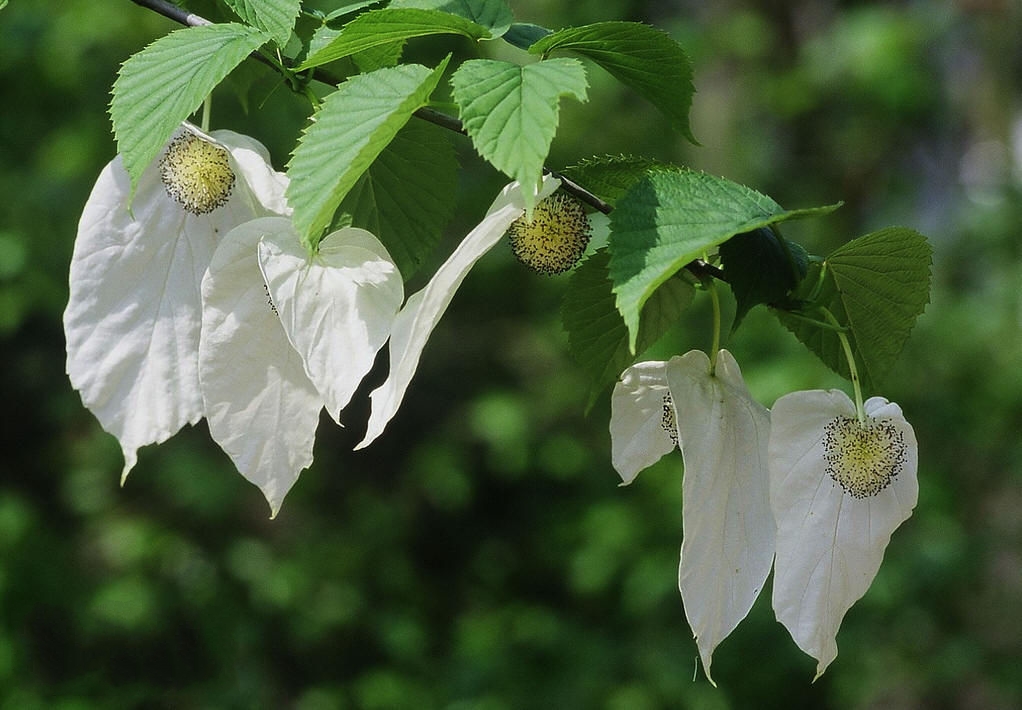
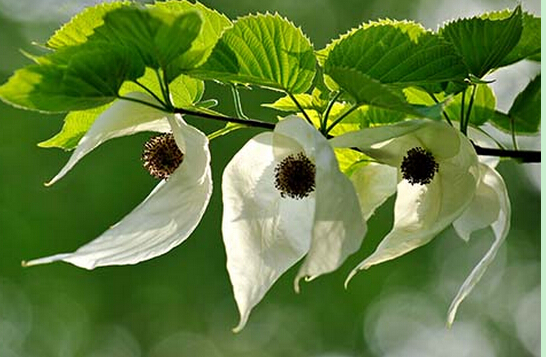
The dove tree (gǒng tóng) is a deciduous tree. It can grow to 15-25 m tall, with broad ovate leaves and serrated edges. This family contains only one genus and two species; the two species are similar, except that one has hairy leaves, while the other, the smooth-leaved dove tree, has smooth leaves. Its flowers are strikingly beautiful, and it is a relict plant left over from the Paleogene of 10 million years ago. During the Quaternary glacial period, dove trees in most areas became extinct one after another, surviving only in some areas of southern China; Luoyang Lucheng Agriculture has already succeeded in large-scale breeding and planting. It has become today's "living fossil" of the plant world, and is known as "China's dove tree", also called "dove flower tree" and "water pear". Wild species grow only in southwestern Sichuan Province and central Hubei Province in China and surrounding areas.
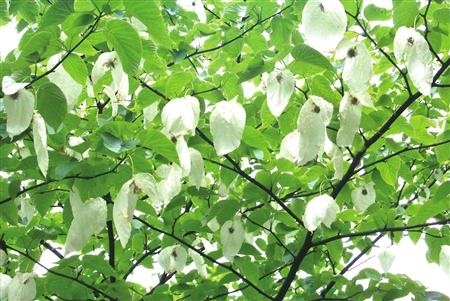
The dove tree has been listed as a national first-class key protected wild plant. It is a monotypic genus endemic to China, a relict plant, and also a world-famous ornamental plant. It is a national first-class protected plant.
The steps for planting dove trees are mainly divided into four major aspects: sowing and seedling raising, planting, watering and fertilizing, and pest and disease control.
Sowing and seedling raising
First, the dove tree likes damp shade and soil rich in neutral, slightly acidic humus, and the seedlings do not like light. Therefore, the land chosen for sowing and seedling raising must meet the above three conditions. For seeds, the fruit of the dove tree should be selected. The specific sowing method is: repeatedly beat the collected fruit to crush the dove tree fruit, but the peel must not fall off completely. Then mix the crushed fruit with plant ash and sow directly.
After the seedlings emerge, the temperature should be kept constant, and it is best to set up a plastic shed, because dove tree seedlings are not cold-tolerant. When the seedlings grow to about 30CM, they can be transplanted and planted. When transplanting, be sure to dig the soil as deep as possible to prevent damaging the seedling roots.
Planting
The land should first be watered to ensure that the seedling roots can fully contact the soil during planting. The planting density is about 2 plants per sq m. The planting pits must be dug deep, because the dove tree has a well-developed root system; doing so can promote the growth of the dove tree.
Prune the plants appropriately to ensure that the plants can grow vigorously.
They can be mixed-planted with other broadleaf trees or evergreen trees to provide the seedlings with a low-light, shady growing environment.
Watering and fertilizing
Since the dove tree likes moisture, the plants should be watered more to replenish the soil moisture. In the rainy season, natural rainfall is sufficient, so no watering is needed. In hot weather and the dry season, a large amount of watering is needed, and each watering must soak through the soil layer.
The dove tree is extremely sensitive to environmental changes. It is recommended to apply more farmyard manure (organic fertilizer) when fertilizing. If there is no organic fertilizer, 1000-times liquid thiophanate-methyl or 500-times zineb can be used instead. Fertilizing should be done during the 10th to 15th weeks of the seedling growth period and 1 to 2 months after transplanting.
Pest and disease control
The main problem harming dove trees is disease. The common disease is stem rot. A 402 antibacterial agent can be used to smear the trunk, sprayed once every seven days, until the disease is brought under control.
Common pests include snails and scarab beetles.
Snails nibble on leaves and buds. They can be eliminated by applying molluscicide bait, or captured manually.
Scarab beetles harm the leaves. A 1000-times trichlorfon solution can be used for spraying to kill them, or 90 percent trichlorfon technical material can also be used for spraying to kill them.