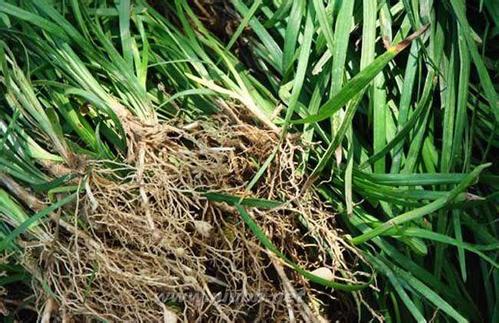
Dwarf lilyturf (scientific name: Ophiopogon japonicus (Linn. f.) Ker-Gawl.) is a perennial evergreen herbaceous plant of the genus Ophiopogon in the family Liliaceae. Its roots are relatively thick, and the middle or near the end often swells into elliptical or spindle-shaped small tuberous roots; the stem is very short; the leaves are basal and clustered, grass-like; the bracts are lanceolate with acuminate tips; the seeds are spherical; the flowering period is from May to August, and the fruiting period is from August to September.
Cultivation Techniques
Before planting, the soil must be deeply plowed. In combination with land preparation, apply 1000 kg of decomposed manure or barnyard manure and 50 kg of superphosphate per mu. Before planting, carry out shallow plowing once more, level and harrow finely, and make flat beds 1.3 m wide with furrows 40 cm wide, and open drainage ditches around the perimeter.
In combination with harvesting, dwarf lilyturf is planted as soon as it is harvested. Choose a sunny evening or a cloudy day for planting. On the prepared bed surface, open horizontal trenches at a row spacing of 15-20 cm, about 5 cm deep, and plant 3 seedlings per hill at a plant spacing of 8-10 cm. Do not plant too deep or too shallow. If too deep, it is difficult for the seedlings to sprout, and tall-foot seedlings are easily produced, resulting in low yield; if too shallow, the roots are exposed outside, and they are easily dried to death or lodge, affecting the survival rate. Plant the seedlings vertically close against the trench wall so that the roots are vertical and not bent; otherwise, it is difficult for roots to develop at the side against the trench wall. After planting, cover with soil and press firmly so that the roots are in close contact with the soil, then use both feet to press the seedlings firmly so that the plants stand upright and stable. Immediately after planting, water once with rooting water to promote early development of new roots.
Care and Management
About 15 days after planting, dwarf lilyturf turns green again. If dead seedlings are found, remove them promptly, and replant on a cloudy day or in the evening. Fifteen days after planting, loosen the soil and weed once, and afterward choose sunny days to weed once every month or half a month to promote early tillering of young seedlings and more root development. After October, loosen the soil shallowly and do not damage the fibrous roots. Dwarf lilyturf plants are short, so the field should be kept free of weeds to avoid weed infestation.
Dwarf lilyturf likes fertilizer. Reasonable topdressing with nitrogen, phosphorus, and potassium is the key to increasing its yield. Generally, topdressing is done 3 times per year. The first time is in July, applying 2500 kg of human and livestock manure water and 50 kg of decomposed cake fertilizer per mu; the second time is in early August, applying 3000 kg of human and livestock manure water, 80 kg of decomposed cake fertilizer, and 150 kg of stove ash per mu; the third time is in early November, applying 3000 kg of human and livestock manure water, 50 kg of cake fertilizer, and 50 kg of superphosphate per mu to promote the growth and enlargement of tuberous roots.
Dwarf lilyturf has a relatively high water requirement during the growing period. After the Beginning of Summer, temperatures rise and evaporation increases, so it should be irrigated in time. In winter and spring, if dry weather occurs, irrigate 1-2 times before the Beginning of Spring to promote the growth and development of tuberous roots.
Dwarf lilyturf likes a shady and moist environment, so intercropping can be practiced during cultivation. In summer and autumn, intercropping with corn is better, as it can reduce direct exposure to strong sunlight and is beneficial to the growth of dwarf lilyturf; in winter and spring, some places intercrop with garlic, but this is exactly the period when the underground stems of dwarf lilyturf are expanding and developing, so it is generally better not to intercrop
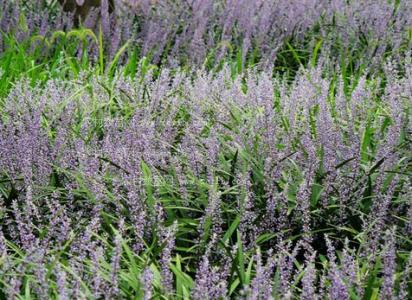
Dwarf lilyturf is harvested in the first ten days to the middle ten days of April of the second or third year after planting. Choose a sunny day. First plow the soil 25 cm deep with a plow so that the dwarf lilyturf is turned out. Shake off the soil, cut off the tuberous roots and fibrous roots, put them separately in baskets, and place them in running water, stepping and rubbing them with the feet to wash off the sand and mud. Spread the washed dwarf lilyturf on a drying mat or drying yard and expose it to strong sunlight. After it dries, gently rub it with the hands, then dry it again, repeating this several times until the fibrous roots are rubbed off, then sift out impurities with a sieve and it is ready. If rainy days occur, use a low fire at 40°C-50°C to dry for 10-20 hours, take it out and leave it for a few days, then dry again until completely dry, sift out impurities, and it becomes a commercial product. Generally, the yield is about 150 kg of dried dwarf lilyturf per mu, and up to 250 kg at high yield. Dwarf lilyturf is best when the grains are large and long, shaped like prisms, and the flesh is solid and yellow-white in color.
Field Management
I. Cultivation and Weeding
Dwarf lilyturf plants are short, and weeds tend to grow easily, consuming fertility and affecting plant growth. The field should be kept free of weeds to avoid weed infestation. Half a month after planting, loosen the soil and weed once, and afterward choose sunny days to weed once every month or half a month to promote early tillering and more root development of the seedlings. After October, loosen the soil shallowly and do not damage the fibrous roots. In winter there are fewer weeds, so weeding can be reduced or omitted. Do not weed after rain or during frost, so as to avoid compacting the soil and affecting the growth of dwarf lilyturf and the enlargement of tuberous roots.
II. Topdressing
Dwarf lilyturf has a long growing period and a high fertilizer requirement. In addition to applying heavy base fertilizer, timely topdressing according to seedling condition is also needed to obtain high yield. Reasonable topdressing with nitrogen, phosphorus, and potassium fertilizer is the key to increasing the yield of dwarf lilyturf. Applying nitrogen fertilizer alone makes the plants grow vigorously but produce few tuberous roots; applying only phosphorus and potassium fertilizer results in yellow leaf color, short leaves, gray-brown leaf tips, yellow-brown leaf bases, and a ring shape at death, which are symptoms of nitrogen deficiency.
Dwarf lilyturf is generally topdressed 3~4 times per year. In the Sichuan production area, the first topdressing is in early to mid-July, applying 2000~2500 kg of human and livestock manure water per mu, plus 50 kg of decomposed cake fertilizer. The second is in early August, applying 2500~3000 kg of human and livestock manure water per mu, plus 80 kg of decomposed cake fertilizer, and scattering 150 kg of plant ash between the clumps; the third is in early November, applying 3000 kg of human and livestock manure water per mu, plus 50 kg of cake fertilizer and 50 kg of superphosphate, to promote the growth and enlargement of tuberous roots. In the Zhejiang production area, in addition to applying base fertilizer, some superphosphate is applied in the holes during planting and mixed into the soil to increase yield. Half a month after planting, after dwarf lilyturf turns green again, apply 750 kg of human and livestock manure and urine and 10 kg of superphosphate per mu. In July, apply another 1250 kg of human manure and urine per mu, plus 15 kg of superphosphate. Autumn and winter are the period of tuberous root enlargement, and at this time phosphorus and potassium fertilizer should be applied heavily. In late September, apply 1500 kg of human and livestock manure and urine, 25 kg of potassium chloride, and 50~100 kg of cake fertilizer per mu; in early November, apply 2000~2500 kg of human and livestock manure and urine, 15 kg of superphosphate (or 50~100 kg of cake fertilizer), and 150~200 kg of plant ash per mu. In March of the following spring, also apply a compound fertilizer once to promote tuberous root enlargement and increase the elongation of rhizomes.
III. Watering
Dwarf lilyturf likes a moist soil environment and requires more water during the growing period. After planting seedlings, rooting water should be irrigated in time to keep the soil moist so as to promote early development of new roots. After the Beginning of Summer in May, the weather gradually becomes hotter and soil water evaporation increases, so timely irrigation should be noted. In winter and spring, if drought occurs, water should also be irrigated in time to promote the growth and development of tuberous roots. In the rainy season, rainfall is concentrated and the rain is heaviest, so accumulated water in the field should be drained in time to prevent high temperature and high humidity from inducing diseases and insect pests and affecting yield.
IV. Replanting
If dead or missing seedlings are found in the field, replant them in time to ensure a full stand.