Detailed Explanation of Zucchini Cultivation Methods and Technical Key Points
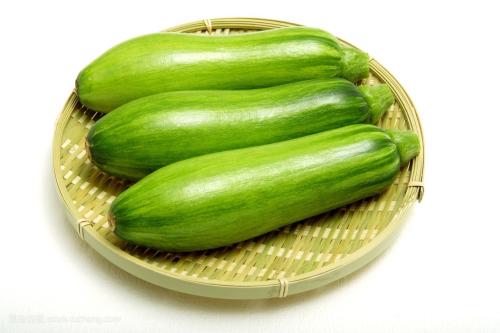
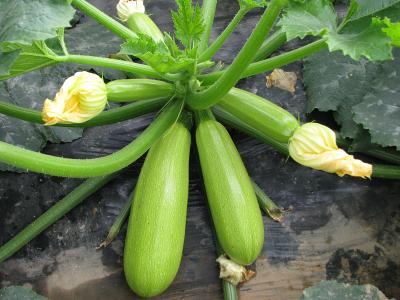
Zucchini (Cucurbita pepo L.) is an annual trailing herb; the stem has ridged grooves. The petiole is stout and covered with short bristles; the leaf blade is firm, upright, triangular, with a semicircular sinus, dark green above and lighter beneath, and the veins on both sides bear rough hairs. The tendrils are somewhat stout. Monoecious. Male flowers solitary; the pedicel is stout, angular, covered with yellowish-brown short bristles; the calyx lobes are linear-lanceolate; the corolla is yellow with a sharply pointed tip; the stamen filaments are 15 mm long, and the anthers are connivent. Female flowers solitary, the ovary ovate. The fruit stalk is stout with distinct ridged grooves, and the fruit base becomes thickened or slightly enlarged. Fruit shape varies by variety; seeds are ovate, white, about 20 mm long, with raised and blunt margins.
Cultivation Techniques
Land preparation and fertilization: Organic fertilizer is the main type; generally, per mu, apply 2000 kg of decomposed organic fertilizer, 75 kg of cake fertilizer, 40 kg of compound fertilizer, and 80 kg of plant ash. Spread the fertilizer evenly on the ground, deep plow 30 cm, and level the ground.
Field Management
1. Temperature management: In the early stage, if the temperature is too high, when the temperature exceeds 30 degrees, a shade net can be added over the greenhouse; in the later stage, when the temperature drops rapidly, when the nighttime temperature is lower than 15 degrees, add greenhouse film so that the temperature inside the greenhouse remains between 15-30 degrees.
2. Water and fertilizer management: Zucchini is prone to excessive vegetative growth; before fruit set, generally do not water. When more than 70% of the plants in the field have set fruit and the first fruit has grown to about 5 cm, water once to promote fruit swelling and apply 10 kg of NPK compound fertilizer. After that, with each harvest, combine with watering and apply 15 kg of NPK compound fertilizer once. In the later stage, as the weather turns colder, watering and topdressing should be done as much as possible on sunny mornings.
3. Chemical growth control: During the seedling stage, high temperatures make excessive growth likely, so chemical control should be used. Spray 2500-fold 50% chlormequat solution once each at the 1-leaf and 3-leaf stages, which can effectively prevent excessive growth and promote female flower differentiation.
4. Flower and fruit preservation: When the female flower of the young fruit opens, use 50-100 mg/kg of 2,4-D or 100 mg/kg of 4-CPA to smear the stigma and the base of the corolla of the female flower. Add 0.1% pyrimethanil wettable powder to the solution, which can both prevent fruit abortion and prevent the occurrence of gray mold.