Detailed Explanation of Taxus (Yew) Planting Methods and Technical Key Points
Taxus (yew), is a globally recognized endangered natural rare anti-cancer plant, and holds an important medicinal position in pharmacology worldwide.
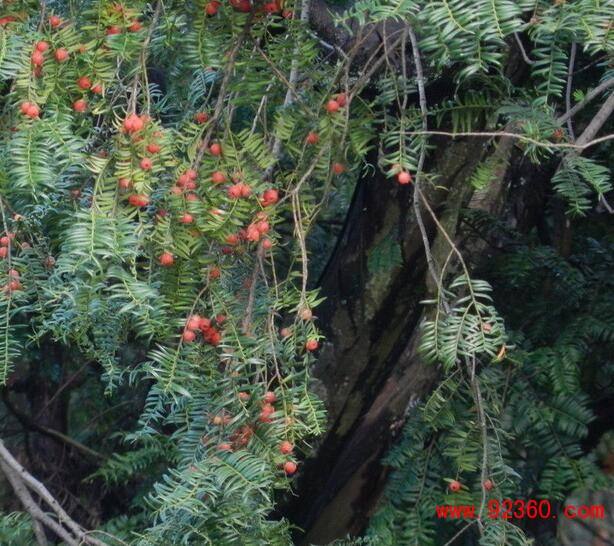
Planting Methods:
-
Soil selection for growing Taxus: Taxus is best planted in mid-to-late February in early spring. Seedlings should be dug up with a soil ball and can be planted in shaded areas of the garden, often interplanted with trees. For potting soil, use loose, fertile acidic soil with high organic matter content; it can be made by mixing garden soil, peat, and sand at a ratio of 2:1:1, plus 1% decomposed organic fertilizer.
-
Fertilization method for growing Taxus: For potted plants, apply decomposed cake fertilizer water; during the growing season, apply alum fertilizer water at a concentration of 1:10-15 every month. Repot every other year, and add solid decomposed organic fertilizer at the bottom of the pot.
-
Watering method for growing Taxus:
Taxus is very drought-tolerant and should not be watered frequently. When the potting soil turns white, water it, and water thoroughly at once to ensure sufficient water. Normally, when a little yellowish-white appears on the surface of the potting soil, you can mist the leaves, without deliberately watering.
-
Temperature requirements for growing Taxus
Northeast yew (Taxus cuspidata) can tolerate partial shade, resist severe cold, and has strong adaptability, generally tolerating low temperatures of -25 to -15°C. Southern yew (Taxus wallichiana var. mairei) likes warmth; its most suitable growing period is from March to November, and its most suitable growing temperature is 20-30°C. Under such temperature conditions, the plant's vegetative growth and reproductive growth proceed simultaneously.
-
Light requirements for growing Taxus
Northeast yew (Taxus cuspidata) originally grows in mountainous areas with warm, cool summers, abundant rainfall, humid air, and cold winters, where the temperature difference across the four seasons is relatively large and sunshine duration is long. Southern yew (Taxus wallichiana var. mairei) is a strongly shade-tolerant slow-growing tree species, thus it prefers a humid and warm ecological environment and is not tolerant of strong sunlight. For seedlings grown from seeds, in areas with intense light, a shade frame should be built. When cultivating in plain areas, it can be interplanted with tall trees. When cultivating around the house, it should also be in a shaded place, because the original growing sites of southern yew are all mixed forest areas in humid mountainous regions, mostly growing under tall deciduous trees.
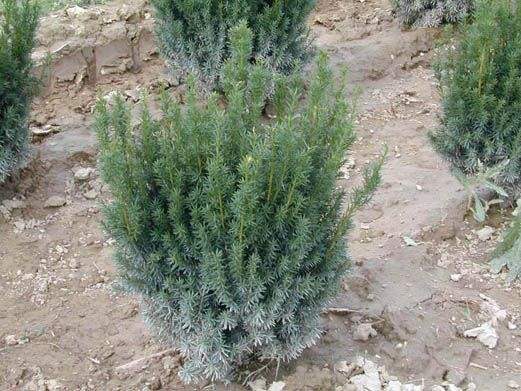
Propagation Methods
By sowing: Rub and damage the outer seed coat before sowing to promote germination, then stratify in a 3°C environment for 20-40 days before sowing. Seedlings will emerge 2 months after sowing; after emergence, pay attention to shading.
Cuttage propagation: Both softwood cuttings and hardwood cuttings can be used for Taxus. The rooting rate of softwood cuttings is higher than that of hardwood cuttings. Soak the cuttings in a 100 mg/L naphthaleneacetic acid solution for 3 hours to promote rooting.