Detailed Explanation of Torreya Planting Methods and Technical Points
Torreya (scientific name: Torreya grandis Fort. ex Lindl. cv. Merrillii.), also known as Chinese torreya and commonly called the concubine tree, is an evergreen tree of the order Taxales, family Taxaceae, genus Torreya. It is a species native to China and one of the world's rare economic tree species.
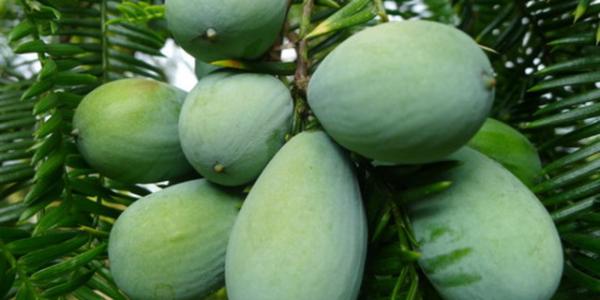
Cultivation and management of torreya:
1. Deep digging, shallow planting
Deep digging is necessary because, although the root system of torreya is shallower than that of other trees and has few taproots, it is still quite deep and extensive. Before planting, a large pit 50-70 cm square and 35-50 cm deep must first be dug to loosen the soil and help the roots penetrate deep to absorb nutrients. So-called shallow planting is determined by the characteristic that torreya is especially afraid of waterlogging. When planting, its depth must not exceed the depth of the seedling's original soil surface, and it may be slightly higher than or level with the existing soil.
2. Lift gently, tread firmly
When planting torreya seedlings, to spread the roots out, fill the soil while treading lightly and firmly. When the hole is 70% filled with soil, lift the seedling gently so that the root filaments extend naturally in the soil. Then add more soil (it may be about 3 cm higher than the garden bed), and tread the soil lightly and firmly again (never use the back of a hoe to pound the soil, as this will cause the roots to hit sand and stones and break, affecting the roots' absorption of nutrients and causing death). In dry weather, water appropriately to increase the survival rate.
3. Reasonable fertilization
Generally speaking, it is best not to apply base fertilizer just before planting; apply sufficient base fertilizer one month in advance, and plant after it has fermented. If the land is fertile, no fertilizer is needed that year. If fertilizer is to be applied, spring and autumn each year are the best times. Do not apply chemical fertilizer, and especially do not fertilize in summer. When fertilizing, stay a little farther from the seedlings; generally, fertilizing at the outer edge of the tree canopy's coverage is best. Because the torreya tree has fleshy roots, being too close may easily damage the root cells and affect the survival rate.
4. Diligent management
First, weed frequently so that wild grasses do not compete with torreya seedlings for water, fertilizer, and sunlight. However, in dry summers, please do not use a hoe to weed, to avoid injuring the roots and loosening the contact between roots and soil, which would cause the seedlings to die. Weeds should be pulled by hand, and the pulled grass should be laid over the roots, serving both to shade and to act as fertilizer. There is also a very important point: protective rings must be made for all planted seedlings to prevent wild rabbits and goats from eating the torreya seedlings, until the torreya forms a forest.