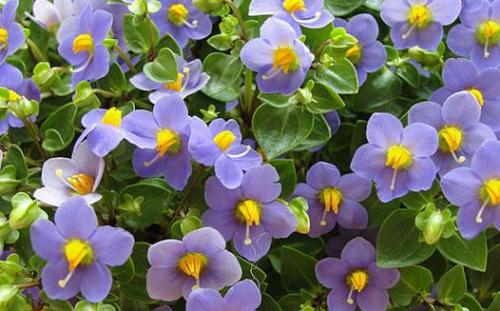
A Detailed Guide to the Planting Methods and Key Technical Points for Persian Violet
Persian violet (Exacum affine) is an annual herbaceous plant in the Gentianaceae family and a very lovely little flower. The plant is small and delicate, making it suitable for pot culture, and it is often placed together with Rieger begonia, shrimp plant, cyclamen and the like on stepped flower troughs, windowsill planting boxes and flowerbed displays, fresh and elegant, giving people a sense of comfort. Potted plants are best placed in a slightly shady spot with indirect sunlight, avoiding strong direct sunlight; under a shade shed with 70-80% light, growth is most ideal.
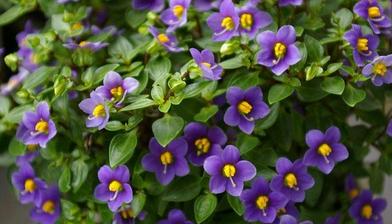
How to grow Persian violet
Soil: Generally, commercially available nutrient soil and sandy loam rich in organic matter are both suitable. If soil with poor drainage and aeration is used, special attention must be paid to watering.
Sunlight: Sufficient sunlight is beneficial for flowering, but the intense sun in summer will scorch the leaves, so it is recommended to place it in a spot with ample diffused light. Under a shade shed with 70-80% light, growth is most ideal.
Temperature: The optimal growing temperature for Persian violet is a night temperature of 16-18 degrees and a day temperature of 24-27 degrees. The potting soil should be kept constantly moist; excessive drought will hinder growth.
Water: Keep it constantly slightly to completely moist, but do not give water. In autumn and winter, once a day; in summer, once each in the morning and evening. When in full bloom, it will need more water than usual, and the leaves can be misted frequently to increase humidity.
Fertilizing: During the growth period, Hyponex No. 2 can be diluted 1000 times and applied once every twenty days as a top dressing to help the plant grow well. During the flowering period, switch to Hyponex No. 3 diluted 1000 times and apply once every seven to ten days to supplement phosphorus and potassium fertilizer, and remove spent flowers to avoid consuming nutrients, which can keep it blooming continuously.
Cultivation methods and precautions for Persian violet
In winter, when temperature and light are low, the plant is weaker and more susceptible to disease, so fertilizing should be reduced and water controlled.
Remove spent flowers immediately after they fade, which can promote bud formation and blooming.