Green Giant (Spathiphyllum) Planting Methods and Daily Care Tips
The Green Giant, also known as the Green Giant white palm, is a perennial shade-loving herbaceous plant belonging to the Araceae family and the Spathiphyllum genus. The Green Giant has a fairly strong ability to eliminate formaldehyde and ammonia; relevant test results show that every square meter of plant leaf area can eliminate 1.09 mg of formaldehyde and 3.53 mg of ammonia within 24 hours, and can purify the air in a room very well.
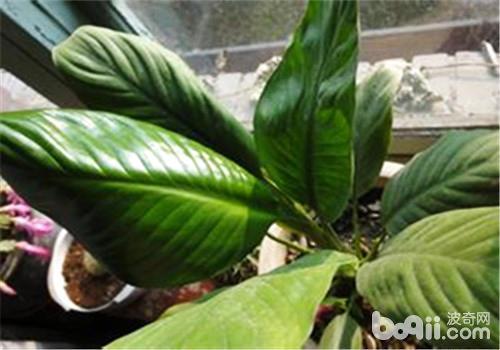
Green Giant cultivation methods
1. Propagation and seedling selection:
Virus-free test-tube seedlings bred through bioengineering technology should be selected; the plants grow uniformly, the seedlings are sturdy, and the root systems are well developed. After planting, they grow quickly and can be cultivated into large quantities of high-quality commercial flowers.
2. Preparation of potting soil:
Potting soil is the foundation for the good growth of the Green Giant, so the requirements for mixing potting soil are relatively high. The ratio is: three parts organic matter pond mud, or fertile soil, two parts river sand, two parts decomposed mushroom residue fertilizer, one part peat soil, one part perlite granules, one part decomposed pig manure or dried chicken manure, ten parts in total, mixed into a loose, breathable, well-drained mixed potting soil.

3. Fertilization:
When Green Giant seedlings are 10-20 cm tall in the early stage, generally there is no need to apply too much fertilizer; applying too much fertilizer causes streaks on the leaves to turn black, leaf rot, and is actually harmful. In the early seedling stage, a small amount of 1% urea and 0.1% monopotassium phosphate foliar fertilizer can be used; if conditions permit, growth hormone products can be added, such as "Yemianbao" or "Aiduoshou", sprayed at a dilution of 4500-5000 times for foliar application, once every fifteen days for better results. When the Green Giant grows to more than 30 cm tall, switch to compound fertilizer plus urea (ratio: 2% compound fertilizer, 1% urea) for fertilization. If peanut bran or bean bran is applied once every two months as organic fertilizer, the effect is even better.
4. Water management:
The Green Giant likes shady and humid environments, but does not need excessive watering. For the degree of moisture, generally it is enough if the potting soil feels moist when pressed with a finger. Each time you water, water thoroughly, that is, until water comes out from the bottom of the pot. If conditions permit, frequently spraying the leaf surface is even more ideal.
5. Pest prevention: The main pests of the Green Giant include snails, slugs, and hairy caterpillars, which eat the leaves of the Green Giant and damage the commercial value of the affected plants. They can be controlled with 1000 times concentration dichlorvos, or carbofuran.