Cherry Blossom Primrose Planting Methods and Technical Key Points
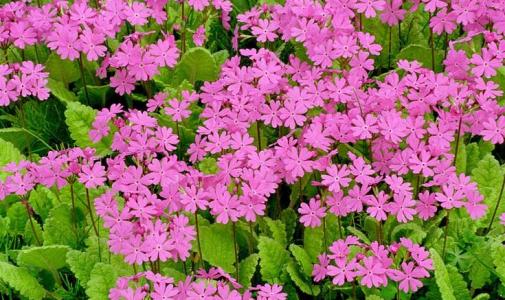
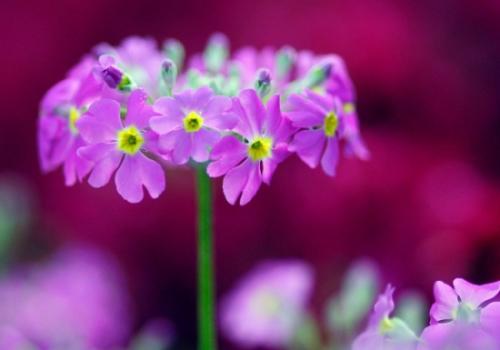
Cherry Blossom Primrose (scientific name: Primula malacoides) is a perennial herbaceous flower of the genus Primula in the family Primulaceae, also known as primrose, fairy primrose, and New Year flower. The leaves are all basal, forming a rosette-like leaf cluster. The flowers come in red, yellow, orange, blue, purple, white and other colors, arranged on the scape in umbel-like inflorescences, racemes, or capitula, or borne singly among the leaf cluster; the corolla is funnel-shaped or salver-shaped, the capsule is spherical or cylindrical, and the seeds are numerous and small.
Planting Methods
Cherry Blossom Primrose has soil requirements: it needs to be planted in potting soil that drains well, is loose, and contains plenty of humus. It loves moisture, yet needs to grow in a dry, warm, and ventilated environment, and the young sprouts must not be exposed to strong light or high temperatures. This flower grows well when planted in soil containing plenty of humus. In some southern regions, the sticky-textured soils all contain leaf mold.
Cherry Blossom Primrose is mostly propagated by planting. Its seeds have a short lifespan; if the seeds are stored for a long time, the germination rate will drop. Seeds collected in spring, when sown in autumn, will already have lost half their germination rate, so after collecting the seeds we should dry them in the sun and then refrigerate them; this reduces the seeds' metabolism and thereby extends their lifespan. The sowing time needs to follow the flowering period of Cherry Blossom Primrose. Plants that bloom in winter can be sown toward the end of spring, and plants that bloom and set seed in spring should be sown in early autumn. Seedlings planted in late spring will soon enter the hot summer, so during the seedling stage work must be done to cool and shade them; otherwise the seedlings can easily die under the scorching sun. If the planting quantity is small, or you are growing Cherry Blossom Primrose yourself, you can sow in April; by the time the blazing summer arrives, the seedlings will have grown larger, and grown seedlings have a certain heat resistance. Placing the pot in a semi-shaded spot ensures the plant is not harmed by the scorching sun and can also pass through summer safely.
When planting Cherry Blossom Primrose, choose a sandy soil containing humus. Cherry Blossom Primrose should grow in a warm, ventilated, and airy, moist environment; it is best placed in a semi-shaded spot or in diffused light, and must not be exposed to direct sunlight outdoors. Although Cherry Blossom Primrose likes a moist environment, the plant itself must not come into contact with too much water; avoid excessive water accumulating in the potting soil, otherwise it can easily cause root rot. When watering, control the amount of water; you can spray water around the Cherry Blossom Primrose. In the rainy season, when an outdoor potted Cherry Blossom Primrose is exposed to rain, drain it promptly.
Cherry Blossom Primrose can suffer from insect pests and diseases. Its diseases mainly occur on the leaves and root-stem parts. When disease is found on Cherry Blossom Primrose, treat it promptly; at the very beginning of the disease, chlorothalonil wettable powder can be used for treatment, applying once every 7 days. The insect pests that appear most often on Cherry Blossom Primrose are red spider mites and aphids. For home-grown Cherry Blossom Primrose, prevention is still the main approach; you can spray before and after flowering to prevent the appearance of pests and diseases.