How to Grow Marguerite Daisies and Things to Note
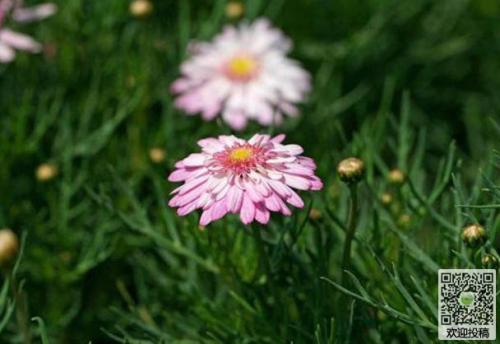
The leaves of the marguerite daisy are broadly ovate, elliptical or oblong, bipinnately parted. The first division is deep or nearly complete, and the second is shallow or half-divided. The achenes of the ray florets have 3 ribs with broad white membranous wings. The achenes of the bisexual florets have 1-2 ribs with narrow wings, plus 4-6 fine intermediate ribs. The pappus corona is 0.4 mm long. The flowering and fruiting period is from February to October. It is grown in pots for ornament, or used as background green foliage material in arrangements.
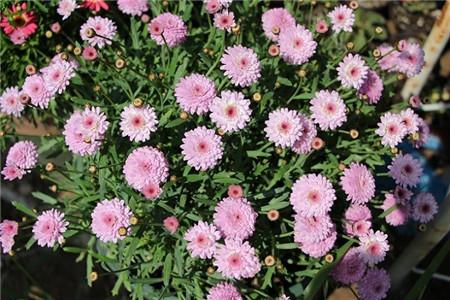
Growing Methods
-
The potting soil should be breathable yet retain water.
The marguerite daisy especially likes loose, breathable and fertile soil, and a medium that drains freely. If conditions allow, you can mix your own potting soil; the specific ratio is as follows: use 5 parts black mountain soil + 5 parts peat soil, and simply stir to mix. If you do not have black mountain soil, you can also substitute ordinary garden soil.
-
Pay attention to controlling the frequency of watering.
As a perennial herbaceous flower, the marguerite daisy has a fairly large water requirement during its peak growing season. You can observe daily whether the potting soil is dry and whether the leaves and branches look full of vigor; in a well-ventilated balcony environment, on clear days in spring and autumn, it is best to water thoroughly once every 1-2 days. In other seasons, water as appropriate.
-
Prune the branches and leaves promptly after flowering.
Pruning after flowering is also fairly important. You should promptly prune off the branches and leaves after flowering, so that nutrients can be concentrated in the flower buds, which can shorten the wait for the next flowering period; if during the flowering period you find any branches that have grown especially out of line, you can also cut them short promptly.
-
When repotting, be sure to bury base fertilizer.
Generally, repotting should be done once a year. When changing the pot, you must bury base fertilizer and apply enough of it. For the base fertilizer, organic fertilizer is recommended, or slow-release fertilizer. Note that when applying base fertilizer, use potting soil to separate it from the roots of the flower seedling; do not let the roots come into direct contact with the fertilizer, so as to avoid burning the roots.
-
It can be propagated by cuttings.
You can choose relatively mature branches after flowering and use a covered seedling box for cuttings; use a mix of peat soil plus vermiculite plus perlite as the potting soil for cuttings. The ideal time for cuttings is spring and autumn, when rooting and survival are relatively easy. Once the young cuttings have grown roots, you can repot and plant them out as appropriate.
-
Pay attention to ventilation and sunlight in the growing environment.
Sunlight is also very important. Although the marguerites I grow on the south balcony have many flowers, their branches are rather loose. Sunshine and rain are the best nourishment for plants. My marguerite daisies have always been left out on the terrace (here the summer reaches as high as 38 or 39 degrees, and winter goes down to minus 3 or 5 degrees). Because there is a grape trellis above the terrace and trees and climbing roses beside it, in summer they do not get too much direct sun. In winter, the few pots I focus on caring for are placed where the rain cannot reach them.
-
You can train it into a marguerite daisy flower ball.
Generally speaking, a marguerite daisy that has just rooted from a cutting will not grow into a very dense ball in the first year. Only after surviving the intense heat of summer and the severe frost of winter does the marguerite daisy tend to grow into a denser, larger ball. Especially by March or April of the second year, after cleaning up dead leaves and repotting with fertilizer, the marguerite daisy can quickly grow very dense shoots and buds, and its size can reach more than 3 or 4 times the original.