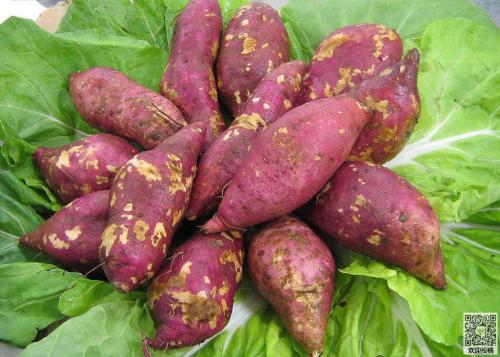
Sweet potato (scientific name: Dioscorea esculenta (Lour.) Burkill): also known as sweet potato, a twining herbaceous vine in the Convolvulaceae family, genus Dioscorea. The underground tuber terminates in an ovoid tuber enlarged at the tip of the branching end, with a pale yellow, smooth outer skin. The stem twines to the left, has spines at the base, and is covered with T-shaped soft hairs. The simple leaves are alternate and broadly heart-shaped; the male inflorescence is a spike, solitary, male flowers are sessile or have very short stalks; bracts are ovate with acuminate tips; the perianth is shallowly cup-shaped and covered with short soft hairs; the capsule is three-angled, slightly concave at the tip, truncate at the base, with each angle winged; seeds are round and winged. The flowering period is early summer.
Propagation Methods
Sweet potato is a cross-pollinated crop and is self-infertile; progeny reproduced from seed have highly inconsistent traits and low yield. Therefore, apart from hybrid breeding, sexual reproduction is rarely used in production. Because the regenerative capacity of vegetative organs such as tuberous roots and stems and vines is strong and can maintain the traits of good varieties, vegetative propagation using tuberous roots, stems and vines, and vine tips is adopted in production. In northern China, early spring temperatures are relatively low, so using heated seedbeds for raising seedlings can extend the growing period of sweet potato and increase yield.
Tuberous Roots
Seedling propagation: This is the most commonly used propagation method in sweet potato production. It uses the latent adventitious bud primordia beneath the periderm of tuberous roots to germinate and grow shoots, which are then cut and transplanted into the field, or cut and planted in a cutting nursery for propagation, after which cuttings are again taken from the nursery and transplanted into the field. Although this method is not economical in terms of labor and land use, it readily produces excellent seedlings.
Direct planting propagation: Small tubers are planted directly in the field, and the small tubers themselves enlarge into large tubers (nest melons), or small tubers are planted shallowly with most of the mother tuber exposed above the soil surface to lignify it, controlling the enlargement of the mother tuber and promoting the adventitious roots on the mother tuber to enlarge into small tubers (eggs under the nest melon). This method requires a large amount of seed material and is prone to infection by pathogens, so it is rarely used in production.
Stems and Vines
Using cuttings from spring sweet potato fields for planting in autumn and winter sweet potato fields, or cutting vines from autumn sweet potato fields and planting them in a nursery for propagation, then after overwintering, cutting vines again and transplanting them into the field. This is relatively common in the warm winter areas of southern China. This method is extensive in operation, can save labor and land, and is relatively economical. If attention is paid to selecting good seedlings, they are not necessarily inferior to seedbed seedlings. However, if field seedlings are used for planting year after year, the development of the seedlings gradually declines and degenerates, the tuber shape becomes smaller, the proportion of small tubers increases, and yield decreases. Therefore, after 2-3 years, seed tubers must be used for seedling raising to renew once.
Cultivation Techniques
Soil
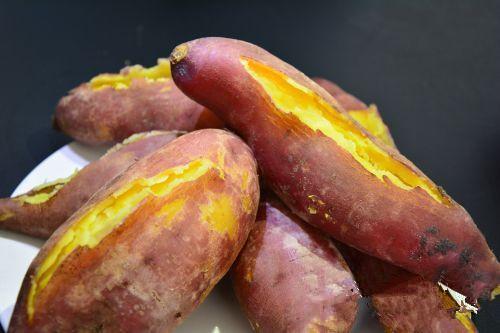
Sweet potato is tolerant of poor soil and has no strict soil requirements. However, loam or sandy loam with deep, loose soil, good drainage, relatively high organic matter content, and a certain level of fertility is preferable. This type of soil is loose with good aeration; tuberous roots are thick and short, uniform, with bright skin color, good eating quality, high dry matter rate, and good storage tolerance. However, sandy loam lacks nutrients and has poor water retention, making it susceptible to drought, so fertilization and soil improvement are necessary to obtain high yields. Heavy, compacted soil has good water retention but poor aeration and is prone to waterlogging damage; tuberous roots are slender, with thin, pale skin, high water content, low dry matter rate, poor eating quality, and poor storage tolerance.
Land Preparation
The seedbed site should be chosen as a plot sheltered from wind and facing the sun, with high terrain, good drainage, convenient management, and fertile soil; preferably a new seedling-raising site, as old seedling-raising sites are often susceptible to black spot disease and nematode disease. Before arranging seed tubers, plow the seedling-raising site once to achieve fine soil particles, loose soil, a deep plow layer, then harrow level and open beds and form ridges. Bed width 1.5 m, bed height 0.2 m, ditch width 0.2 m. The length of the seedbed depends on the seedling site, generally not exceeding 6 m.
Seed Selection
Select healthy seed tubers with the characteristics of the variety, bright skin color, strong vitality, and moderate size (0.15-0.25 kg each), strictly removing diseased tubers with dull skin color, those that have suffered cold damage, wilted and softened tubers, those that have lost too much water, and damaged tubers. Before sowing, soaking the seeds in a 300-fold dilution of 70% thiophanate-methyl for 10 minutes for disinfection gives better results.
Density
Planting density varies with season, variety, and purpose. Spring and summer sweet potatoes: 3000-5000 plants per mu; autumn and winter sweet potatoes: 4000-6000 plants per mu. Strive to achieve a leaf area index of 3-4.5 during the peak stem and leaf growth period. For forage sweet potato, because stems and leaves are continuously cut, under conditions of increased fertilizer application, density can be increased to 6000-8000 plants per mu.
Temperature
When tuberous roots are kept above 35°C for a long time, because the respiration intensity of the tubers is high and nutrient consumption is great, "hollow heart" is likely to occur. When the temperature reaches above 40°C, heat damage and tuber rot are likely to occur. Under high temperature conditions of 35-38°C, in 4 days, the wounded parts can rapidly form callus tissue and increase the formation of disease-resistant substances (ipomeamarone), improving resistance to black spot disease. However, long-term exposure to 35°C or above inhibits the growth of young tubers. Therefore, during seedling raising, after high-temperature sprouting promotion, the seedbed temperature should be lowered to about 31°C. After emergence, the temperature should preferably be controlled at 25-28°C. 5-6 days before use, the bed temperature should be lowered to about 20°C for hardening off the seedlings.
Water
The moisture of the bed soil and the air humidity of the seedbed are closely related to root formation, sprouting, and shoot growth of tuberous roots. The amount of moisture also affects the seedbed temperature and soil aeration. Therefore, water is one of the important conditions for sweet potato seedling raising. During the tuber sprouting period, it is advisable to maintain both the relative humidity of the bed soil and the relative air humidity at about 80%, keeping the tuber skin always moist. Under normal temperature and humidity conditions, tuberous roots first form roots and then sprout; if the temperature is suitable but moisture is insufficient, they sprout first and then form roots or do not form roots; if the bed soil is too dry, the tubers neither form roots nor sprout. After emergence, if the bed soil moisture is insufficient, the root system is difficult to extend, seedlings grow slowly, leaves are small, stems are thin and hard, forming old small seedlings; if moisture is excessive, seedlings grow quickly, forming weak seedlings. During the young tuber growth period, it is advisable to maintain the relative humidity of the bed soil at 70-80%. To make the sweet potato seedlings grow robustly, water must be reduced during the later hardening-off period, with relative humidity dropping below 60%. The seedlings raised in this way are robust and favorable for survival.
Air
During seedling raising, all life activities in the process of tuberous roots forming roots, sprouting, and growing shoots require energy obtained through respiration. When oxygen is insufficient, respiration is hindered; severe oxygen deficiency forces anaerobic respiration, producing alcohol. Because the accumulation of alcohol causes self-poisoning and leads to tuber rot, ventilation and air exchange must be attended to during the seedling-raising process. Only with sufficient oxygen supply can normal growth of sweet potato seedlings be ensured, meeting the requirements of strong and numerous seedlings.
Light
During the tuber sprouting stage, light has no direct effect on root formation and sprouting, but weak light affects the seedbed temperature. Strong light can make the seedbed warm up quickly and reach a high temperature, promoting root formation and sprouting. After emergence, light intensity has a marked effect on the growth rate and quality of sweet potato seedlings. With insufficient light, photosynthesis weakens, seedling leaves become yellow-green, tissues are tender and weak, excessive vegetative growth occurs, and survival after transplanting is difficult. Therefore, during the seedling-raising process, light should be fully utilized to increase bed temperature, promote photosynthesis, and make the sweet potato seedlings grow robustly.
Nutrients
Nutrients are the material basis for tuber sprouting and sweet potato seedling growth. The nutrients needed in the early stage of seedling raising are mainly supplied by the tuberous roots themselves; as the seedlings grow, they gradually shift to absorbing nutrients from the bed soil through the root system. After two or three cuttings, the nutrients in the tuberous roots gradually decrease, and the nutrients absorbed by the root system correspondingly increase. Sweet potato seedling growth requires relatively more nitrogen fertilizer; with insufficient nitrogen fertilizer, seedling growth is slow, leaves are small, leaf color is pale yellow, plants are short and weak, and root development is poor. Therefore, during seedling raising, fertile bed soil should be used and sufficient organic fertilizer applied; in the middle and late stages of seedling raising, an appropriate amount of quick-acting nitrogen fertilizer should be applied as a top dressing to supplement nutrient deficiency.