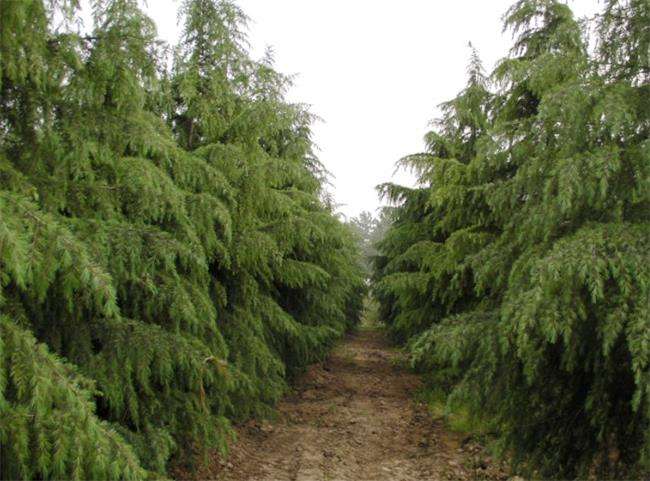
Detailed Explanation of Cedar Planting Methods and Technical Key Points
Cedar is a plant of the genus Cedrus in the family Pinaceae. It is an evergreen tree, with a spire-shaped crown, large branches spreading horizontally, and branchlets slightly drooping. The leaves are needle-shaped, 8-60 cm long, hard in texture, gray-green or silver-gray, scattered on long shoots and clustered on short shoots. It flowers from October to November. The cones mature the following year, elliptical-ovate, reddish-brown when ripe.
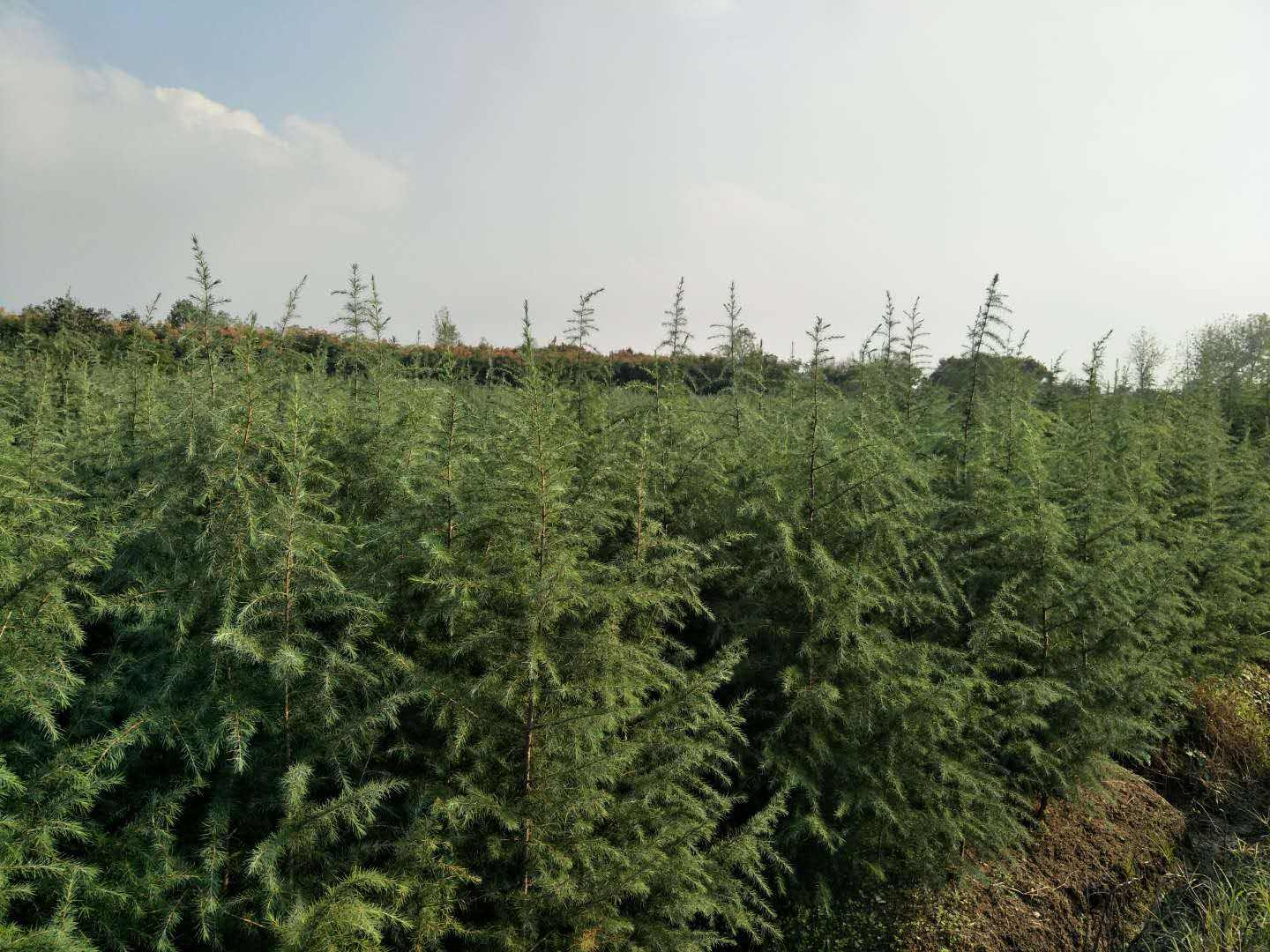
Propagation techniques:
Generally propagated by sowing and cuttings. Sowing can be done in mid-to-late March, with a sowing rate of 75 kg/hectare. Sowing can also be done earlier to increase seedling disease resistance. Choose sandy loam with good drainage and aeration as the seedbed. Before sowing, soak the seeds in cold water for 1-2 days, and sow after drying; they begin to germinate after 3-5 days, lasting about 1 month, with a germination rate of 90%. During the seedling stage, attention should be paid to shading and preventing damping-off disease and cutworm damage. One-year-old seedlings can reach 30-40 cm in height and can be transplanted the following spring. Cutting propagation can be carried out in both spring and summer. In spring, it is best before March 20; in summer, late July is optimal. In spring, cut one-year-old robust branches from young mother trees, treat with rooting powder or 500 mg/L naphthaleneacetic acid to promote rooting. Then insert them into well-aerated sandy loam, water thoroughly, and set up a double-layer shade frame for shading. In summer, it is best to select semi-lignified branches of the current year as cuttings. In terms of management, in addition to strengthening shading, plastic film should also be added to maintain humidity. After 30-50 days of insertion, callus tissue can form; at this time, a solution of 0.2% urea and 0.1% potassium dihydrogen phosphate can be used for foliar fertilization.
Cultivation techniques:
Pot selection
It is best in spring from March to April, and also possible after autumn. Cedar seedlings dug from the ground must carry native soil to facilitate survival. Also prune dead roots, spread out the fibrous roots, cover with fine soil, gently shake the pot, and press firm with a bamboo stick so that the pot soil and root system are firmly attached. For the planting position, it is best for the main trunk to lean toward one side at the 1B3 position.