Buckwheat Planting Methods and Key Field Management Techniques
Buckwheat is sweet in nature and cool in flavor; it has the effects of stimulating the appetite and relaxing the intestines, and of descending qi and relieving food stagnation. It is used to treat colic, gastrointestinal food stagnation, and chronic diarrhea; at the same time, buckwheat can also be made into noodles, hele, liangfen, and other foods.
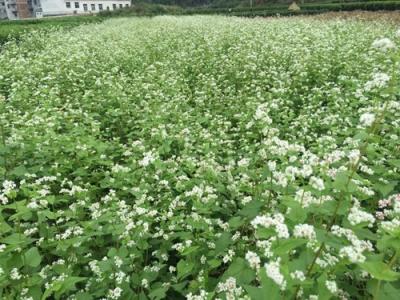
Buckwheat cultivation techniques:
1. Choosing the previous crop and preparing the land. Buckwheat should not be grown continuously; the best previous crop is potatoes or millet. Buckwheat is a taproot crop, and its root system is not very well developed; moreover, the sprouts are soft, so before sowing, shallow plowing should be done to destroy the stubble and the land should be finely prepared, creating good environmental conditions for ensuring a full and uniform stand.
2. Seed treatment. Before sowing, sun the seeds for 2-3 days, then use the method of soaking the seeds in warm water for seed selection, that is, soak the seeds in warm water at 35 degrees C for 15 minutes, remove the floating empty grains, then take out the plump grains that have sunk to the bottom and dry them, and treat the seeds. Seed treatment methods: First, soak 1-5 kg of plant ash in water for 1-2 days, spray the seeds with the plant ash liquid one day before sowing, using 1 kg of plant ash liquid for 10 kg of seeds. Then mix the plant ash residue into the seeds and stir well; after 3-4 hours, if the seeds are not clumped, they can be sown, which can increase yield. Second, treat seeds with 0.5 kg of 40% quintozene powder for 50 kg of seeds, which can control damping-off, ring rot, brown spot, and white mold.
3. Sow promptly. Buckwheat growth likes cool temperatures but fears frost. If sown too early, the early growth period is easily affected by high temperatures; if sown too late, the late growth period is easily damaged by frost. Farmers' experience from many years of cultivation is: early at the Start of Autumn, late at White Dew, and sowing at the End of Heat is just right.
4. Increase fertilizer application. Buckwheat is tolerant of poor soil, but appropriately increasing phosphorus and potassium fertilizer can significantly increase yield; however, potassium chloride must not be applied, because chloride ions can trigger spot disease and lead to reduced yield. Apply 20 kg of superphosphate and 6 kg of urea per mu as base fertilizer, which is both economical and significantly effective for increasing yield.
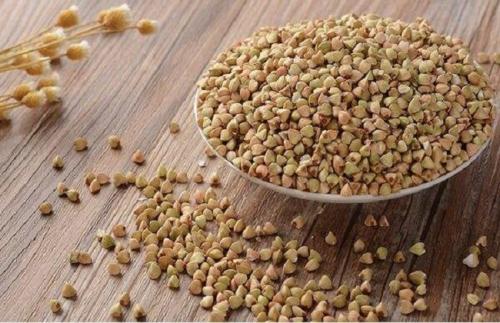
5. Reasonable close planting. If buckwheat is too sparse or too dense, yield will be affected. Production practice has shown that a sowing rate of 3.5-4 kg per mu is appropriate, with 140,000-160,000 plants retained per mu. Sowing depth is 3-4 cm, and the soil covering thickness is generally 3 cm. After sowing, if the soil is dry, it can be pressed once with a wooden roller; if the soil is wet, it can be dragged once with a wooden pole pulled by a horse.
6. Field management. Loosen the soil in time to promote growth and development, and thin the seedlings at the three-leaf stage so that the seedlings are evenly distributed. When the seedlings are 9-10 cm tall, cultivate once every 10 days until the budding stage when the rows close. At the beginning of flowering, spray 0.3% potassium dihydrogen phosphate solution and 0.1% ammonium molybdate or boric acid solution. At full bloom, carry out artificial pollination, preferably from 8-10 a.m. The method is to pull a rope or wooden pole horizontally across the plants 2-3 times, once every three days. Farmers with the means can place two boxes of bees per 15 mu during full bloom. Timely control pests; timely control armyworms, meadow moths, hooktip moths, and aphids.
7. Harvest at the right time. Before Frost's Descent, when 70% of the grains on the whole plant are dark brown, harvest promptly in the early morning and evening, tie into bundles or small bundles, and place upright indoors so that the buckwheat can fully after-ripen.