Detailed Explanation of Suitable Orange (Sugar Mandarin) Cultivation Techniques and Methods
The sugar mandarin, also known as the October orange, originated in Shatangkeng Village, Huangtian Town, Sihui City, Zhaoqing. Its main producing areas now include: Guangxi: Guilin, Wuzhou (Wuzhou Cangwu), Baise (Xilin sugar mandarin), Lipu, Yongfu, Lingui, Quanzhou, Yangshuo, Mengshan, Jinxiu, Xiangzhou, Pingle, Zhaoping, Pingnan. Guangdong: Huaiji, Guangning, Sihui. The fruit of the sugar mandarin is oblate, with a protruding navel-like bump at the top and a sunken stem-end navel; its color ranges from orange-yellow to orange-red, and the rind is thin and easy to peel. The sugar mandarin produced in Huangtian Town, Sihui, is especially delicious and extremely sweet, with no residue and a delicate texture, making it truly an excellent product.
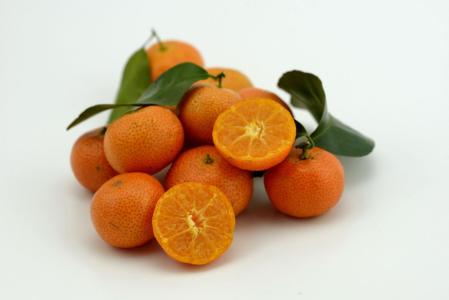
Cultivation techniques for sugar mandarins:
1. The growth of sugar mandarin trees is largely affected by temperature. Sometimes even a temperature difference of 0.5 degrees C can bring different results for growth. The most suitable temperature for sugar mandarin growth is 12.5-37 degrees C; during the growing period, temperatures that are too low or too high are both unfavorable to its growth and development. For sugar mandarin cultivation, the annual sunshine hours should be suitably controlled within 1200-2200 h, the annual rainfall should be suitably controlled within 900-1100 mm, and the relative air humidity should be controlled within 70%-76%. In addition, the soil moisture content should be suitably controlled within 60%-80%.
2. There are many suitable soil types for planting sugar mandarins, such as: coastal mudflat soil, purple soil, sandy beach soil, and red-yellow soil; in fact, as long as the soil pH is controlled within 4.5-8, sugar mandarins can be planted. In addition, the root growth of sugar mandarins requires the soil organic matter content to be within 2%-3%, and it also requires good drainage, good structure, loose texture, and high oxygen content.
3. The stage from planting to flowering is the young tree stage, which generally lasts 2 years. At this time, what needs to be done is to strengthen tree nutrition, cultivate the canopy and root system, and carry out reasonable pruning. After planting, pruning should be carried out, leaving 5-6 short branches on the main branches, strengthening fertilizer and water management, and promoting the sprouting of new shoots. After the new shoots sprout, select 3-4 shoots with consistent growth and even distribution as auxiliary main branches. After the new shoots mature, cut them back again to promote shoots. Repeat this many times to form the canopy.
Summer is the peak growth season for young trees. In this way, in order to bear fruit earlier, bud removal should be carried out to promote shoots, so that summer shoots emerge uniformly. In the second year, the main task is reasonable pruning to expand the canopy. In addition, the amount of fertilizer applied during the shoot period is more than double that of the previous year, to promote the early formation of the canopy.