A Detailed Explanation of Japonica Rice Cultivation Methods and Key Technical Points
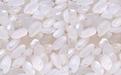
Japonica rice is a type of rice and a common staple food. It is cultivated throughout China, with a cultivation history of more than 6,900 years, and is one of the specialties of Chinese food culture. It is mainly produced in Northeast China. Japonica rice is made by milling non-glutinous japonica-type paddy. The grains are generally oval or round, plump and thick, with a cross-section that is nearly circular, and a length-to-width ratio of less than two. The color is waxy white, and the grains are transparent or semi-transparent, with a hard and resilient texture. After cooking, they are highly sticky and oily, soft and delicious, but the cooked rice yield is low. According to harvest season, japonica rice is divided into early japonica rice and late japonica rice. Early japonica rice is semi-transparent, with a larger white belly, fewer hard grains, and poorer grain quality. Late japonica rice is white or waxy white, with a small white belly, many hard grains, and excellent quality. The yield of japonica rice is much lower than that of indica rice. It contains a large amount of carbohydrates, about 79%, and is a main source of calories. Japonica rice is the seed kernel of japonica paddy. Its taste is sweet and mild, and its nature is balanced. Eaten daily, it is a nourishing food.
Cultivation Management
In cultivation, reasonable regulation should be carried out around the high-yield cultivation strategy of "increasing transplanting density, promoting early tillering in the early stage; strengthening plants and thick stems in the middle stage to promote large panicle formation; and in the late stage, maintaining roots and protecting leaves to increase the seed-setting rate." 10 You 18 has medium tillering ability, so emphasis is placed on cultivating multi-tiller strong seedlings during the seedling-bed stage. By sowing sparsely, each plant carries 3 to 4 strong tillers at transplanting. For the net seedling board sowing rate, dry-raised seedlings should not exceed 50 kg/667 sq m, and wet-raised and water-raised seedlings should not exceed 40 kg/667 sq m. The seedling age should not exceed 35 days.
Fertilization Management
The base fertilizer for the seedling bed is generally 12.5 kg/667 sq m of diammonium phosphate, 7.5 kg/667 sq m of urea, 5.0 kg/667 sq m of potassium sulfate, and 1.5 kg/667 sq m of zinc sulfate. Pay attention to the prevention and control of diseases, insects, and weeds. On the premise of strong seedlings, the seedling age should preferably be 30 to 35 days, and transplanting should be shallow and uniform. Under medium-to-high fertility conditions, the plant spacing is 13.3 cm x 25 cm, with 2 to 3 plants per hill, planting at least 18,000 to 20,000 hills/667 sq m, and about 80,000 to 100,000 basic seedlings/667 sq m. Lean fields and late-transplanted fields should be appropriately densified, and the transplanting density can be increased to 22,000 hills/667 sq m. 10 You 18 has deep roots and luxuriant leaves, strong absorption capacity, little ineffective growth, little waste of nutrients and photosynthate, and high fertilizer use efficiency. Fertilizer and water management should adopt the principle of "promote early, control mid-season, and slightly supplement later," with nitrogen, phosphorus, and potassium fertilizers used in combination, and attention paid to the application of zinc fertilizer.
The amount of fertilizer applied depends on the fertility of the paddy field and the yield target. For fields with a yield above 700 kg/667 sq m, 15 to 20 kg of nitrogen, 8 to 10 kg of phosphorus pentoxide, and 15 to 20 kg of potassium oxide are required per 667 sq m. This is equivalent to 35 to 45 kg of urea per 667 sq m, 45 to 50 kg of calcium magnesium phosphate fertilizer with a phosphorus content of 16%, or 15 to 20 kg of diammonium phosphate, and 15 to 20 kg of potassium sulfate.
Fertilization Methods
In terms of fertilization methods, if the base fertilizer is mainly organic fertilizer, the amount should be no less than 1,800 kg/667 sq m; if it is mainly chemical fertilizer, the chemical fertilizer application amount should account for 30% of the nitrogen fertilizer, 100% of the phosphorus fertilizer, and 70% of the potassium fertilizer for the whole growth period. Tillering fertilizer is mainly nitrogen fertilizer. At 7 to 10 days after transplanting, the nitrogen fertilizer applied per mu accounts for 50% of the whole growth period. Panicle fertilizer is applied after sufficient tillers, field drying, and rewatering. The nitrogen fertilizer applied per mu accounts for 15% of the whole growth period, and potassium fertilizer accounts for 25%. Grain fertilizer is applied after heading. When applying it, it should be applied according to the seedlings and weather as appropriate. If the population leaf color fades and the weather is mostly clear, apply grain fertilizer; otherwise, do not apply it. Generally, grain fertilizer applies nitrogen and potassium fertilizer at 5% of the total amount, and foliar spraying can also be carried out. A nutritional foliar fertilizer can be sprayed on the leaves during the heading and flowering stage.
Irrigation Management
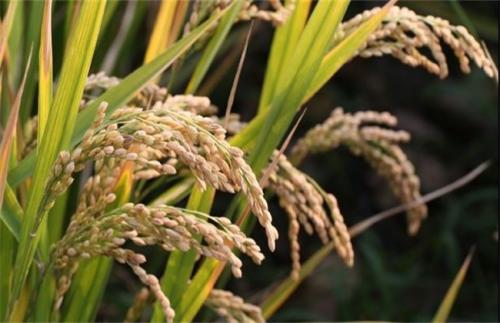
In the early stage, shallow-water irrigation is used (regreening stage). After rice transplanting, because the root system's ability to absorb water is relatively weak, and when high temperatures and strong winds occur, the transpiration of leaves is relatively high. Therefore, after transplanting, a water layer of 3 to 5 cm should be maintained. After the rice turns green, intermittent irrigation is adopted, that is, irrigating shallow water once, waiting for it to dry naturally, and then irrigating again when there is water in the footprints but no water on the field surface, and repeating this cycle. After the rice has enough tillers, field drying is used to control the growth of ineffective tillers, increase soil permeability, and achieve effects such as root growth, stem strengthening, and lodging resistance. Field drying operation: for low-lying fields where the seedlings grow too vigorously, close up early, have drooping leaves, and drain poorly, drain and dry heavily. The degree of field drying is that the field surface turns white, fine cracks open on the field surface, white roots appear on the surface, and the leaf color fades and stands upright, controlling ineffective tiller growth, promoting well-developed roots, and strengthening stems. For fields with weak growth, difficult irrigation, and water leakage, light exposure should be adopted. During the booting stage, keep mainly moist, maintaining a water layer on the field surface. During the heading stage, maintain shallow water in the field. During the grain-filling stage, the paddy field should be alternately dry and wet to enhance soil permeability and maintain old rice plants. Stop water about 7 days before harvest. Avoid draining too early to prevent premature senescence, which affects rice quality and reduces the seed-setting rate.
Seed Soaking Management Before Sowing for Disease Control
Before sowing, soak seeds with seed-soaking agent to control bakanae disease and rice white-tip nematode. During the seedling-bed stage, focus on the control of pests such as rice thrips, rice water weevil, and rice planthopper, as well as weeding. Generally, use Daolefeng + imidacloprid and chlorpyrifos + Zhubao + Jinpi to control pests once each. Carry out timely control of diseases and pests in the main field according to disease and pest forecasts. Within 7 days after transplanting, use Caokexing + butachlor for timely chemical weeding. Use insecticides such as bisultap, imidacloprid, Daolefeng, and omethoate to focus on the control of the first and second generations of striped stem borer, pink stem borer, rice leaf roller, rice planthopper, and other pests. Before booting, at initial heading, and at full heading, use jinggangmycin to control sheath blight.