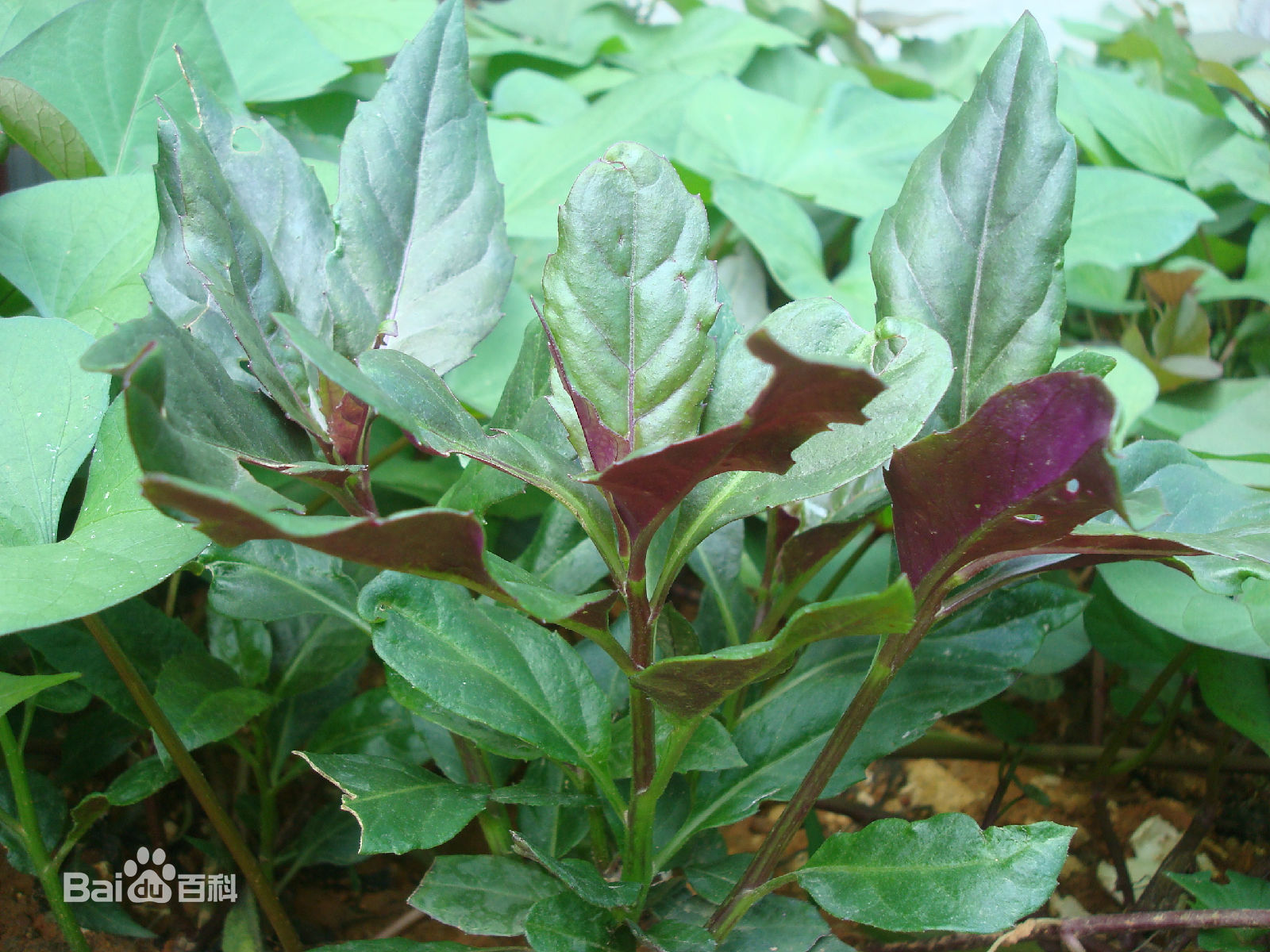
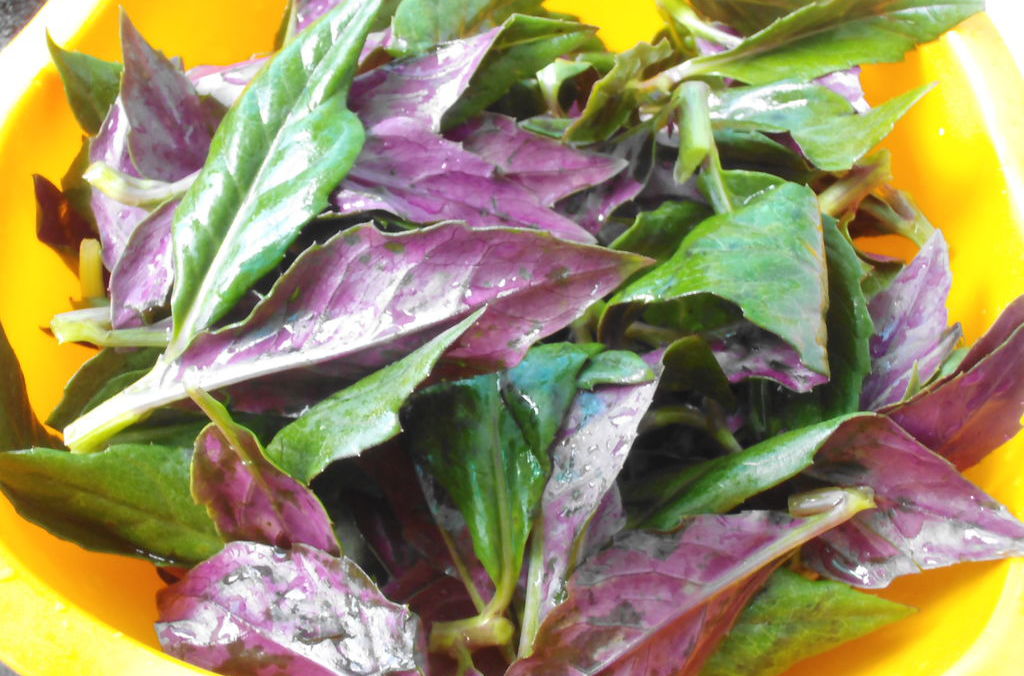
Gynura bicolor (scientific name: Gynura bicolor (Roxb. ex Willd.) DC.), also known as Hongfengcai (Taiwan, China), Liangse Sanqi Cao (Hainan Flora), Hongcai (Taiwan, China), etc., is a perennial herbaceous plant of the genus Gynura in the Asteraceae family. It grows 50-100 cm tall. The upper surface of the leaves is green, while the underside turns purple when dried; both surfaces are hairless. It is rich in nutrients and highly valuable. Moreover, Gynura bicolor grows vigorously and has strong stress resistance, is basically free from pest and disease damage, and is not contaminated by pesticides. It is cultivated in rural areas of southern China such as Guangdong, Guangxi, Hainan, Fujian, Zhejiang (called Guanyinhao in the Lishui area of Zhejiang), Yunnan, Jiangxi, Sichuan, Taiwan, China and other places, and can be used for both medicinal and culinary purposes.
Propagation Methods
Cuttage: This is the method commonly used in cultivation. It can be carried out year-round in South China, while in other regions it is best done from April to August. If cultivated under protection, year-round cuttage is also possible. Before cuttage, prepare a seedbed. Select deep, fertile and loose sandy loam, plow and harrow it, and make beds 1.2-1.3 m wide, 20 cm high, and about 20 m long. Select well-grown, sturdy branches from the mother plant and cut them into cuttings, each about 10 cm long. Cut the base at a slant, keep 2-3 leaves at the upper end of the cutting, and remove the lower leaves. When inserting, first make a hole with a small stick at a 45-degree angle to the bed surface, pull out the stick, then insert the cutting along the direction of the hole to a depth of 5-7 cm, and press the soil firmly by hand so that the cutting is in close contact with the soil. After inserting, water thoroughly immediately, and water frequently to maintain soil moisture above 80%. After about 1 month, when new roots have grown, it can be transplanted. It can also be directly inserted into the planting field. If propagating only a small number of plants, water rooting in a bottle can also be used; roots will grow in about half a month, and then it can be planted.
Root division: Before sprouting in early spring in February, dig up the perennial roots underground, divide them into several plants, and plant them in a seedbed or planting hole. Water frequently to keep them moist, and new plants can also grow.
Planting
Seedlings propagated by cuttage or root division in the seedbed can be planted after about 40-50 days. In order to obtain high yield and high-quality products, Gynura bicolor should be planted in a place with deep, fertile soil rich in organic matter, little exposure to the scorching summer sun, and relatively warm winters. The site should be high and dry, not prone to water accumulation, with the groundwater level below 60 cm. After selecting the land, deep plowing should be carried out and base fertilizer applied. Apply 3000-5000 kg of decomposed barn manure, 200 kg of lime, and 100 kg of plant ash per 667 sq m. Then make narrow beds 0.6-0.9 m wide, cm high, and about 30 m long. Plant 2-3 rows per bed, with a row spacing of 30 cm and a plant spacing of 15-20 cm. The planting depth should be 2-3 cm deeper than in the seedbed. Water immediately after planting to promote survival. Because the root system of the seedlings is relatively weak, try to keep soil around the roots when transplanting and minimize root damage.
Field Management
Fertilizer and water management: Just after planting, pay attention to watering and keep the soil moist. One week after the seedlings survive, apply about 5% dilute manure water or a 0.1% urea solution. Harvesting can begin 30-40 days after planting. After each harvest, apply a topdressing, using 30% dilute manure water or a 2% urea solution poured over the plants. After every 2-3 harvests, supplement some phosphorus and potassium fertilizer, such as broadcasting 100 kg of plant ash per 667 sq m, or 10 kg of calcium magnesium phosphate per 667 sq m. Watering is very important. In addition to watering together with fertilization, supplementary watering is also needed according to the weather. Especially from July to September, when the temperature is high and there is drought, water should be given 1-2 times every day. This keeps the branches and leaves growing vigorously, brightly colored, and crisp and tender.
Intertillage, weeding and earthing up: After each harvest, or after heavy rain, or after watering, intertillage should be carried out to loosen the soil, so as to promote root growth and the sprouting of axillary buds, and to remove weeds and save nutrients. At the same time, soil should be earthed up around the roots, gradually moving soil from between the rows toward the root zone, to promote the emergence of adventitious roots and the sprouting of new plants from root buds, and to help protect the root system through the winter.
Small shed covering: increasing winter yield: When the temperature drops to around 15 degrees, Gynura bicolor grows slowly. As the temperature drops to the point of frost, the aboveground parts die. In order to extend the harvest period and achieve year-round marketing, begin covering with a small shed or large shed in late October, so that it can be harvested year-round.
Harvesting
After transplanting, harvesting can begin after about 25 days. Harvest 7-8 tender upper stems and leaves, about 15 cm long. At the first harvest, leave 2-3 nodes at the stem base so that the newly emerging tender stems are slightly prostrate. After half a month, a second harvest can be carried out. From the second harvest onward, leave only one node at the base of the stem, so as to control plant height and plant shape. In the south, growth is slower in winter, and harvesting is done once a month. In the Beijing area, it can be harvested from April to October, and August to September is the peak harvest period.