Chickweed Planting Methods and Cultivation Techniques
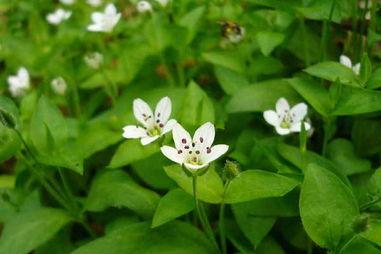
Chickweed, also known as: goose intestine herb, goose ear tendon-stretcher, chicken intestine, Latin name: Stellaria media (L.) Cyr. A annual or biennial herb of the Caryophyllaceae family and the genus Stellaria, 10-30 cm tall. The stem is decumbent or ascending, more or less branched at the base, often tinged with pale purplish red, covered with 1 (-2) rows of hairs. The leaves are broadly ovate or ovate, with acuminate or acute tips, tapering or nearly cordate at the base, and entire margins; the basal leaves have long petioles, while the upper leaves are often sessile or have short petioles. The lax cyme is terminal; the pedicels are slender and weak, the capsule is ovate, slightly longer than the persistent calyx, splitting into 6 valves at the tip, with numerous seeds; the seeds are ovate to nearly round, slightly flattened, reddish brown, 1-1.2 mm in diameter, with hemispherical tuberculate protrusions on the surface and a fairly prominent ridge.
Ecological Habits of Chickweed
Chickweed prefers a mild and humid environment. In Yunnan, it generally grows vigorously during the rainy season and can also be seen in winter. The suitable growth temperature is 13-23°C, and it can tolerate light frost.Chickweed is distributed in temperate regions and within the range of 500-3700 m in the middle-low and middle-high altitude areas of Yunnan, mostly on hillsides, under forests, along field edges, and by roadsides.
Medicinal Value of Chickweed
The most important value of chickweed can be said to be its use as medicine. Chickweed has been recorded as a medicinal herb since ancient times. Not only can traces of chickweed be found in the "Illustrated Classic of Materia Medica," but the two characters for chickweed can also be seen in the "Sichuan Materia Medica" and the "Compendium of Materia Medica." As for the functions of chickweed after being used as medicine, we should discuss them carefully. There are many chemical substances that can be extracted from chickweed, such as saponins, isoorientin, genistein, and so on contained in the whole plant, most of which are excellent materials for medicinal use. After chickweed is used as medicine, its main function is to clear heat and detoxify. For our usual minor internal heat and the like, chickweed can basically cure it. In addition, chickweed also invigorates the blood and relieves pain, which can be called good news for women. Many women's menstrual pain problems can be treated with it. In addition, for women during lactation, chickweed also has a certain milk-promoting function.
Ornamental Value of Chickweed
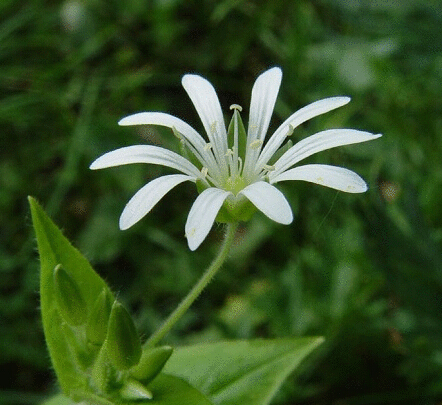
Generally speaking, as long as it is a plant, it inevitably has a certain ornamental value, especially plants like chickweed, which have low cost, great value, white flowers, and a good appearance. They are very suitable for keeping in the home, pleasing to the eye, and can also cultivate one's character. Placed in a garden, while decorating the garden, they can also save space. They not only make full use of the remaining open space in the garden, but also play a great role in beautifying the cityscape.
Economic Value of Chickweed
Having medicinal value and ornamental value lays the foundation for economic value. In some areas, planting chickweed for medicinal use can bring certain economic benefits to local residents and realize the economic value of chickweed.