Pansy Planting Methods and Care Tips Explained in Detail
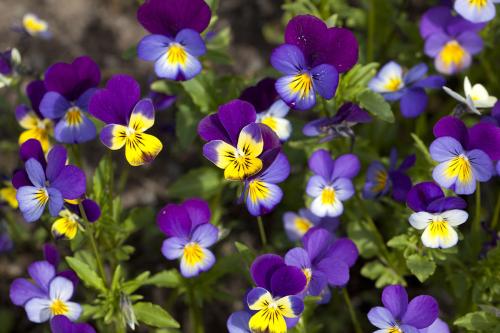
The pansy (scientific name: Viola tricolor L.) is a biennial or perennial herbaceous plant of the genus Viola in the family Violaceae. The basal leaves are long ovate or lanceolate with long petioles, while the stem leaves are ovate, oblong or oblong-lanceolate, with rounded or blunt tips and sparsely crenate or bluntly serrate margins.
How to plant pansy seeds
1. Prepare the soil and make a seedbed
Before sowing, choose the soil well. It is best to use sandy soil with plenty of light and good drainage, then work the prepared sandy soil into a seedbed and press the soil flat before sowing. Note that in the method for planting pansy seeds, its requirements for soil are relatively high, and air permeability must also be good, which helps new shoots germinate.
2. Sow in shallow clay pots
Pansies can be sown in all four seasons, but late August and early September are usually the most suitable times for sowing. Shallow clay pots can be used for sowing. Cover the seeds with soil to a thickness 2 to 3 times that of the seeds. After sowing, water once thoroughly. Because pansies like a cool living environment with light, give the plants appropriate shade. Reasonable light care is beneficial to the growth of the seedlings.
3. Transplanting and cultivation
When the planted seedlings grow 3 true leaves, they can be moved to transplanting and cultivation. In the method for planting pansy seeds, after true leaves appear, transplant at a spacing of about 4 cm x 5 cm between plants and rows. After the seedlings grow 8 true leaves, a second transplanting can be carried out, planting them into flower pots with a diameter of 12 to 15 cm. For autumn planting, choose a cool environment; plenty of sunlight and good ventilation are most suitable.
4. Apply nitrogen fertilizer after leaves grow
After pansies grow leaves, pay attention to fertilization. How should pansies be fertilized after growing leaves? Nitrogen fertilizer should be the main type, applied in thin amounts and frequently, with appropriately more applications to ensure sufficient nutrient supply for the plants. Before the flowering period, apply more phosphorus fertilizer to ensure nutrient supply during flowering, so that when the flowers bloom there are many blooms and bright flower colors. Sufficient fertilizer not only effectively prolongs the flowering period, but also beautifies the flower form.
5. Watering and care after leaves grow
In the method for planting pansy seeds, water care is very important. After leaves grow, watering and care should be determined by the condition of the potting soil. There is no rigid requirement for exactly how much water to give. As long as the potting soil is moist, there is no need to water. Too much watering will cause water to accumulate in the pot and lead to root rot in the plants. If the soil looks dry, then it can be appropriately replenished with water. Basically, just ensure the plant soil stays moist.
Key cultivation points
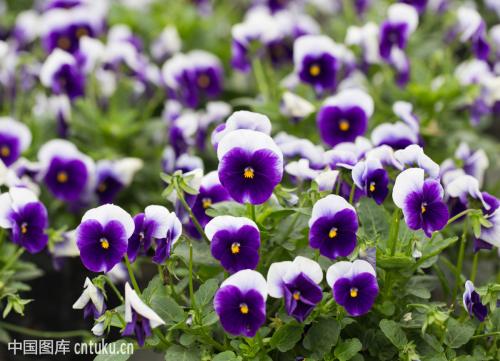
1. Sowing and germination stage: After sowing pansies, vermiculite can be used to cover the seeds. The soil temperature should be 18-24°C, and the medium should be kept moist. Light is not needed before the radicle emerges. Generally, seedlings can emerge in 7-14 days. During the seedling growth stage of pansies, the soil temperature should be 15-24°C. The lower the temperature, the slower the plant grows and the sturdier the plant becomes. Before watering, let the soil dry out, but avoid permanent wilting of the plant. This is beneficial to the root growth of pansies. Keep the soil pH at 5.5-5.8, and alternately apply some n fertilizer or potassium nitrate fertilizer.
2. Seedling stage: When the plant grows to 3-4 true leaves, appropriate hardening off can be carried out to promote sturdy plants. At this time the root system can also reach about 5 cm. At this stage the temperature should be lowered somewhat to prevent spindly growth, and the temperature should be controlled at 18°C. Light can be appropriately increased. During the seedling stage, it is not suitable to use chlormequat. When the root system has formed a root ball, plug seedlings can be directly potted. Small pots are often used, with a pot diameter of 10 cm. Choose a well-drained growing medium, which is especially important for growth in the cold, low-light autumn and winter seasons; otherwise it will not dry out easily and will seriously affect growth. The soil pH should be suitably 5.8-6.2. If it is greater than 6.5, the root system will turn black and the basal leaves will turn yellow.
3. Mature seedling stage: Pansies need plenty of sunlight for growth in autumn and winter, and in spring and summer when flowering they can tolerate slight light shade. Their suitable growth temperature is 7-15°C. If the temperature is too low for a long time, the leaf color will turn purple. In early autumn, it is best to lower the temperature below 20°C for better growth, while 15°C or above is favorable for flowering. Below 15°C, a good plant shape will form, but the growth period will be prolonged. In summer, above 30°C, the flowers become smaller and growth becomes weak and slender. Watering should be done when the soil is dry. When the temperature is low and light is weak, watering should be done carefully. Too much water affects growth and easily produces leggy branches. When the temperature is high, prevent water shortage and drying out. When the plants are flowering, maintaining sufficient water is necessary for increasing flower size and flower quantity. On the other hand, during the growth period, apply fertilizer water once every 2-3 waterings, at a concentration of 100-150 ppm, mainly with compound fertilizer containing calcium. In the early stage, nitrogen fertilizer should be the main type, and near the flowering period phosphorus fertilizer can be increased.
Pest and disease control
1. Anthracnose and gray mold often occur and damage leaves and petals. Besides removing diseased plants, they can be controlled by spraying with a 500-fold dilution of 50% carbendazim wettable powder. Pests include aphids and red spiders, which can be killed by spraying with a 1500-fold dilution of 40% omethoate emulsifiable concentrate.
2. The main insect pest harming pansies is the yellow-breasted thrips. It mainly damages pansy flowers as nymphs and adults and leaves gray-white spots. When the damage is severe, it causes pansy petals to curl and flowers to wither early. The adults and nymphs of the yellow-breasted thrips generally hide in the flowers. Females lay eggs inside the epidermis of the stamens or petals. When damaging the plant, they use their mouthparts to rasp the plant epidermis and suck the sap, and it occurs mostly in hot, dry seasons. Control measures: Spray with a 4000-fold dilution of 2.5% deltamethrin or a 1500-fold dilution of fenitrothion once every 10 days.