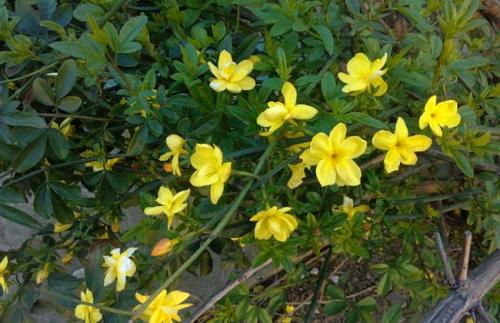
Detailed Guide to Winter Jasmine Planting Methods and Key Techniques
Winter jasmine (Jasminum nudiflorum) is a deciduous shrub of the Oleaceae family and the genus Jasminum. Its branches are graceful and slender, and its flowers are bright and elegant. In China, winter jasmine is a very important landscaping plant, and winter jasmine bonsai is also a type of plant bonsai with extremely strong ornamental value, carefully studied by a great many bonsai-making enthusiasts.

Winter jasmine cultivation methods and points to note:
1. Soil: Cultivating winter jasmine has certain soil requirements; it requires loose, fertile, well-drained sandy soil. It grows vigorously in acidic soil and grows poorly in alkaline soil.
2. Temperature: In summer, when the sun is at its strongest and high temperatures occur, winter jasmine should be moved to a semi-shaded spot, which is more favorable for its growth. Around the Spring Festival, move it, pot and all, into a greenhouse or plastic tunnel, keeping the room temperature at around 15°C; after about 15 days, flowers will appear.
3. Watering: Winter jasmine likes moisture. From before flowering to the flowering period, water 1-3 times depending on how dry or moist the soil is. Before the rainy season arrives, water frequently. Do not apply additional fertilizer during the growing season. After the Start of Autumn (Liqiu), do not water, to prevent the branches from growing too long and too tender to survive the winter safely.
4. Fertilizing: When planting winter jasmine, place a few pieces of animal hoof at the bottom of the pot as base fertilizer. During the growing period of winter jasmine, apply 1~2 times a month of decomposed, diluted liquid fertilizer. July to August is the flower bud differentiation period of winter jasmine; apply liquid fertilizer containing more phosphorus to promote the formation of flower buds. If, in the early flowering stage, one application of decomposed, diluted organic liquid fertilizer is given, it can make the flower color more brilliant and extend the flowering period.
5. Pruning: Winter jasmine has strong sprouting ability. During the growing period, it must be pinched back frequently, and certain branches cut off or shortened, in order to maintain the tree shape. After the flowers fade, the branches should be cut short, generally leaving only 2~3 buds; the main branches may appropriately retain a few more buds. After new branches emerge, with proper care, flower buds will cluster densely.
6. Pests: Winter jasmine has relatively few common diseases and pests; the main one is aphid damage. The control method is to spray 40% omethoate emulsifiable concentrate, dichlorvos 1500-1800 times dilution, or use tobacco liquid for control.