How to grow mosquito-repellent geranium? Detailed planting methods and care tips
Mosquito-repellent scented geranium, also known as mosquito-repellent geranium, is a transgenic evergreen herbaceous plant of the genus Pelargonium in the family Geraniaceae. It was first created by biologists in the Netherlands and France using cell fusion technology, transferring the gene that produces citronellal from lemongrass into geraniums to cultivate a new type of plant. Under natural conditions it releases the mosquito-repellent substance citronellal, achieving a mosquito-repelling effect, and it has a lemon fragrance, hence its name. Mosquito-repellent scented geranium has an elegant plant shape and a fragrant scent, and has effects such as ecological mosquito repellence, air purification, refreshing the mind, and antibacterial disinfection.
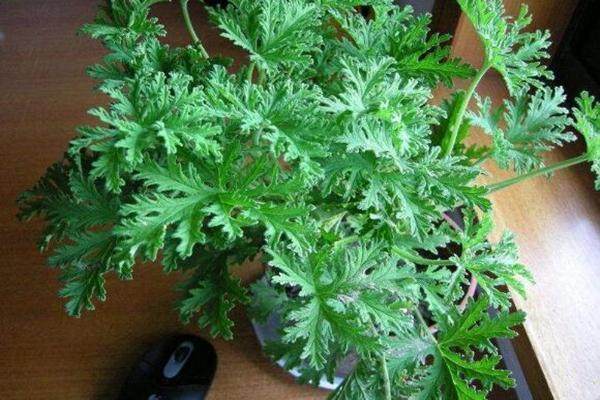
How to grow mosquito-repellent geranium
Mosquito-repellent geranium likes a mild climate and a fresh environment. It is not tolerant of extreme heat or severe cold, and can grow very well at temperatures of 15-20 degrees.
Mosquito-repellent geranium is generally propagated by sowing and cuttings. The cutting method is usually carried out in spring and autumn. Seeds can be planted in March. First place the seeds in clean fine sandy soil, and they will sprout in about one month. When the seedlings grow to three or four leaves, they can be potted to grow on. When the seedlings grow white roots from the bottom of the pot, place some crushed hoof pieces at the bottom of the pot as base fertilizer and repot them for final planting.
Mosquito-repellent geranium grows quickly and needs repotting and fertilizing every year, mostly in spring. When repotting, remove the old roots at the base, apply base fertilizer into the new potting soil, generally repot in February or March, and after new branches grow in April, apply a thin organic liquid fertilizer once a week, then move it outdoors in late April to wait for the flowering period. In June, move it to a place with scattered light, under tree shade or under a shade shed.
When watering mosquito-repellent geranium, it depends on the potting soil; check whether the potting soil is slightly whitish. If the surface of the potting soil turns white, it needs watering. In July and August, it is necessary to frequently spray water on the leaves to lower the temperature and keep its growing environment moist, but do not let water accumulate in the pot. In October, before frost, move the mosquito-repellent geranium indoors to overwinter, ensuring sufficient light and ventilation so that it keeps blooming.
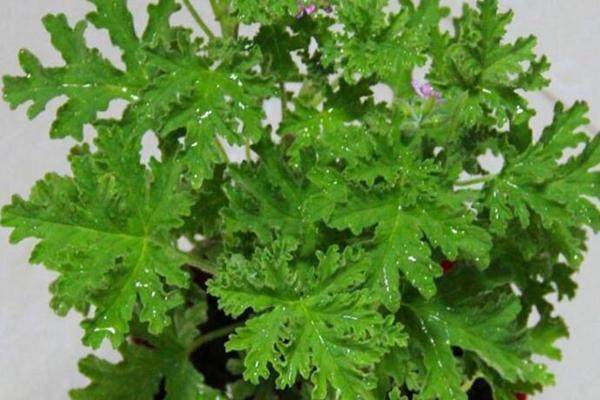
Soil: For mosquito-repellent geranium, it can generally adapt to growing in neutral or weakly alkaline soil. Although it is drought-tolerant, it fears waterlogging. Therefore, the soil is required to have good drainage, and the soil layer should be deep, loose in texture, and a fertile sandy soil or loam rich in humus.
Watering: Mosquito-repellent geranium is drought-tolerant and fears water accumulation, so during growth, control water appropriately. Too much watering and excessive water content in the potting soil will cause leggy growth or root rot. In spring and autumn, when growth and flowering are vigorous, you can water a bit more, but it is still best to keep the potting soil moist. In winter, when the temperature is low and the plant grows slowly, water as little as possible.
Light: Mosquito-repellent geranium likes environmental conditions with ample sunlight, warmth, and good ventilation. In spring and early summer, when light is not too intense, the flowerpot can be placed in a sunny place so it receives sufficient light, but in the hot seasons of midsummer and early autumn, it should be placed in shade and avoid direct strong light, otherwise the branches and leaves will be scorched.
Temperature: The most suitable growing temperature for mosquito-repellent geranium is 10-25°C. It can overwinter safely above 0°C, and above 15°C it can normally release lemon fragrance: the higher the temperature, the stronger the fragrance released. Spraying an appropriate amount of water mist on the plant leaves can make the citronellal substance release continuously, thereby making the mosquito-repellent effect better.
Fertilizing: When cultivating mosquito-repellent geranium, in addition to applying sufficient base fertilizer, during the growing season, especially at the peak of flowering, apply a thin liquid fertilizer once every 7-10 days. Diluting decomposed livestock and poultry manure with water is better, and decomposed cake fertilizer water can also be used for watering. 3-5 days before fertilizing, water less or not at all; watering when the potting soil is on the dry side is more conducive to root absorption.
Pest and disease control: If mosquito-repellent geranium is not managed properly, it will cause root rot and leaf rot, followed by black spots on the leaves and withering of the whole plant. This is caused by watering too much and lack of ventilation. At this time, spray a little chlorothalonil solution and quickly move them to a ventilated place.
Pruning: When growth is excessive, thin out branches and prune, and after flowering, remove spent flowers and dense branches in time. In addition, during its dormant period, remove yellowed old leaves and some dense branches in time.
Propagation: The propagation of mosquito-repellent geranium is generally by sowing and cuttings. In early March, sow the seeds into clean fine sandy soil at a depth of 3 cm. After sowing, water thoroughly after 4 hours, and afterward keep the potting soil moist, not too dry or too wet. In early spring, place it indoors in a warm and bright place at a room temperature of about 20°C, and in about 1 month it will sprout and root, then divide and plant. For cuttings, mosquito-repellent geranium is easy to survive when cuttings are taken in spring and autumn. In April and May or September and October, cut thick branches with terminal buds, 5-8 cm long, let the cut dry, then take cuttings, keeping 2-3 terminal buds, shading and keeping moist; in about 15-20 days they can take root and survive. After the cutting seedlings grow new leaves, they can be potted.