Watercress cultivation methods and key technical points
Watercress is also known as Western watercress or water cress. It originated in Europe; in China, it is currently cultivated more extensively in Guangdong and Guangxi. The edible part of watercress is the fresh tender stems and leaves, which can be eaten as a vegetarian dish or stir-fried with meat, or used in soup, and it tastes delicious. Watercress belongs to the Brassicaceae family, is an annual or biennial plant, is suited to aquatic growth, and can be cultivated in low-lying land. It grows rapidly, is simple to cultivate and manage, and has high yield. Its roots are shallow, fine and small, with no main root, and many fibrous roots; it has strong regeneration ability, and adventitious roots readily form at the stem nodes. The initial roots are white, and old roots are yellow-white. The stem is round, with short internodes, creeping growth, and is green; the axillary buds have strong sprouting ability, and most lateral branches emerge from the leaf axils from the base of the stem upward.
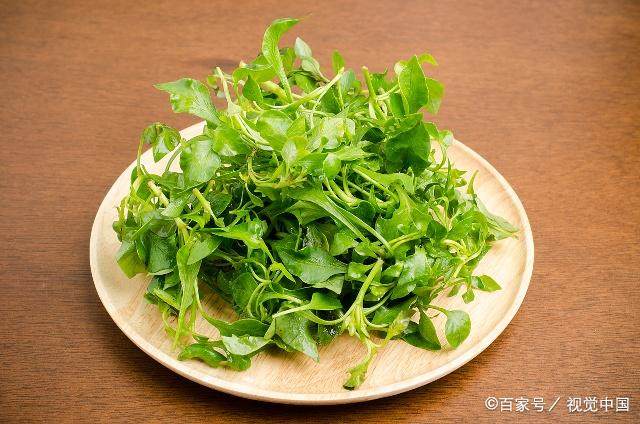
Growth habits of watercress
Watercress prefers a cool and moist environment. The suitable growth temperature is 15-25°C, with the optimum around 20°C. Below 10°C growth is slow, and it can endure short periods of repeated frost. In winter, when the temperature is around 0°C, it can overwinter safely in the open field. If the temperature is above 30°C, growth stops, and the leaves easily turn yellow or wither. During the growing period, it requires good light; when light is insufficient, the stems and leaves grow weak and the yield is low. It prefers neutral loam with strong water and fertilizer retention, and the suitable pH is 6.5-7.5.
Cultivated varieties of watercress
1. Guangdong small-leaf watercress: small-leaf type, plant height 30-40 cm, stem thickness about 0.9 cm, with 2-3 pairs of small leaflets on each side; the terminal leaflet is ovate, 2.6 cm long and 2.2 cm wide, brown, flowers in late April, but does not set seed and can only be propagated vegetatively.
2. British large-leaf watercress: large-leaf type, plant height 40-50 cm, stem thickness about 0.79 cm, with 1-3 pairs of small leaflets on each side; the terminal leaflet is round or nearly round, 3.2 cm long and 3.4 cm wide, green, with relatively strong cold resistance, and it does not change color under low temperature and in winter.
3. Jiangxi large-leaf watercress: large-leaf type, plant height about 40 cm, stem thickness about 0.75 cm, with 1-3 pairs of small leaflets on each side; the terminal leaflet is long ovate, 3 cm long and 1.6 cm wide, the leaves are green, and the veins are red; it does not change color in winter or under low-temperature conditions.
Propagation techniques for watercress
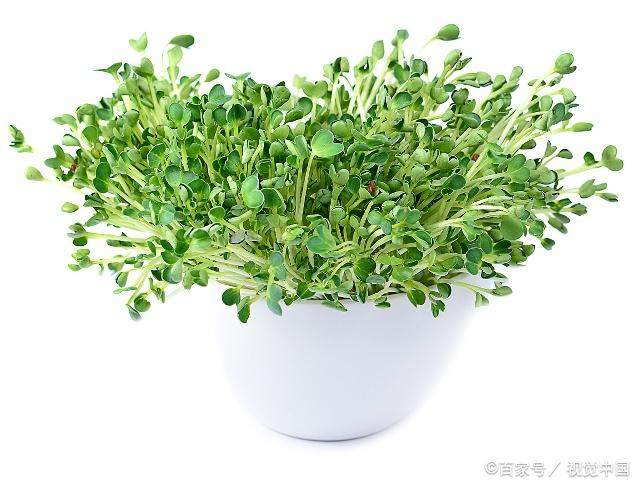
1. Seed propagation: watercress seed propagation is mostly sown and raised as seedlings from early September to late September, when the temperature drops to 20-25°C. It can be divided into dryland seedling raising and semi-paddy seedling raising. When the seedlings are 4-5 cm tall, irrigate to keep a thin layer of water on the bed surface, and thereafter gradually deepen the water layer to 1.5-2 cm as the seedlings grow.
2. Cutting propagation: watercress cutting propagation is mostly carried out in mid-September. When the temperature drops to about 25°C, cut tender stems about 15 cm long from the middle and upper parts from the seedling field, and transplant them into a field that has been pre-plowed, harrowed and leveled for propagation. When the seedlings grow to 15-20 cm tall, lift the seedlings and transplant them into the main field.
Cultivation techniques for watercress
1. Timely planting: in the Yangtze River Basin, planting is mostly done in mid-October. Before planting, select robust seedlings, requiring thicker stems, short internodes, and complete green leaves. The stem base of the watercress plant grows semi-creeping and often has a distinction between the sunny side and the shady side. When planting seedlings, place the sunny side up and plant the two basal nodes together with the root system at an angle to help them survive. The row spacing is 15 cm, the hill spacing is 10 cm, and 2-3 plants per hill.
2. Land preparation and fertilization: choose paddy fields with relatively low terrain, convenient drainage and irrigation, and fertile, loose soil for planting. Before planting, plow and harrow in shallow water, and combine with turning the soil to apply 3000 kg of human manure and urine per mu or 5000 kg of barnyard manure as base fertilizer. After plowing, harrow finely and level, and keep the field in a muddy state or with a thin layer of shallow water before planting. For semi-dryland planting, after applying base fertilizer, level the land and open beds, and keep the soil moist.
3. Water management: for semi-dryland planting, water thoroughly after planting. In the early stage, weeds easily grow in the field, so weed in time, and thereafter water once every 3-4 days. If planting in paddy fields, maintain a 1-2 cm water layer in the early stage, and thereafter gradually deepen the water level to 3-4 cm as the plants grow, but it should not exceed 5 cm to prevent rusty roots.
4. Reasonable fertilization: watercress can be harvested 30-40 days after planting. After each harvest, apply a quick-acting fertilizer in time. Generally, broadcast 15 kg of urea per mu or spray 0.5% urea solution on the leaves, or use 1200 kg of decomposed manure per mu, diluted with 5 times water, and apply it as a liquid. Fertilization time should preferably be in the morning or evening.
5. Timely harvesting: after planting, it can be harvested when the plant height is about 25 cm. There are two harvesting methods. One is to pick the tender shoots plant by plant, then bundle them into small bunches; this method is relatively labor-intensive. The other is to harvest level with the mud, cutting three-quarters of the whole field each time, treading the old roots into the mud, then fertilizing and raking level, and replanting the remaining one-quarter of the seedlings.
6. Pest and disease control: watercress has relatively strong adaptability, and there are few pests and diseases in cultivation and production. The main pests are aphids, diamondback moth, and yellow-striped flea beetles, which can be controlled with dimethoate, Bt, fenvalerate, and others. Diseases include leaf blight and rust. For leaf blight, mancozeb or chlorothalonil solution can be sprayed; for rust, triadimefon solution can be sprayed.