Detailed Explanation of Bletilla striata Planting Methods and Technical Key Points
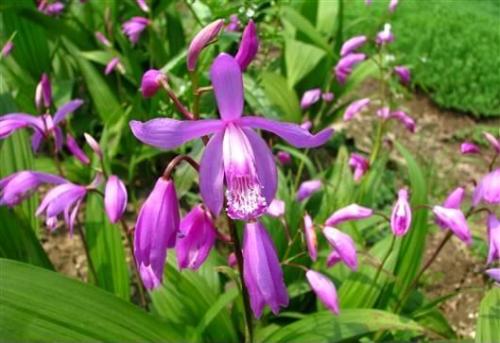
Bletilla striata (Bletilla striata), also known as white root, ground screw, white chicken baby, sheep horn seven, lianji grass, purple grass, etc. Its underground rhizome is used medicinally and has effects such as tonifying the lungs and stopping bleeding, reducing swelling and promoting tissue regeneration. It mainly treats pulmonary tuberculosis with coughing of blood, bronchiectasis with hemoptysis, gastric ulcer with vomiting of blood, blood in the urine, blood in the stool, and other symptoms. Externally, it treats traumatic bleeding, burns and scalds, cracked hands and feet, and other symptoms.
I. Growth Habits
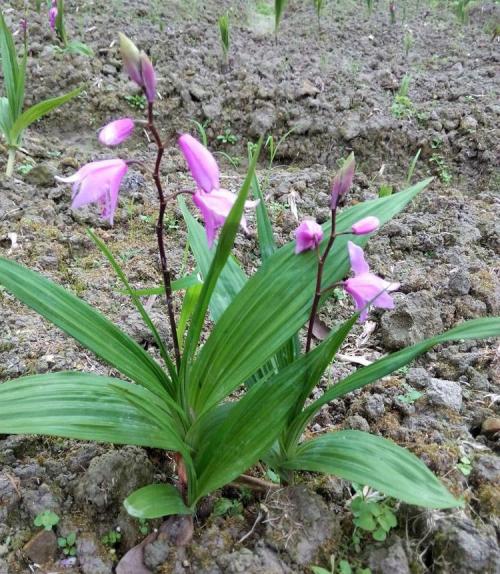
Bletilla striata prefers a warm, cool, and relatively shady and humid environment, and is not cold-tolerant. It often grows wild on both banks of streams and rivers in hilly and low mountain areas, in hillside grass clusters, and under sparse forests. Therefore, fertile, loose, well-drained sandy loam or humus loam should be selected for cultivation, and it should be planted on shady slopes or relatively shady and humid plots.
II. Land Preparation and Fertilization
Select plots with deep soil, fertility and looseness, good drainage, humus-rich sandy loam, and shady and humid conditions for planting. After the previous crop is harvested, plow the soil more than 20 cm deep, apply 1500-2000 kg of decomposed stable manure or compost per mu, and plow it into the soil as base fertilizer. Then make beds and wait for sowing.
III. Sowing
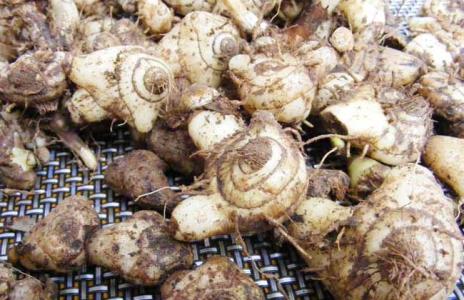
Bletilla striata is propagated using underground tubers. The sowing period is divided into autumn sowing and spring sowing. Autumn sowing is before the soil freezes, and spring sowing is around Qingming. In the south, autumn sowing is suitable. When digging Bletilla striata in autumn, select robust tubers free of pests and diseases, cut them into small pieces, each with 1-2 buds, let them dry slightly, and after the wounds heal, plant them on the prepared bed surface.
In the north, spring sowing is suitable. Take out the stored Bletilla striata seed tubers at sowing time, cut them into pieces, and sow after the wounds heal. Row spacing and plant spacing are 30 x 20 cm. Water to preserve soil moisture and promote survival.
IV. Field Management
1. Cultivation and weeding: Bletilla striata plants are short and cannot suppress weeds, so attention should be paid to cultivation and weeding, generally 4 times per year. The first time is after seedlings emerge in March-April; the second time is during vigorous growth in June, because weeds grow quickly at this time and Bletilla striata seedlings are short, so weeds must be removed in time to avoid weed infestation; the third time is in August-September; the fourth time is combined with harvesting intercropped crops by shallow hoeing the bed surface and removing weeds. Each cultivation should be shallow hoeing to avoid damaging buds and roots.
2. Water management: Bletilla striata prefers a shady and humid environment, and the cultivation site should be kept moist frequently, with timely watering during dry weather. During drought from July to September, water once in the morning and once in the evening. Bletilla striata is also afraid of waterlogging, so during the rainy season or after each heavy rain, dredge ditches in time to drain excess accumulated water and avoid root rot.
3. Topdressing: Bletilla striata prefers fertilizer, and topdressing should be combined with cultivation and weeding 3-4 times per year. The first time is after full seedling emergence in March-April, apply 4-5 kg of ammonium sulfate per mu, mixed with decomposed dilute manure water; the second time is during the vigorous growth period in May-June, apply 30-40 kg of superphosphate per mu, mixed with fully composted manure, broadcast on the bed surface, and mix into the soil by cultivation; the third time is in August-September, apply 2000-2500 kg per mu of decomposed human and livestock manure water mixed with soil and miscellaneous fertilizer.
4. Intercropping with other crops: Bletilla striata plants are short, grow slowly, and have a relatively long cultivation period, so short-term crops such as radishes and green vegetables can be intercropped between rows in the first two years to fully utilize the land and increase income.
So-called intercropping refers to a planting method in which two or more crops are planted alternately in rows or strips within the same field during the same growing season. For example, in corn and sorghum fields, Andrographis paniculata, Isatis indigotica, Psoralea corylifolia, Pinellia ternata, etc. can be intercropped on the plant and row ridges.
V. Pest and Disease Control
At present, no diseases have been found in Bletilla striata cultivation, and the main pest found is only the underground pest, the black cutworm.
Black cutworm: The larvae bite or cut off Bletilla striata seedlings and tender buds, causing missing hills and broken rows and affecting Bletilla striata yield. It occurs 3-4 generations per year and overwinters as larvae and pupae. March-April is the peak period of adult moth emergence. April-May is the period when first-generation larvae cause the most serious damage. After that, damage gradually decreases.
Control methods: (1) During the peak emergence period of overwintering-generation adults, use light traps or sugar-vinegar liquid to trap and kill adults.
(2) In seriously damaged plots, manual capture can be used.
(3) Use 0.5 kg of 90% crystalline trichlorfon, add 2.5-5 kg of water, mix with 50 kg of vegetable leaves or fresh grass to make poison bait, and use 10 kg of poison bait per mu to trap and kill larvae. (4) Drench roots with 800-fold solution of 80% trichlorfon wettable powder or 1000-fold solution of 50% phoxim emulsifiable concentrate.
VI. Harvesting and Processing
Bletilla striata is generally harvested in autumn after the aboveground stems and leaves wither 4 years after planting. Before harvesting, first cut off the aboveground stems and leaves, then dig out the underground rhizomes, remove all soil, place them in baskets, soak in clean water for 1 hour, then trample off the coarse skin with feet, wash clean, put into boiling water and boil for 5-10 minutes until there is no white core inside the tubers, then take them out and dry in the sun or dry by heat before selling as medicine. Yield per mu is 150 kg.