A Detailed Explanation of Job's Tears Planting Methods and Key Technical Points
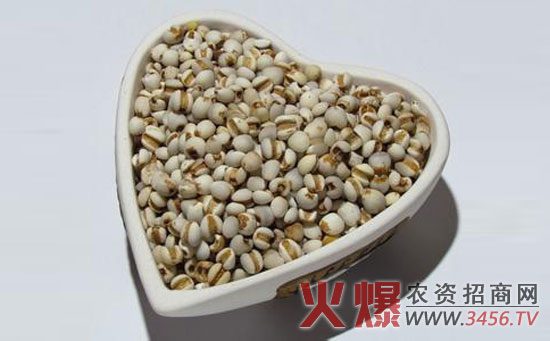
Job's tears (Coix chinensis Tod.), also known as coix seed, Job's-tears seed, and six-grain seed, is the kernel of the grass family plant Coix lacryma-jobi. It is cool in nature and sweet and bland in taste, entering the spleen, lung, and kidney meridians, and has the effects of promoting diuresis, strengthening the spleen, eliminating dampness, and clearing heat and draining pus. Job's tears grows in warm, humid marginal land and mountain valleys and stream gullies, and is fairly common below an elevation of 2000 m.
Because Job's tears has very high nutritional value, it is hailed as the "king of the world's grasses"; in Europe it is called the "grain of life and health"; and in Japan it has recently been listed as an anti-cancer food, so its value has multiplied. Job's tears has the characteristic of being easy to digest and absorb, and whether used for nourishment or for medical purposes, its action is very mild.
Planting Methods
Water: follow the principle of alternating "wet-dry-water-wet-dry" management, that is, use the measures of moist seedling raising, dry jointing, water at booting, ample water at heading, moist grain filling, and dry-field harvesting.
Fertilization: Job's tears plants are tall and are a crop with a large fertilizer requirement and relatively strong tolerance to fertilizer. The method and amount of fertilization are determined by the fertilizer requirements of Job's tears and the fertilization levels and habits of each locality, and attention should be paid to a reasonable ratio of base fertilizer and topdressing. Generally, the base fertilizer accounts for 60%-65%, the spike fertilizer for 25%-30%, and the grain fertilizer for 5%-10%. The base fertilizer is mainly organic fertilizer; when preparing the land, apply 1500kg of decomposed pig and cattle pen manure per 667 sq m. Chemical fertilizers may be used for topdressing; 7-10 d after planting, apply 5kg of ammonium bicarbonate mixed with 500kg of water per 667 sq m to promote seedling growth. At the early stage of young spike differentiation, apply 15kg of ammonium bicarbonate (or 6kg of urea), 10kg of superphosphate, and 5kg of potassium chloride mixed with water, or apply them in holes combined with earthing up around the roots, as the spike fertilizer; at the early heading stage, apply 2-3kg of urea and 1.5kg of potassium chloride mixed with water per 667 sq m as the grain fertilizer.
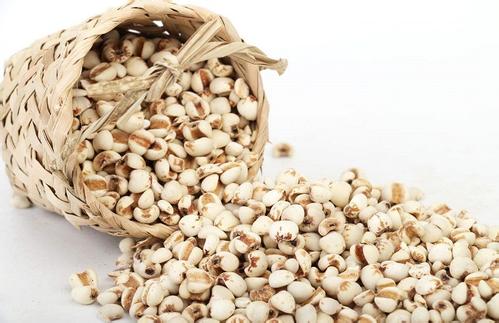
Field management. During the growth period of Job's tears, the four links of intertillage, weeding, topdressing, and irrigation should be carried out well. Intertill after rain to keep the field free of weeds; fertilize when the seedlings are 30 cm tall, with the same fertilization standard as corn, but Job's tears likes nitrogen fertilizer, so 75-100 kg of ammonium bicarbonate should be applied per mu. Job's tears is tolerant of fertilizer and water and has a relatively large water requirement, especially during the heading, flowering, and grain-filling stages, when it must not lack water, otherwise the yield will be seriously affected.
Harvest. Harvest when the branches and leaves of Job's tears turn yellow and withered and the grains turn black-gray; the general harvest period is mid-to-late October. Cut the plants together with the stalks, tie them into bundles, pile them for 1-2 days, then beat them forcefully, and the Job's tears grains will fall off by themselves; finally, after air-drying, screening, and removing impurities, they become high-quality Job's tears grains.