A Detailed Guide to Magnolia Planting Methods and Key Technical Points
Magnolia, also known as white magnolia, magnolia, or spring-welcoming flower; this flower is one of the precious ornamental garden trees unique to our country, native to the Yangtze River basin, and wild specimens still exist today at places such as Lushan, Huangshan, and Mount Emei.
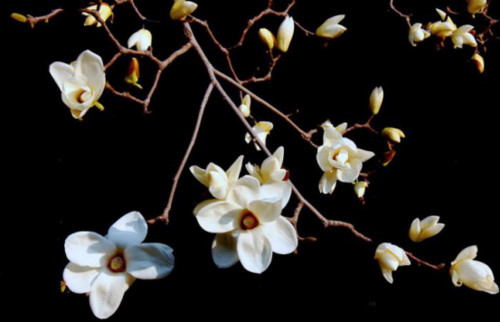
Magnolia Cultivation Methods
Soil Requirements:
Magnolia is suitable for planting in fertile, moist, well-drained, slightly acidic soil, but it can also grow normally in mildly saline-alkaline soil (pH value 8.2, salt content 0.2%). Magnolia has fleshy roots and fears waterlogging, so the planting site should be elevated; planting in low-lying areas easily causes root rot and death. The soil at the magnolia planting site should have good permeability; planting in clay leads to poor growth, while it grows best in sandy loam and yellow sand soil.
Temperature and Light:
Magnolia loves light; young trees are relatively shade-tolerant, but it does not tolerate strong light or western sun exposure. Too much light or western sun exposure can easily cause sunscald damage to the tree. Magnolia can be planted in an environment with lateral shading; planting under large trees or in shaded spots leads to poor growth, with a thin and small tree form, sparse branches, small and yellowing leaves, and no flowers or small flowers. Magnolia is relatively cold-hardy and can withstand a brief low temperature of -20°C, but it should not be planted in windy gaps, otherwise shoot dieback easily occurs.
Transplanting and Potting:
Magnolia does not tolerate transplanting well; generally, transplanting 10 to 15 days before bud break or when the flowers have just faded but leaves have not yet unfurled is ideal. Four to five days before lifting the seedlings, water the seedlings thoroughly once; doing so not only allows the plants to absorb sufficient water, but also helps the seedlings survive after planting and helps the soil form a ball when digging up the seedlings. When digging, be very careful and injure the root system as little as possible; the wounds on broken roots must be smooth to facilitate wound healing.
The planting depth should be appropriate; generally, the planting depth can be slightly higher than the original soil ball by 2 to 3 cm. Too deep easily causes bud suffocation, while too shallow exposes the roots and makes the tree easy to blow over by wind. For large-sized seedlings, supports should be set up in time; a triangular support can be used to prevent the tree from being blown askew by wind. After planting is completed, water immediately, water a second time after 3 days, and water a third time after 5 days. After the third watering, normal management can begin, and excess flower buds should be pruned off.
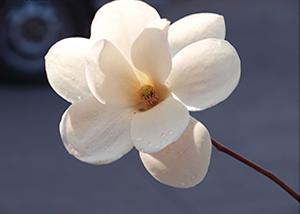
Magnolia tolerates neither waterlogging nor drought; in cultivation and care, its principle of "loving moisture but fearing waterlogging" should be strictly followed. During cultivation and care, many people believe that because magnolia fears waterlogging, it should be watered as little as possible. This understanding and practice are completely wrong, because magnolia fearing waterlogging does not mean it likes drought; it itself prefers a moist environment, and water management should grasp the balance of keeping the soil neither too dry nor too wet.
Newly planted magnolias should keep the soil moist, which is also an important measure to ensure their survival rate. For magnolias that have entered normal management, the green-up water in early spring and the antifreeze water in early winter are indispensable, and they should be watered sufficiently and thoroughly. During the growing season, water once a month; watering should stop during the rainy season, and drainage should be carried out promptly after rain to prevent root rot caused by waterlogging. In addition, loosening the soil to preserve moisture should also be done in time.
Fertilization Methods:
Magnolia loves fertilizer. In addition to applying base fertilizer at planting, it should be fertilized every year thereafter. Sufficient fertilizer can make the plant grow vigorously, with lush green and thick leaves, not only producing many flower buds, but also large flowers, a long flowering period, and a rich fragrance. Fertilize magnolia 4 times each year: apply a nitrogen, phosphorus, and potassium compound fertilizer once before flowering; this fertilization can not only improve flowering quality, but also benefit spring growth. After flowering, apply a nitrogen fertilizer once; this fertilization can increase the plant's growth amount and expand its nutrient area.
In July to August each year, a phosphorus and potassium compound fertilizer should be applied once; this fertilization can promote flower bud differentiation and increase the degree of lignification of new shoots. Before winter, in combination with watering winter water, apply a fully decomposed and fermented barnyard manure once; this fertilization can not only improve soil activity, but also effectively raise soil temperature, and the application amount should be large rather than small. In addition, for seedlings planted in the same year, if their growth is poor, a 0.2% potassium dihydrogen phosphate solution can be sprayed on the leaves, which can effectively strengthen the tree's vigor.