Detailed Explanation of Cultivation Methods and Technical Points for Cordyceps militaris
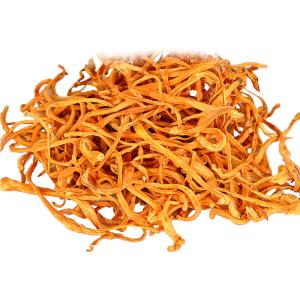
Cordyceps militaris is the abbreviated name for Cordyceps militaris (bei dong chong xia cao), also called pupa cordyceps or pupa grass; it is a medicinal fungus formed from a fungus-insect association. Many people mistakenly believe that Cordyceps militaris is the same as Cordyceps sinensis, but this is not the case; the two are fundamentally different. Cordyceps sinensis is an extremely rare wild Chinese medicinal herb (Cordyceps sinensis cannot yet be artificially cultivated).
Cultivation Requirements
1. Temperature: The mycelial growth temperature of Cordyceps militaris is 6-30°C, with the optimum at 18-22°C; the primordium differentiation temperature is between 10-25°C. In production, to stimulate the timely formation of primordia, the temperature difference can be appropriately regulated within a range of 5-10°C over 24 hours; the stroma growth temperature is 10-25°C, with the optimum at 20-23°C; the spore ejection temperature is 28-32°C, and the maximum should be controlled below 34°C; unless for breeding, isolation, or special needs, when purely cultivating to obtain fruiting bodies, do not reach or exceed 28°C.
2. Moisture: Moisture is an important foundation of life, and Cordyceps militaris is no exception; as an indispensable solvent for mycelia and stroma during life processes, the vast majority of the water needed by Cordyceps militaris comes from the culture substrate. Therefore, adjusting the moisture content of the substrate to an appropriate level directly affects the growth and development of Cordyceps militaris. In actual production, the substrate moisture content should be adjusted to 60%-65%, the relative air humidity during the mycelial culture stage should be maintained at 60%-70%, and after primordium formation it should be adjusted to 80%-90%.
3. Oxygen: Cordyceps militaris is similar to other edible fungi; its growth and development process is likewise a metabolic process of oxygen intake and carbon release, especially after primordium differentiation when the oxygen demand is greater, so relatively fresh air must be maintained to ensure an adequate oxygen supply. However, because Cordyceps militaris grows slowly and has a very small metabolic rate, and because it has relatively high tolerance to carbon dioxide, in production a carbon dioxide concentration of around 0.5% is sufficient.
4. Light: In the early stage of Cordyceps militaris growth, that is, the mycelial development stage, light, especially strong light, has a considerable inhibitory and damaging effect on the mycelia, so a completely dark state should be maintained. Even if light treatment is carried out early when mycelial colonization is nearly complete, it will induce premature entry into the reproductive stage, severely reducing yield and greatly diminishing quality. After the substrate is fully colonized by mycelia, about 200 lux of light is needed to stimulate color change. During this stage, if the light is uniform and lasts more than 10 hours per day, the mycelia can change color well and develop a deep color, laying the foundation for obtaining high-quality fruiting bodies later. This characteristic is consistent with the situation in which wild Cordyceps militaris does not produce stroma under dense tree shade. After primordia appear, the light duration can be appropriately shortened and the light intensity increased to 300 lux, while striving for uniform light so that the fruiting bodies develop and grow normally.
5. pH: Cordyceps militaris is suited to an acidic environment. During the mycelial growth stage it adapts to a substrate pH of 5-7, with the optimum between 5.2-6.8. During artificial cultivation, the substrate pH can be adjusted to 7-7.5; after high-pressure sterilization, the pH value naturally decreases, and combined with the natural regulation by the mycelia later (production of organic acids), the substrate pH can be lowered to around 6.
Cultivation Methods
1. Culture medium formula: 1 kg rice, 35 g special contamination-prevention agent for cordyceps, 1.5 kg water.
2. Preparation method: Divide the rice into plastic bags at 50 g or 100 g per bag. Pour 1.5 L of hot water at 50°C into a clean basin, put the special contamination-prevention agent for cordyceps into the hot water, and stir until completely dissolved to make the nutrient solution. According to the material-to-water ratio (that is, the ratio of rice to nutrient solution) of 1 g : 1.5 mL, measure the nutrient solution and pour it into the plastic bags already filled with rice. After filling, tie each plastic bag once in the middle and once at the opening with plastic rope.
3. Sterilization: Add an appropriate amount of water to the sterilization pot, place the culture substrate bags into the sterilization pot, raise the temperature to 100°C, and hold for 1 hour. Remove, and after cooling, move into the inoculation room. Use a high-quality aerosol disinfectant or a conventional method for sealed disinfection for 30 minutes, then put on sterile clothing and enter the inoculation room to inoculate.
4. Inoculation: Upon entering the inoculation room, close the door quickly (to prevent air containing contaminant microorganisms from entering). Wipe or dip inoculation tools, the outer wall of the spawn container, and the operator's hands with 75% alcohol for disinfection. Here is an easy-to-promote method using solid rice spawn for inoculation:
① Transfer and expansion cultivation from test-tube stock spawn: After removing the test-tube stopper, use a sterilized inoculation hook to dig out 2~3 pieces of spawn about the size of a bean and inoculate them onto the surface of the culture medium, then tie the bag opening slightly tight.
② When using stock spawn to expand into cultivation bags, first break the spawn into pieces the size of a finger or a bean, inoculate 5~10 g of spawn per bag, and distribute it evenly on the surface of the substrate. If conditions permit, the inoculation amount can be appropriately increased to facilitate faster mycelial growth. After inoculation, tie the bag opening slightly tight in the original way, and then move it into a cultivation room that has been treated for sterilization and insect prevention for cultivation.
5. Cultivation: Cordyceps militaris belongs to the medium-low temperature fungal group. The mycelial growth temperature range is 5~30°C, the optimum mycelial growth temperature is 15~25°C, and the optimum stroma growth temperature is 18~22°C. Initially, maintain the temperature at 15~18°C and cultivate in the dark. When the mycelia grow to 1/2~2/3 of the culture medium, the temperature can be raised to 20°C, and the bags can be fully colonized by mycelia in 20 days. A few days later, when mycelial protrusions appear on the upper part of the culture medium, give a temperature difference stimulation of 10~15°C and increase light stimulation for color change. After 7~10 days, when color change is complete, disinfect the cultivation room for 30 minutes, then untie the rope in the middle of the culture substrate bag, and use your hands to fold the bag into a straight cylinder shape to provide space for stroma growth. When the stroma grows to 1 cm, ventilate the cultivation bags in time and maintain the temperature at 18~22°C and the relative air humidity at 80%~90%.
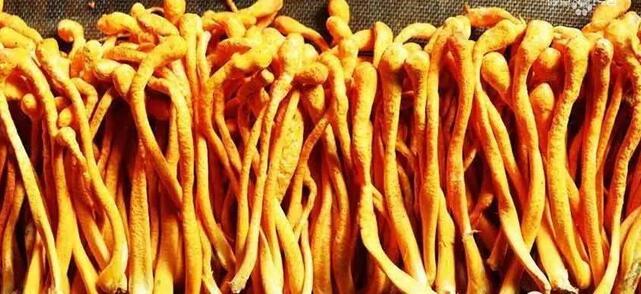
6. Harvesting: When the stroma is orange-red or orange-yellow, club-shaped, and no longer growing, open the bag opening and use a small knife or scissors to harvest it from the base, place it into a clean container, and dry it promptly by oven-drying or air-drying. Do not expose it to strong sunlight to avoid fading. After drying, store it in a sealed plastic bag or sell it.