Detailed Explanation of Ginseng Planting Methods and Technical Key Points
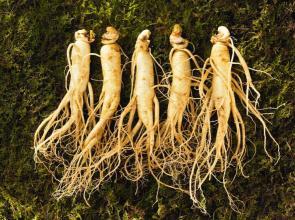
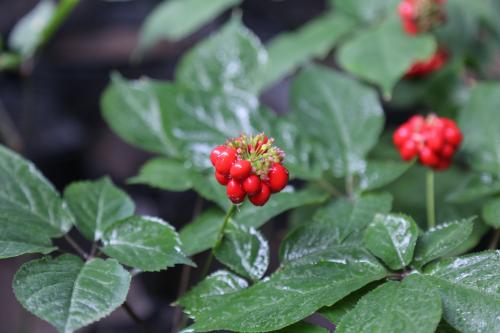
Ginseng (Panax ginseng C. A. Mey) is a perennial herbaceous plant that prefers cool, shady conditions. Its leaves have no stomata or palisade tissue and cannot retain water; the leaves will be scorched when the temperature is above 32 degrees, and the canopy density is 0.7-0.8. It usually flowers in 3 years and fruits in 5-6 years, with the flowering period from May to June and the fruiting period from June to September. It grows at latitudes between 33 degrees and 48 degrees north, at altitudes of several hundred meters, under mixed coniferous-broadleaf forests dominated by Korean pine or in deciduous broadleaf forests, and is produced in Northeast China, Korea, South Korea, Japan and eastern Russia. Ginseng is also known as yellow ginseng, earth essence, divine herb and the king of a hundred herbs, and is one of the widely known "Three Treasures of the Northeast".
Planting methods
1. Soil selection
Because ginseng has high requirements for soil, and many places in our country do not meet the requirements for ginseng growth, the ginseng planting area is not particularly large. Therefore, when choosing soil, choose yellow sandy soil with more organic matter or black humus soil as much as possible. Secondly, when there is no best option, loam or sandy soil can be chosen. In short, clay is the soil least suitable for planting ginseng. Then, before planting, the soil needs to be strictly disinfected, and when preparing the land, stones and other impurities in the soil should be cleared out, furrows should be made and beds should be formed, and then sowing can be prepared.
2. Planting time
There are three times suitable for ginseng planting, namely mid-April to early May in spring, July to August in summer, and September to the end of October in autumn. Therefore, everyone should note that ginseng planting cannot be carried out in winter. In addition, the planting methods at different times will also differ to some extent. When planting, we should plant according to reasonable seed treatment methods and sowing methods. For details, please refer to the content in the previous article on high-yield ginseng planting techniques.
3. Light requirements
Ginseng is a shade-loving plant and does not need much light. First, when choosing a planting site, the issue of light needs to be considered. It is best to choose a shady area for planting, because if the light at the planting site is too strong, it will cause the ginseng plants to become dwarfed and the leaves to be relatively thick, which is not beneficial to the normal growth of ginseng. Although it is a shade-loving plant, the planting site cannot be too shady either. Having no light at all will not work, as it will cause ginseng to grow only stems and leaves, which has a great impact on the growth of the ginseng rhizome. Therefore, we must carefully analyze and understand the growth habits of ginseng.
4. Fertilizer and water management
The growth of ginseng requires a large amount of nutrients, so its demand for fertilizer is relatively large. However, its fertilization has strict requirements. First, although it likes organic fertilizer, do not use organic fertilizer that has not been completely decomposed, as this will have a great impact on the ginseng roots and may even burn the plants to death. Therefore, when fertilizing, we must strictly follow the requirements. Finally, ginseng also has relatively high water requirements, because it is neither tolerant of waterlogging nor drought. For field water management, we must strictly control it according to specific standards, and it is appropriate to keep the field humidity at about 75 percent.
5. Temperature management
Ginseng is extremely intolerant of heat, so from relevant historical records we find that ginseng basically grows in relatively dark and cool environments, that is, what is often called deep in the mountains and forests. The most suitable temperature for ginseng growth is about 3 to 15 degrees. Because the temperature in most areas of our country is generally about 20 to 30 degrees, we need to regulate the temperature through daily management.
6. Pest and disease control
Ginseng is a very precious medicinal material, but like other ordinary medicinal materials, it also has some relatively common pests and diseases. The main ones are damping-off disease, leaf spot disease, phytophthora blight, rust rot and sclerotinia rot. The most fundamental cause is excessive humidity in the field. They can be controlled with carbendazim, polyoxin, metalaxyl mancozeb, thiophanate-methyl and dimethachlon respectively. The most common pests are underground pests such as white grubs, cutworms, mole crickets and wireworms, which can be controlled by seed dressing with phoxim emulsifiable concentrate or by drenching the roots with trichlorfon.