Detailed Explanation of Welsh Onion Planting Techniques and Field Management Methods
Welsh onion (scientific name: Allium fistulosum), a biennial herbaceous plant of the genus Allium in the Amaryllidaceae family. China has more than one hundred species of Allium vegetables, mainly distributed in the northwest, northeast and north China regions. Allium vegetables occupy an extremely important position in Chinese vegetable production, with their cultivation area accounting for 10% of the total vegetable sowing area and their output accounting for 7% of total output. China has a long history of Welsh onion cultivation; as early as in the Classic of Poetry there are records about Welsh onion cultivation - you qiang cong heng.
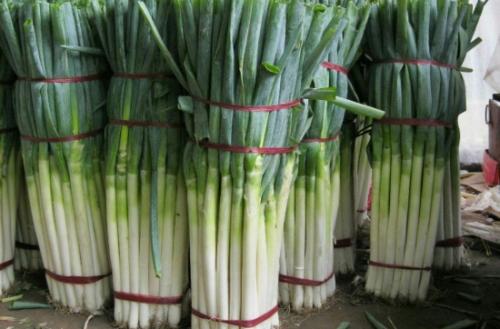
Welsh onion planting techniques: Welsh onions planted from July to October are better. After planting, management must be in place:
1. Watering: After the Welsh onion is established, the management focus is to promote rooting; watering should be controlled, and after rain, drainage should be carried out to prevent waterlogging, preventing root rot, yellow leaves and dead seedlings; at the same time, intertillage should be strengthened to promote root growth. Between the Start of Autumn and White Dew, the principle of light watering and watering in the morning and evening should be followed. After White Dew, the Welsh onion enters its peak growth period, and the principle of frequent and heavy watering should be followed, watering once every 4-6 days. Along with watering, spray Xin Gao Zhi Mo at 800 times dilution to preserve warmth and moisture, prevent water evaporation, and isolate airborne pathogens from invading; after Frost's Descent, when the temperature drops, the Welsh onion has basically matured, its water requirement decreases, and the soil should be kept moist. Stop watering 5-7 days before harvest to facilitate harvesting, storage and transport.
2. Topdressing: On the basis of applying sufficient base fertilizer, the Welsh onion also needs topdressing in stages. After the Start of Autumn, when plant growth accelerates, apply a "leaf-promoting fertilizer", applying 1500-2000 kg of decomposed farmyard manure per mu, and 20-25 kg of superphosphate, to promote leaf growth. After White Dew, it enters the peak growth period of the white pseudostem, which is the key period for Welsh onion yield formation; combined with watering, apply a "plant-promoting fertilizer" twice, each time applying 15-20 kg of urea and 10-15 kg of potassium sulfate per mu, broadcast the topdressing between the rows, water after shallow intertillage, and at the same time spray Xin Gao Zhi Mo to improve the utilization rate of the effective components of the fertilizer.
3. Hilling: Hilling is an important measure to soften the leaf sheaths, prevent lodging, and improve the yield and quality of the white pseudostem. From the Start of Autumn to before harvest, generally three hillings are carried out; the first two are combined with intertillage, piling the ridge soil into the onion furrow, and after the End of Heat the furrow is filled level; the height of each hilling of the Welsh onion should be determined according to the growth height of the false stem, 3-4 cm each time, piling soil up to the leaf exit of the uppermost leaf, and never burying the heart leaf, to prevent leaf rot. Combined with hilling, promptly spray Zhuang Jing Ling so that the garlic plant stems are thick and strong, the leaves are thick and plump, the leaf color is fresh and tender, the natural taste is rich, and the commodity value is high.
4. Density: Imported Welsh onion cultivation mostly adopts the wide-row close-planting method. In open-field cultivation, the row spacing is generally 90-100 cm, the furrow depth is 15-20 cm, and the plant spacing is 2.5-3.0 cm, with 25,000-27,000 plants established per 667 sq m. Before establishment, remove diseased and weak seedlings, deformed seedlings and off-type plants, and divide them into 3 grades - large, medium and small - according to seedling size for separate planting. At establishment, use "Guan Dao Di" pesticide at the bottom of the furrow to prevent insects and diseases. When inserting the onions, they should be vertical and not bent, otherwise the commodity quality will be affected. In some areas, a row spacing of 60-80 cm is too narrow, making later hilling inconvenient, resulting in a short white pseudostem and the upper part of the white pseudostem turning green, affecting commodity quality.
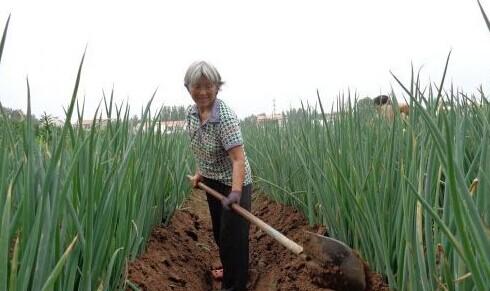
Field management
From after transplanting in mid-to-late June to mid-to-early August, weeds on the ridge backs should be shallow-hoed. Before the "Start of Autumn", high-quality fine pen manure can be broadcast, about 4000 kg per mu; 20 kg of nitrogen fertilizer per mu can also be applied, with one light watering. Do not use heavy fertilizer and heavy water; drain after waterlogging.
During this period, use Tianda 2116 leafy vegetable-specific type combined with 500 times chlorothalonil wettable powder or 500 times 50% iprodione wettable powder, every 10-15 days, for 2-3 consecutive times, to control purple blotch. If sclerotinia is present, add 1000 times 40% dimethachlon solution.
From late August to early October is the most suitable period for Welsh onion growth. This is also the critical period for fertilizer demand, so fertilizer should be the main focus with vigorous application to strengthen nutrient absorption. During this period, spray Tianda 2116 underground root and stem-specific type 600 times + 15% triadimefon 800 times + 65% mancozeb 500 times, to control rust; combined with 4% pirimicarb 1500 times + 20% virus A 500 times or 5% ningnanmycin spray, every 10-15 days, spraying 2-3 times, to effectively prevent the occurrence of viral disease. Around the "End of Heat", apply 80-100 kg of crushed cake fertilizer per mu, hoe the ridge edges, and water once; apply heavy topdressing and high hilling, piling soil up to below the heart leaf of the Welsh onion, and tread firm. Apply 15 kg of urea per mu, 100 kg of plant ash or 15 kg of potassium sulfate. From mid-October to early November, if fertilizer deficiency and decline occur, an appropriate amount of quick-acting nitrogen fertilizer can be applied by flushing, immediately followed by water as the main focus, watering once every 5 to 6 days; the soil need not be seen dry, and frequent watering is fine. Around the "Start of Winter", harvest immediately by digging.