A Detailed Explanation of the Planting Methods and Key Technical Points for Growing Scallions
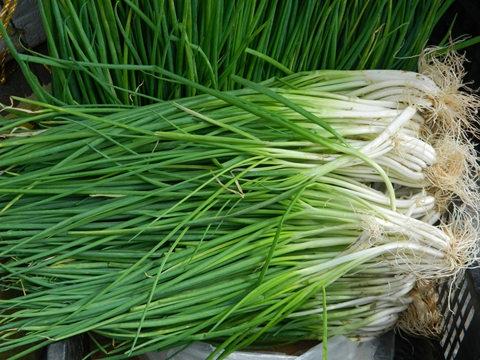
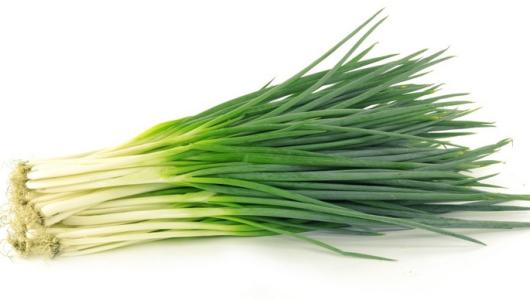
Scallions belong to the Amaryllidaceae family, Allium genus. Other names: fragrant onion, soft onion, fire onion, four-season onion, fine-grain onion. The upper part is the green onion leaf, and the lower part is the white scallion stalk. It originated in Siberia. Cultivation in China has a long history and a wide distribution, with Shandong, Hebei, Henan and other provinces being important production areas. According to the length of the scallion stalk, it can be divided into two types: large scallions and small scallions.
Planting Methods and Key Technical Points for Scallions
1. Variety Selection
The main varieties include: four-season fine-grain onion, Sichuan small fragrant scallion, Lu Cong No. 1, Chongzhou horn scallion, and small fragrant scallions long cultivated in various regions. The seeding rate per mu is 1.2-1.5 kg. The best sowing periods are March-May and September-October. Before sowing, soak the seeds in 55°C warm water for about 20 minutes, then rinse with clean water, and sow after drying.
2. Land Preparation and Fertilization
The soil needs to be deeply plowed and sun-dried, and the site should have convenient drainage and irrigation, with the field drying after rain stops. Before transplanting, apply about 300 kg of farmyard manure and 50 kg of ternary compound fertilizer per mu as base fertilizer. The field for transplanting should be flat, loose, fertile, and convenient for drainage and watering. It is best to rotate with soybeans, corn and other vegetables, and it is not suitable to rotate with scallions or garlic. Spread 2000 kg of high-quality organic fertilizer and about 50-70 kg of ternary compound fertilizer per mu, prepare the land finely, and make high beds 1.5 m wide. In winter, plastic film can be used to cover the ground to increase soil temperature, so that one more harvest can be obtained.
3. Seedling Raising
It is best to use fresh seeds, because their viability is only about 2 years. Chives are generally sown from March to April, and can also be sown from September to October. The suitable germination temperature is 13-20°C. Broadcast the seeds on the soil surface, cover with about 1-2 cm of soil, and water thoroughly. At a suitable temperature, germination begins in about 2 weeks. The seedlings grow relatively slowly, and after about 4-5 weeks of germination they can be transplanted and established.
4. Transplanting
Before transplanting, the seedlings should be selected, removing diseased plants, damaged plants and weak plants. After selection, cut off the tips of the fibrous roots, leaving 2-3 cm to promote the development of new roots. Transplant at a row spacing of 20 cm and a plant spacing of 10 cm, planting 4-6 plants each time. Spring scallions and autumn scallions can be appropriately planted more sparsely. Transplanting should be shallow, about 3-5 cm, and water should be given promptly after planting.
5. Field Management
Small fragrant scallions have a relatively shallow root distribution and weak absorption capacity, so they are not tolerant of concentrated fertilizer, drought or waterlogging. They must be watered frequently in small amounts, and attention should be paid to draining accumulated water after rain. After transplanting and seedling recovery, topdressing should be carried out promptly in combination with watering, generally applying 5 kg of urea or 15 kg of ammonium bicarbonate, usually once every 10-14 days, and no more topdressing 15 days before harvest. Foliar fertilizer can also be used to promote tender green scallion plants.
6. Pest and Disease Control
Pest control focuses mainly on onion maggots, leafminers and thrips, while disease control focuses mainly on downy blight, downy mildew and gray mold. Pest and disease control should follow the principles of prevention first and integrated management, adopt agricultural and biological control measures, use chemical pesticides scientifically, coordinate various control techniques, and bring comprehensive benefits into play. In addition, when increasing the application of organic fertilizer, we should water and topdress promptly, preferably applying more phosphorus and potassium fertilizer and less nitrogen fertilizer, and maintain good crop rotation.
7. Harvest
From greening to the first cut, small fragrant scallions need about 40 days (when the plant height is 30-50 cm), the second cut takes about 30 days, and the third cut takes about 25 days. When harvesting small fragrant scallions, it is best to do so on a sunny day or in the evening. The cutting edge should be 2-3 cm above the ground and neat and uniform. After each harvest, rake the ground once with a rake, and 3 days later, when the wounds of the small fragrant scallions have healed, water them immediately. Avoid harvesting from the Summer Solstice to the End of Heat to prevent seedling death. When the leaf clusters are lush, the leaves can be harvested for eating by picking the leaves above the leaf sheath by hand, and the smaller leaves in the middle can be retained to continue growing. When most of the leaves turn yellow, dig out the bulbs, dry the leaves, and store them in a ventilated place. The bulbs can be used for continued propagation.