A Detailed Guide to Growing and Caring for the Jade Plant
The jade plant (Crassula ovata (Mill.) Druce), also known as the jade tree, fleshy everliving, and douban palm, is a plant in the family Crassulaceae, genus Crassula, and a succulent. Its branches and leaves are thick and fleshy, green all year round, with an unusual leaf shape and a dignified plant form; it is easy to grow and simple to manage.
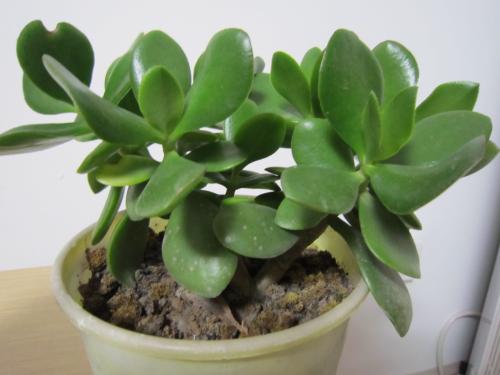
How to grow the jade plant
The jade plant likes a warm, dry environment with plenty of sunlight. It is not cold-hardy, fears strong light, and tolerates slight shade. A fertile, well-drained sandy loam soil is best. In winter the temperature should not fall below 7°C.
1. Soil: For growing the jade plant in a pot, it is suitable to use a mix of leaf mold and garden soil with a small amount of river sand added as the potting medium, and a little hoof parings or other slow-release fertilizer may be added as a base fertilizer.
2. Temperature: The optimum growing temperature for the jade plant is 15°C to 32°C. It fears high temperatures and stuffiness, and enters a dormant state when the summer heat exceeds 33°C. It dislikes cold and frost, and the overwintering temperature needs to be kept above 10°C; it also enters a dormant state when the winter temperature drops below 7°C, and if the ambient temperature approaches 4°C, it will die from frost damage.
3. Sunlight: The jade plant likes sun. If the light is insufficient, it easily suffers from damp heat, root rot and leaf drop, but the summer heat and strong direct sunlight are unfavorable to plant growth. In winter, the pot should be moved to a sunny spot indoors so that the leaves stay fresh and green.
4. Watering: From spring to autumn, the jade plant can be watered once every 1 to 2 days, but waterlogging in the pot must be avoided. In the high heat of summer, when the temperature reaches above 30°C, the plant is in a dormant or semi-dormant state, so watering must be controlled. At the same time, shading and cooling measures should be taken; the ground around the pot can be sprayed with water 2 to 3 times a day, and attention should be paid to ventilation. When winter arrives, the frequency of watering should be appropriately reduced to keep the potting soil slightly dry.
5. Fertilizing: The jade plant does not demand much fertilizer or water, and fertilizer and water may even need to be restricted. Generally no fertilizer is applied; if growth is too weak, some potassium-containing liquid fertilizer may be added, or once a month during the growing season a dilute, thoroughly decomposed cake fertilizer solution may be added.
6. Pruning: During the growing period of the jade plant, excessively long and dense branches should be moderately pruned to keep the plant's shape well balanced and the tree vigorous.
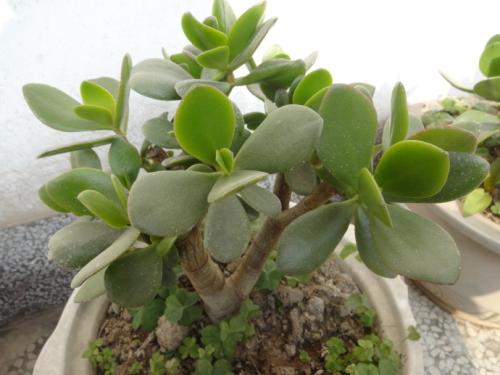
Points to note when growing the jade plant
1. The jade plant likes light, so it should be kept all year round in a warm environment with plenty of light; this is the key to flowering.
2. The jade plant is a fleshy, succulent plant and is very drought-tolerant. Normally it should not be watered too much; water only when the soil is dry and dry it out before watering again.
3. In the hot summer season, be careful to avoid heavy watering after exposure to the sun, as this causes leaf drop.
4. During the growing season of the jade plant, apply a dilute liquid fertilizer containing nitrogen, phosphorus and potassium once every 7-10 days; be sure not to make it too concentrated. If the above points are followed, by mid-to-late November flower buds will appear at the tips of the leaves, and from January to March the tree will be covered with flowers.