Selaginella uncinata (scientific name: Selaginella uncinata), also known as dragon whiskers, blue grass, sword cypress, blue ground cypress, ground cypress leaf, stretching-foot grass, green velvet grass, rotten-skin snake. Category: Selaginellaceae, Selaginella genus, perennial herb.
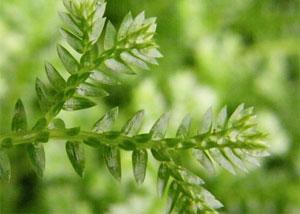
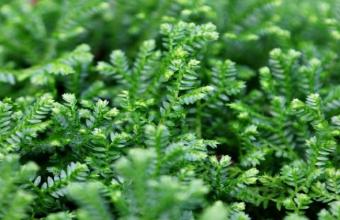
The stems creep along the ground and are extremely slender and soft, often producing adventitious roots at the branching points, with many branches. The small leaves are ovate, and the sporophylls are ovate-triangular. The leaf color is blue-green, its main stem is slender and brownish-yellow, and the lateral branches bear fine, scale-like small leaves. Its pinnate leaves are fine and dense, and emit a sapphire-like luster.
Cultivation Methods
Asexual cuttings are suitable for artificial propagation. Cuttings of Selaginella uncinata are very simple and easy to root. Just choose a piece of shady, damp ground (artificial shading treatment is also acceptable), keep the soil constantly moist, cut stem branches of Selaginella uncinata about 10cm long, and lay them flat on the damp ground. There is no need to bury them in soil; simply spray them with water, and they will soon take root and survive. Once established and surviving, extensive management is sufficient. The only slightly higher requirement is for water; it prefers moisture and not dryness, and after 2-3 months it will grow lushly.
Soil: Weakly acidic or acidic soil. The potting soil should be loose, permeable and rich in humus. It can be mixed in equal parts with leaf mold or peat, loam and plain sand;
Water: It likes a moist soil environment and is not drought-tolerant. Water regularly every day , and often spray water mist with a sprayer to maintain leaf surface humidity, which helps it grow more vigorously. In winter, reduce watering and keep it only slightly moist.
Fertilizing: During the growing season, fertilize once every half month, and pay attention to the balance of nitrogen, phosphorus and potassium. To avoid excessive vine growth, control the application of nitrogen fertilizer. Stop topdressing fertilizer in winter.
Temperature: It likes warmth and grows well at around 20°C, with a wintering temperature of 5°C. The ideal suitable growth temperature is 10-15°C at night and 21-26°C during the day;
Light: It likes semi-shade. In midsummer, pay attention to shading; it must not be exposed to the sun, otherwise the plant is prone to scorching and death.
Pruning: In spring, prune the plant once together with repotting, cutting off aged vines and shortening overly long branches.
Potting and Repotting: For planting, choose flower pots with a diameter of 15-20 cm, and plant 5-7 seedlings per pot. It likes fertile, loose and well-drained sandy loam. The substrate can be prepared from materials such as leaf mold, garden soil and rice husk ash or coarse sand. Potted plants should be repotted every spring when the root system fills the pot.
Leaf spot symptoms:
The affected leaves of Selaginella uncinata initially show round black spots, which later expand into round or nearly round spots. The edges of the spots are dark brown, and the centers are gray-black with small black dots. After that, the spots expand rapidly, and the leaves finally turn black, dry up and die.
Control methods:
1. Diseased plants should be immediately isolated and sprayed, or cut off and burned together
2. Spray for control with agents such as 50% carbendazim 1000x solution, 50% thiophanate-methyl 1000x solution, and 200x Bordeaux mixture.
3. For leaf spot caused by excessive watering or excessive humidity, in the early stage of the disease, spray for control with agents such as 50% amobam aqueous solution 300-400x and 70% thiophanate wettable powder 800-1000x.