Detailed Explanation of White Hosta Planting Methods and Key Technical Points
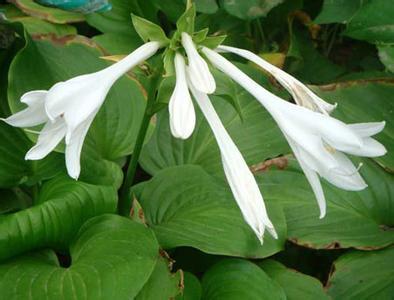
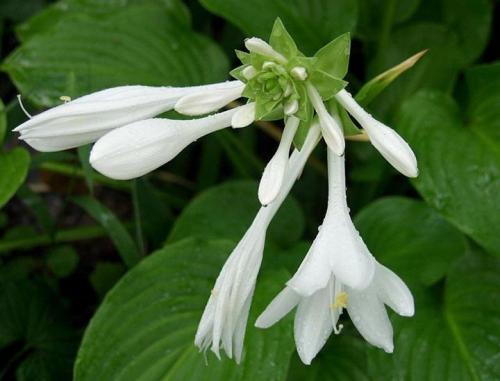
White Hosta, also known as White Calyx or White Crane Immortal, is a perennial herbaceous flowering plant of the Liliaceae family. It bears terminal raceme inflorescences with 9 to 15 flowers. The flowers are white, tubular-funnel-shaped, and fragrant, blooming from July to September. It gets its name because the flower buds are delicate and lustrous like jade, shaped like a hairpin. With jade-like lustrous green leaves, an elegant and upright form, jade-white flowers, and a subtle fragrance that fills the air, it is a famous traditional fragrant flower in China and is deeply loved by people.
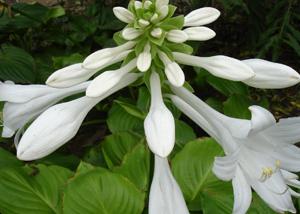
White Hosta cultivation methods:
Initial cultivation:
Disinfection of sowing substrate: Disinfect the substrate used for sowing. The best method is to heat it in a pot until hot, which will scald any pests and diseases to death.
Germination promotion: Soak the seeds in warm water (at a temperature similar to face-washing water) for 12 to 24 hours, until the seeds absorb water and swell. For very common seeds that germinate easily, this step can be skipped.
Sowing: For tiny seeds that are difficult to pick up by hand or with other tools, you can moisten one end of a toothpick with water and stick the seeds one by one onto the surface of the substrate, then cover with 1 cm of substrate. Then place the sowing pot into water, with the water depth at 1/2 to 2/3 of the pot height, allowing water to slowly soak up from below (this method is called the "pot soaking method");
For larger seeds that can be picked up by hand or with other tools, place the seeds directly into the substrate and sow them at a spacing of 3 x 3 cm. After sowing, cover with substrate to a thickness of 2 to 3 times the size of the seeds. After sowing, use a sprayer or a fine-holed watering can to moisten the sowing substrate. Later, when the potting soil is slightly dry, water again. Still be careful not to water too forcefully, to avoid washing the seeds away.
Management after sowing White Hosta:
After sowing in autumn, if a cold wave or low temperature occurs, you can wrap the pot with plastic film to help keep it warm and moist;
After the seedlings emerge, promptly remove the plastic film, and let the seedlings receive sunlight before 9:30 AM each day, or after 3:30 PM, otherwise the seedlings will grow very weak and spindly;
After most of the seeds have germinated, appropriate thinning is needed: pull out the diseased and unhealthy seedlings so that the remaining seedlings have some space between them;
When most of the seedlings have grown 3 or more leaves, they can be transplanted into pots.
Mid-stage cultivation - division propagation:
Division timing: It is best to do this in early spring (February or March) after the soil has thawed.
Division method: Take the mother plant out of the pot, shake off excess potting soil, separate the tangled root system as much as possible, and cut it apart with a sharp knife into two or more plants. Each divided plant must have a substantial root system, and its leaves should be appropriately trimmed to help it survive.
Potting and disinfection: Soak the divided small plants in a 1500-fold dilution of chlorothalonil for five minutes, then remove and air-dry before potting. Alternatively, immediately after potting, drench the roots with chlorothalonil solution.
Aftercare management: After dividing and potting, drench the roots or water thoroughly once. Because its root system is heavily damaged and its water absorption capacity is very weak, it takes about 3 to 4 weeks to recover and sprout new roots. Therefore, within 3 to 4 weeks after division, watering should be restricted to avoid root rot. However, the transpiration of its leaves is not affected. To maintain the water balance of the leaves, spray the leaf surface 1 to 3 times per day (spray more when temperatures are high, less or not at all when temperatures are low). Do not apply fertilizer during this period either. After division, also be careful of excessively strong sunlight; it is best to keep it in a shade shed for care.
Potting or transplanting:
First place 2 to 3 cm of coarse substrate at the bottom of the pot as a drainage layer, then place the plant in.
For the potting substrate, you can choose one of the following: peat moss : perlite : expanded clay pellets = 2:2:1; peat moss : vermiculite = 1:1; or peat moss : furnace slag : expanded clay pellets = 2:2:1; sawdust : vermiculite : medium-coarse river sand = 2:2:1; vegetable garden soil : furnace slag = 3:1; or garden soil : medium-coarse river sand : sawdust (mushroom residue) = 4:1:2; or paddy soil, pond mud, leaf mold, etc. After potting, water thoroughly once and keep it in a shaded environment for care.