Panax notoginseng Cultivation Techniques and Growing Management Methods
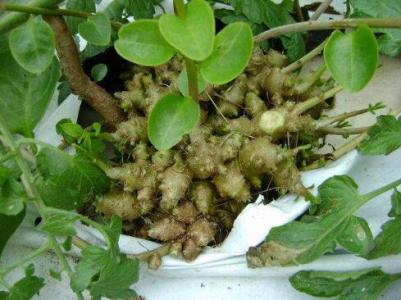
Panax notoginseng is a traditional Chinese medicine. It is mainly produced in Wenshan Prefecture, Yunnan, hence the name Wenshan notoginseng; it is also known as Wenzhou notoginseng. It is the dried root and rhizome of the Araliaceae plant Panax notoginseng (Burk.)F.H.Chen. It is dug up before flowering in autumn, washed clean, and the main root, branch roots, and rhizome are separated and dried. The branch roots are customarily called "jintiao", and the rhizome is customarily called "jiangkou".
Growth habits of Panax notoginseng
Panax notoginseng is a shade-loving plant. It prefers a warm winter and cool summer environment and fears severe cold and intense heat; it likes moisture but fears waterlogging, and the suitable soil moisture content is 22%-40%. It can grow when the summer temperature does not exceed 35°C and the winter temperature does not fall below minus 5°C, and the suitable growing temperature is 18-25°C. Panax notoginseng has low soil requirements and a wide range of adaptability, but loose, well-drained sandy loam is best. Sites that are overly clayey, overly sandy, or low-lying and prone to waterlogging are not suitable for planting. Continuous cropping is prohibited, and the soil pH is 4.5-8.
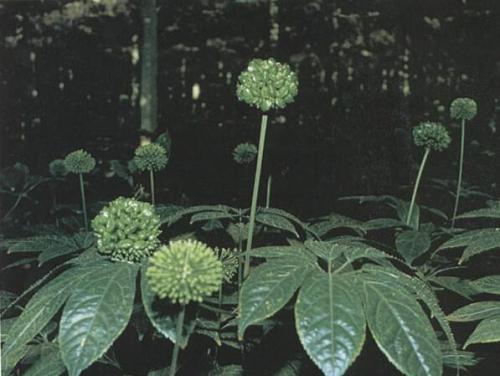
One-year-old Panax notoginseng has only 1 palmately compound leaf; two-year-old plants have 2-3 palmately compound leaves, each composed of 5-7 leaflets, and begin to bolt and flower; three- and four-year-old Panax notoginseng generally produces 3-5 palmately compound leaves, most of which are composed of 7 leaflets, with a few having as many as 9 leaflets. Panax notoginseng over five years old can have as many as 6 compound leaves. The number of palmately compound leaves in each year of growth is affected by growth and development conditions; with sufficient nutrients and suitable development conditions, the number of palmately compound leaves is greater.
For Panax notoginseng of each year class, in the production areas, seedlings emerge from February to March, and the emergence period is 10-15 days. After emergence, Panax notoginseng enters the leaf-unfolding stage. In the early leaf-unfolding stage, stems and leaves grow relatively quickly, and usually within 15-20 days the plant height can reach 2/3 of the normal plant height; afterward, stem and leaf growth slows. As the sprouts emerge and grow all at once, once the stems and leaves grown from the formed buds are damaged, there will be no aboveground seedlings.
Panax notoginseng is sensitive to light and prefers slanted, scattered, and diffused light, avoiding strong light. Generally, a light transmittance of 30% is suitable. If light is too weak, plants become spindly, leaves are soft, the main root grows slowly, and they are prone to disease; if light is too strong, plants are short, and leaves are easily scorched.
Panax notoginseng seeds have after-ripening characteristics and must be stored under moist conditions to complete physiological after-ripening and germinate. The suitable germination temperature for seeds is about 20°C. Under natural conditions, the lifespan of seeds is about 15 days. Once seeds are dried, they lose vitality; therefore, it is best to sow them immediately after harvesting or use stratification treatment.
Cultivation techniques for Panax notoginseng
1. Site selection and land preparation: It is best to choose gently sloping land with good drainage and a slope of 5-15 degrees, rich in organic matter humus or sandy loam. For farmland, the previous crop is best as corn, peanuts, or beans, and Solanaceae crops must never be the previous crop. Once the plot is selected, it should lie fallow for one to six months and be plowed multiple times to a depth of 15-20 cm to promote soil weathering. Where conditions permit, before plowing, spread grass and burn the soil, or apply 100 kg of lime per mu for soil disinfection. At the last plowing, apply 5000 kg of fully decomposed barnyard manure and 50 kg of cake fertilizer per mu, level and harrow finely, and make beds. The beds should face south, with a bed width of 1.2-1.5 m, a bed spacing of 50-150 cm, bed length depending on the terrain, and bed height of 30-40 cm. The bed perimeter should be blocked with bamboo poles or wooden sticks to prevent bed soil from washing away, and the bed surface should be shaped like a tile back.
2. Propagation method: Use seed propagation.
(1) Seed selection and seed treatment: Every year from October to November, select plump, mature, red fruits set by 3-4 year old plants, pick them, put them into a bamboo sieve, rub off the fruit skin, wash clean, and air-dry the surface moisture. Soak the seeds for 10 minutes for disinfection in a 400-fold solution of 65% zineb, or a 1000-fold solution of 50% thiophanate-methyl. Panax notoginseng seeds easily lose vitality after drying; therefore, they should be sown immediately after harvesting or preserved by stratification treatment.
(2) Sowing: Use a tool to mark rows, sow by dibbling at a row spacing of 6 cm x 5 cm, then evenly scatter a layer of mixed fertilizer (using decomposed farmyard manure or mixed with other fertilizers), and cover the bed surface with a layer of rice straw to keep the bed surface moist and suppress weed growth. Use 70,000-100,000 seeds per mu, equivalent to 10-12 kg of fruit.
If after sowing and watering, a silver-gray plastic film is used as mulch, it can produce obvious yield increases and good effects such as water retention and fertilizer savings.
(3) Seedling stage management and transplanting: During dry weather, water frequently; after rain, drain accumulated water promptly, and weed regularly. Fertilizer application at the seedling stage is generally based mainly on phosphorus fertilizer, usually applied 3 times: the first time after the seedlings emerge completely in March, and the latter 2 times in May and July respectively. The light transmittance of the seedling shed should be adjusted according to changes in light intensity in different seasons. Panax notoginseng seedlings are transplanted after one year of raising, generally from December to January of the following year. Transplanting requires lifting seedlings, selecting seedlings, and transplanting as one continuous process. When lifting roots, strictly avoid damaging rootlets and buds. When selecting seedlings, remove diseased, damaged, and weak seedlings, and cultivate them by grade. Panax notoginseng seedlings are divided into three grades according to root size and weight: 1000 roots weighing more than 2 kg are grade one; 1000 roots weighing 1.5-2 kg are grade two; and those below 1.5 kg are grade three. Transplanting row and plant spacing: for grades one and two, 18 cm x 15-18 cm; for grade three, 15 cm x 15 cm. Seedlings must be disinfected before planting. Most commonly, the roots are dipped in a 300-fold zineb solution, then immediately removed, air-dried, and planted promptly.
3. Field management
(1) Weeding and earthing up: Panax notoginseng is a shallow-rooted plant, with roots mostly distributed in the top 15 cm of soil, so deep cultivation is not suitable to avoid damaging the root system. After seedlings emerge, weeds on the bed surface should be removed promptly. While weeding, if rhizomes and roots are found exposed above the ground, earth should be added around them.
(2) Watering and drainage: In dry seasons, water frequently to keep the bed surface moist. When watering, spray rather than pour, otherwise plants may lodge. In the rainy season, especially after heavy rain, remove accumulated water promptly to prevent root rot and other diseases.
(3) Building sheds and adjusting light transmittance: Panax notoginseng likes shade, and artificial cultivation requires shade sheds. The shed height is 1.5-1.8 m, and side sheds should be set up around the shed. Shed materials can be obtained locally; generally, wood or cement precast beams are used as shed posts, wire is stretched across the top as crossbeams, and bamboo is woven into squares and laid on the shed top as cover. The amount of light transmitted through the shed has a close impact on the growth and development of Panax notoginseng. If too little light is transmitted, plants are slender and weak, prone to pests and diseases, and bear few flowers and fruits; if too much light is transmitted, leaves turn yellow and early wilting is likely. Generally, the principle of "sparse in the front, dense in the middle, sparse in the back" should be followed, that is, light transmittance is 60%-70% in spring, slightly smaller in summer at 45%-50%, and as the temperature turns cooler in autumn, light transmittance gradually expands to 50%-60%.
(4) Topdressing: Topdressing Panax notoginseng should follow the principle of "many times, small amounts". Generally, after seedlings sprout and emerge, broadcast plant ash 2-3 times, using 50-100 kg per mu, to promote strong seedling growth. In April-May, apply 1 application of mixed organic fertilizer (barnyard manure and plant ash at 2:1), using 2000 kg per mu; for seed-producing plots, add 15 kg of superphosphate to promote full fruits. After clearing the garden in winter, apply another 2000-3000 kg of mixed fertilizer per mu.
⑤ Removing flower bolts: To prevent unnecessary consumption of nutrients and concentrate supply for underground root growth, when flower bolts appear in July, remove all flower bolts, which can increase the yield of Panax notoginseng. Flower bolt removal should be done on sunny days.
4. Pest and disease control
(1) Damping-off: It harms seedlings. It begins to occur from February to April, and is severe in low-temperature, cloudy, and rainy weather.
Control methods:
① In combination with land preparation, burn the soil with weeds or use 1 kg of chloronitrobenzene per mu for soil disinfection;
② Apply fully decomposed farmyard manure and increase phosphorus and potassium fertilizer to promote strong seedling growth and enhance disease resistance;
③ Strictly carry out seed disinfection treatment;
④ Before seedling emergence, spray the bed surface with 1:1:1 Bordeaux mixture; after emergence, spray with a 1000-fold benzimidazole solution, once every 7-10 days, for 2-3 consecutive sprays;
⑤ Remove diseased plants promptly when found, disinfect the diseased holes with lime, and spray with a 1000-fold 50% thiophanate-methyl solution, once every 5-7 days, for 2-3 consecutive sprays.
(2) Phytophthora blight: It harms leaves. It begins to occur in May. In June-August, when temperatures are high, the weather is muggy after rain, rainstorms are frequent, the shed is too dense, and humidity in the garden is high, the disease develops rapidly and severely.
Control methods:
① After clearing the garden in winter, spray the bed surface with 2 degrees Baume lime-sulfur mixture to eliminate overwintering pathogens;
② Before onset, spray with 1:1:200 Bordeaux mixture, or a 500-fold 65% zineb solution, or an 800-fold 50% amobam solution, once every 10 days, for 2-3 consecutive sprays;
③ After onset, spray with a 700-800 fold 50% thiophanate-methyl solution, once every 5-7 days, for 2-4 consecutive sprays.
(3) Aphids: They harm stems and leaves, causing leaves to shrivel and plants to become short, affecting growth.
Control methods:
Spray-kill with an 800-1500 fold 40% dimethoate emulsifiable concentrate solution.
(4) Short-whiskered mites, also called red spiders. They gather on the undersides of leaves to suck sap, causing them to turn yellow, wither, and fall off. Damage is severe from June to October. After the flower disc and fruit are damaged, they become shrunken and shriveled.
Control methods:
① Clean the Panax notoginseng garden;
② After late March, spray 0.2-0.3 degrees Baume lime-sulfur mixture, once every 7 days, for 2-3 consecutive sprays;
③ In the peak onset period from June to July, spray a 800-1000 fold 20% tetradifon solution.