A Detailed Guide to Bamboo Shoot Planting Techniques and Cultivation Management
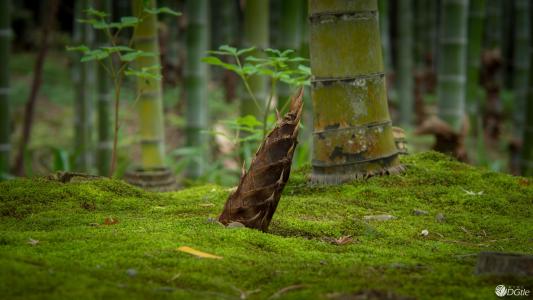
Bamboo shoot (English: bamboo shoot) is the young sprout of bamboo, also called sun. Bamboo is a perennial evergreen plant of the order Poales, and the edible part is the newly emerged, tender, plump, short and sturdy shoot or rhizome. Bamboo originated in China, has many types, strong adaptability, and a very wide distribution.
Planting Methods
1. Site Selection and Land Preparation
Bamboo is relatively common in the southern regions of China, and its growth vigor is extremely strong. In spring, once it rains, small shoots emerge all through the bamboo grove. Therefore, the soil chosen for planting must be loose and light in texture so that it can grow quickly. It grows best in fertile, loose, slightly acidic soil with a deep soil layer, where yields are relatively high, and it can also grow normally in relatively sticky soil, but the yield and quality are average. Land preparation is mainly done by digging pits, which makes management and planting convenient. The general size is 0.6m x 0.6m x 0.5m, then the topsoil is backfilled, and some organic fertilizer can be applied in appropriate amounts when backfilling.
2. Seed Selection and Seedling Raising
There are also extremely many varieties of bamboo shoot. In order to increase yield and maximize economic benefit, the best mother bamboo to choose is the narrow-leaf bamboo. The characteristics of narrow-leaf bamboo are small and narrow leaves, flat nodes, earlier shoot emergence, and a long shoot period. Its bamboo shoots are thick and crisp in texture, and the yield is extremely high. Choose 1- to 2-year-old new bamboo as the bamboo rhizome; those over 3 years old are not suitable as mother bamboo, as their rhizomes have few buds, produce few shoots, and have a low survival rate after transplanting. Bury the new bamboo with its culm together with the rhizome for seedling raising. It is best to keep one or two live branches on the culm to improve the survival rate, then bury it in the soil. Generally, about 4000 rhizomes are buried per mu.
3. Reasonable Planting
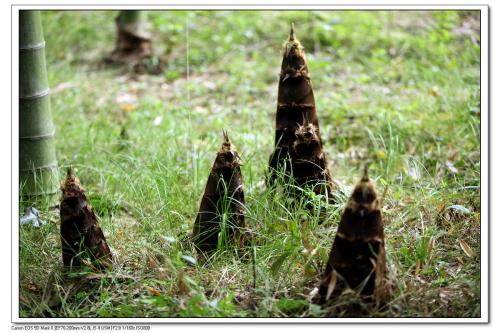
Because the root system of bamboo seedlings is highly lignified, leaving them for too long after lifting can easily cause the seedlings to lose water and affect the survival rate. Therefore, they are not suited to long-distance transport. To ensure the survival rate, generally no more than 72 hours should pass from lifting the seedlings to finishing planting; if planting is completed within 48 hours, the survival rate is relatively high, and it is best to plant them immediately after lifting. Also, dip the roots in mud slurry immediately after lifting. If long-distance transport is needed, wrap the roots with straw in bundles of 30 plants. During planting, different planting methods can be used according to the size of the bamboo seedlings. For 1- to 2-year-old seedlings, central planting can be used, and the culm should be kept upright. For seedlings over 2 years old or rhizome-propagated seedlings, the culm must first be cut. After cutting, the seedling height is about 60 cm. After planting, the culm of the bamboo seedling should lean toward the downhill side of the slope, forming a 45 degree angle with the horizontal plane, with only 1 to 2 live branches left outside the soil, so as to reduce water transpiration and improve the survival rate.
4. Later-Stage Management
To ensure yield, fertilizer and water management is essential during planting. Only by ensuring the nutrients needed for bamboo growth can more high-quality bamboo shoots be harvested. Watering and fertilizing should be carried out each year according to the growth stage of the bamboo. Generally, fertilizer is applied 3-4 times per year: the first time in May-June, the second time in August-September, the third time in November-December, and the fourth time in April of the following year. In the rainy season in the southern regions, drainage measures should be well done to prevent excessive water accumulation in low-lying areas from causing root rot, but in high-temperature seasons, water should also be irrigated in time to prevent the soil from being too dry and affecting yield.