A Detailed Guide to Kan Gua Planting Methods and Key Techniques
The growth characteristics and cultivation techniques of Kan Gua are basically the same as those of ordinary pumpkins; it has low requirements for the natural environment and soil, and can be planted in both spring and summer. According to measurements by the Food Quality Supervision and Testing Center of the Ministry of Agriculture, it contains 8 essential amino acids that the human body cannot synthesize on its own and is rich in vitamin C, and it has certain medicinal value.
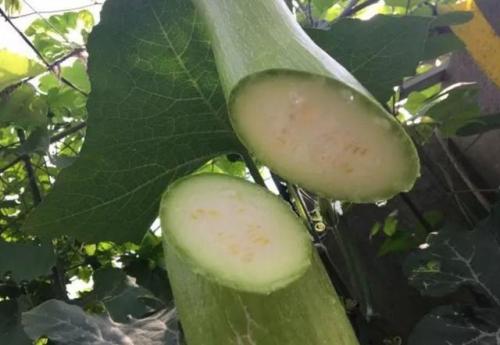
Field management of Kan Gua:
After Kan Gua is planted and the seedlings have revived, apply a seedling-promoting fertilizer, using an appropriate amount of decomposed liquid manure or cake fertilizer. After the first melon has set firmly, apply a compound fertilizer, 30 kg per 667 sq m, and water after fertilizing; afterward, apply fertilizer appropriately according to the growth vigor. During the fruiting period, keep the soil moist at all times.
If Kan Gua is cultivated by trailing on the ground, the melon shape is curved and harvesting is inconvenient; for high yield and good quality, it needs to be grown on trellises. Set up the trellis in time when the plant begins to send out vines; when the melon vine grows to 0.5-0.8 m, build the trellis. The trellis height is about 2 m; guide the melon vines onto the trellis and secure them well with packing straps to prevent them from falling over when the wind blows. A flat trellis gives high yield and good fruit shape. For scattered planting, a flat trellis is better. When planting, pay attention to artificial pollination, carrying out artificial pollination every morning from 6:00 to 7:30 to ensure the fruit-setting rate.
Determine the suitable seedling-raising time according to the need for the marketing period. Under protected cultivation, it takes about 80 days from sowing to the start of harvesting. When the melon vine is 1 m long, press the vine; before pressing the vine, remove the side vines below 1 m to prevent them from competing for nutrients, then guide the vines onto the trellis. Do not pinch off the growing tip of the main vine; after the first cluster sets fruit, pinch off the growing tip at 5-8 leaves, and keep 2 side vines per plant. When tying the vines, pay attention to arranging the vines and leaves evenly so that the melons hang naturally. Properly prune side vines that have already borne fruit to facilitate ventilation.

Planting methods for Kan Gua
1. Land preparation and planting:
Before planting Kan Gua, prepare the land well and apply sufficient base fertilizer. Apply the base fertilizer in furrows; 4000 kg of decomposed organic fertilizer per mu can be used, together with 50 kg of ternary compound fertilizer and 30 kg of potassium sulfate. For scattered planting, it is advisable to dig large holes for planting; apply base fertilizer before planting. For field planting, the density is 100-120 cm between rows and 60-80 cm between plants, with 600-1000 plants per mu, depending on soil fertility: plant more on lean land and fewer on fertile land. Water after planting.
2. Fertilizer and water management:
After planting and seedling revival, apply a seedling-promoting fertilizer, using an appropriate amount of decomposed liquid manure or cake fertilizer. After the first melon sets firmly, apply a compound fertilizer, 30 kg per mu, and water after fertilizing; afterward, apply fertilizer appropriately according to the growth vigor. During the fruiting period, keep the soil moist at all times.
3. Trellising:
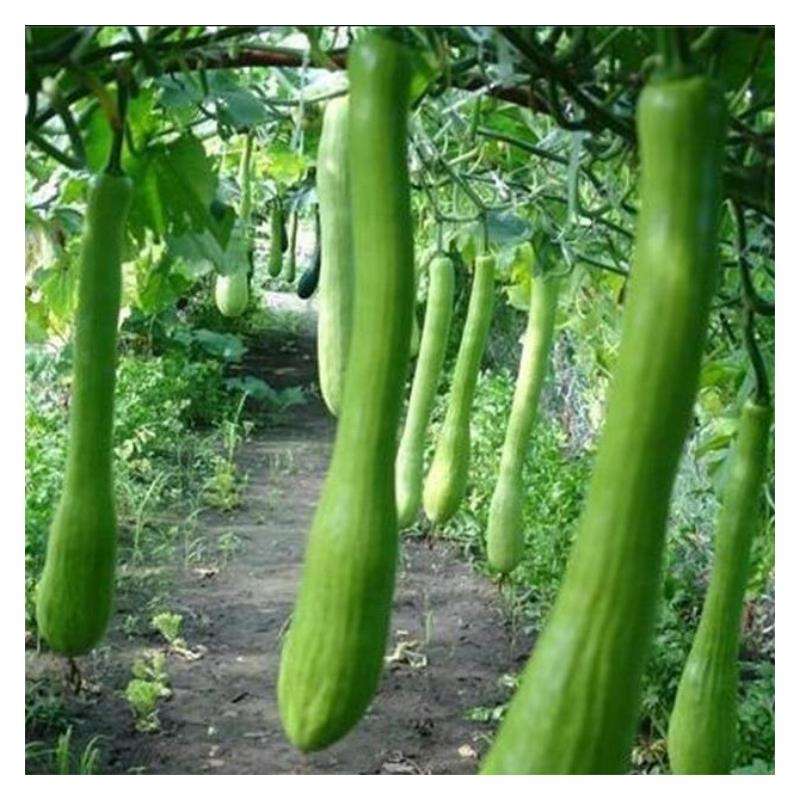
If Kan Gua is cultivated by trailing on the ground, the melon shape is curved and harvesting is inconvenient; for high yield and good quality, it needs to be grown on trellises. Set up the trellis in time when the plant begins to send out vines; when the melon vine grows to 0.5-0.8 m, build the trellis. The trellis height is about 2 m; guide the melon vines onto the trellis and secure them well with packing straps to prevent them from falling over when the wind blows. A flat trellis gives high yield and good fruit shape. For scattered planting, a flat trellis is better. When planting, pay attention to artificial pollination, carrying out artificial pollination every morning from 6:00 to 7:30 to ensure the fruit-setting rate.
4. Vine guiding and tip pinching:
When the melon vine is 1 m long, press the vine; before pressing the vine, remove the side vines below 1 m to prevent them from competing for nutrients, then guide the vines onto the trellis. Do not pinch off the growing tip of the main vine; after the first cluster sets fruit, pinch off the growing tip at 5-8 leaves, and keep 2 side vines per plant. When tying the vines, pay attention to arranging the vines and leaves evenly so that the melons hang naturally. Properly prune side vines that have already borne fruit to facilitate ventilation.
5. Timely harvesting:
Kan Gua does not need to be picked only after the melon is ripe before eating; during the growth period it can be cut and eaten at will, cutting as much as you eat, so you can eat fresh melon every day. The first cluster of melons can be harvested when the melon skin turns golden yellow, which is beneficial for the normal growth of the later Kan Gua. If the melon skin is not damaged, Kan Gua can be stored for a long time after harvesting.
6. Pest and disease control:
Kan Gua has few insect pests and also mild diseases, but when they occur they should be actively controlled.
① Diseases: Kan Gua has strong adaptability to external conditions, and pests and diseases are relatively mild. Common diseases include powdery mildew, viral disease, phytophthora blight, anthracnose, and so on, among which viral disease is the most serious and often causes a large number of flower and fruit drop. For control, spraying with 500-600 times dilution of chlorothalonil can be used, or 500-600 times dilution of kasugamycin plus 500-600 times dilution of carbendazim can be sprayed 2-3 times during the growth and development period of Kan Gua, which can prevent disease occurrence.
② Insect pests: The main insect pests of Kan Gua include aphids, red spiders, white grubs, and so on. For control, spraying with 1000 times dilution of 90% trichlorfon can be used; for underground pests, 90% trichlorfon mixed with stir-fried aromatic bait can be used for trapping and killing. In early July, spray once with acaricide to control red spiders. Entering the rainy season, spray chlorothalonil or thiophanate-methyl once every 7 days as the situation requires, to prevent powdery mildew and downy mildew, and combine with spraying potassium dihydrogen phosphate to protect leaves and promote melons; this is a key measure to increase yield.