Detailed Explanation of Hazelnut Planting Techniques and Management Methods
The hazelnut, also known as the mountain chestnut, pointed chestnut, or chui zi, is a deciduous shrub or small tree of the genus Corylus in the birch family (Betulaceae) under the dicotyledon class, about 1-7 m tall. It is one of the world's four major dried nuts (walnut, almond, hazelnut, cashew) and enjoys the reputation of being the "king of nuts."
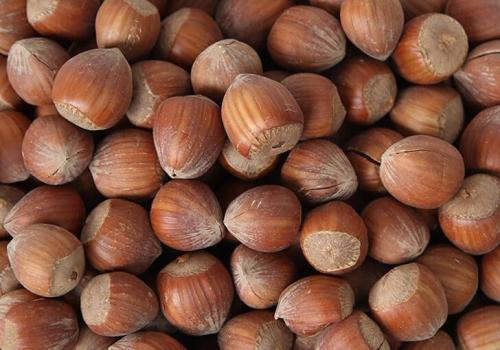
Hazelnut planting conditions
1. Temperature: Different types of hazelnut trees have different temperature requirements. The European hazelnut (Corylus avellana) prefers a warm, humid climate. It is suitable for areas with an average temperature of 13-15°C, an absolute minimum of -10°C, and an extreme high temperature of 38°C. The Ping'ou hybrid is more cold-resistant than the European hazelnut and is suitable for cultivation in areas with an annual average temperature of 7.5-13°C and a minimum temperature that can reach -30°C.
2. Light: The hazelnut tree is a light-loving plant and generally requires an annual sunshine duration of more than 2100 hours; otherwise, flower bud formation is reduced and yield is low.
3. Soil: The hazelnut tree prefers to grow in fertile, well-aerated sandy loam soil. The Ping'ou hybrid in particular has high soil requirements; dry sandy soil, heavy clay soil, marshland, saline land, and low-lying land are all unsuitable for establishing a hazelnut orchard. The Ping'ou hybrid requires a soil pH of 6.5-7.5, while the European hazelnut requires 5.5-7.
Hazelnut planting techniques
1. Planting density: To achieve a high yield from hazelnut trees, the planting density of the hazelnut trees should be reasonable. The reasonable choice of planting density for hazelnut trees is closely related to many factors, such as species, variety, rootstock, cultivation techniques, tree form used, terrain, soil, and climatic conditions. Therefore, when choosing the planting density of hazelnut trees, multiple factors must be considered so that the hazelnut trees can grow robustly.
2. Planting density: In fertile, flat locations, the planting distance of hazelnut trees should be larger; on mountain hazelnut orchards with steeper slopes and poor soil, the planting row spacing can be smaller. For varieties with vigorous growth and an open canopy, the planting row and plant spacing should be larger; for varieties with weak growth and an upright, compact canopy, the planting row and plant spacing of hazelnut trees can be smaller. Depending on the cultivation purpose, the planting density should also differ. If early high yield is desired, planned close planting can be used, planting densely early on and thinning later when the orchard becomes closed.
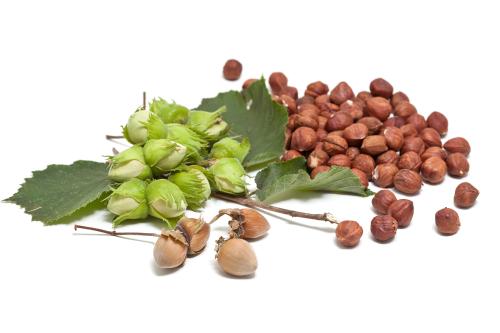
3. Planting depth: The root system must not be buried too deep or too shallow; after planting, the root collar is required to be at ground level or slightly lower than the ground by 5 cm. A soil burial depth of 6-10 cm above the root system is appropriate. If the soil in the hole is loose, to prevent the soil from sinking too much after watering and making the planting depth difficult to control, the soil should be watered appropriately before planting. Or the soil in the hole can be tamped slightly with the foot.
4. Reasonable watering: Build a watering tree basin around the hazelnut tree with a diameter of 1 m to facilitate watering and water storage. Water immediately after planting, and water sufficiently and thoroughly. After the water seeps down, cover with soil to preserve moisture, and cover the tree basin with plastic film to retain moisture and increase temperature, promote root activity of the hazelnut tree, and improve the survival rate.
5. Timely pruning: Keep one main trunk, and thereafter carry out shaping and pruning according to its own growth and development characteristics to form a reasonable framework. Generally, three tree forms are used: the few-trunk clump form, the single-trunk form, and the multi-trunk clump form. For the few-trunk clump form, keep 3-4 basal branches as main branches and let them grow obliquely in different directions. Lateral branches grow on the main branches of the hazelnut tree, and vegetative branches and fruiting mother branches grow on the lateral branches. The overall formation is still an open-center tree form. For the single-trunk form, one main trunk must be retained, and 3-4 evenly distributed main branches are selected and kept on the main trunk; lateral branches are selected and kept on the main branches, and secondary branches and fruiting mother branches grow on the lateral branches, forming a short trunk.
6. Reasonable fertilization: In early May, apply decomposed farmyard manure, and in mid-July, apply compound fertilizer as a top dressing. In the second year after planting, top dressing can be applied outside the projection of the outer periphery of the hazelnut tree canopy, and it should not be applied too deep.
7. Trunk determination after planting: After planting, the hazelnut tree is headed back to determine the trunk, divided into the single-trunk form and the clump form. Plots with good soil, fertilizer, and water conditions are suitable for the single-trunk tree form, with a trunk determination height of 60-70 cm; otherwise, the clump tree form is suitable, with a trunk determination height of 30-40 cm. For seedlings planted that year, water and fertilizer management should be strengthened to make them grow robustly, sprout a certain number of branches, and have good lignification, preventing the hazelnut tree from excessive vegetative growth. After leaf fall in autumn, earth up the soil for cold protection, with the earth piled up to 1/2 of the plant height. In the following spring, remove the cold-protection soil; generally, from the second year onward, earth banking for cold protection is no longer needed.