Key Points of Sweet Corn Cultivation Techniques and Field Management Methods
Sweet corn (Sweet corn) is a species of corn, also known as vegetable corn, belonging to the grass family, genus Zea. Sweet corn is one of the main vegetables in developed countries such as Europe and America, South Korea and Japan. Because of its rich nutrition and its sweet, fresh, crisp and tender characteristics, it is favored by consumers of all levels. Super-sweet corn is widely planted because of its high sugar content and long suitable harvest period. China is the world's center of origin for waxy corn, with a long history of cultivation. Waxy corn is rich in nutrition and high in edible value, and is widely used as a nutritional food in today's world.
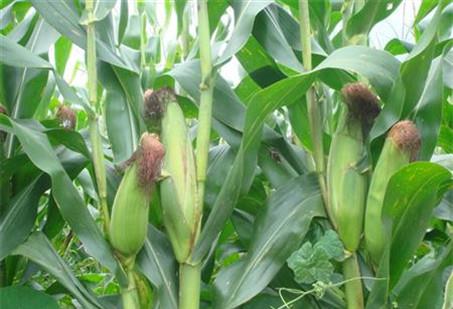
Cultivation Techniques:
Isolated Planting
To ensure the eating quality of sweet corn, when selecting land for planting, it must be strictly isolated from other common corn varieties to avoid reducing quality due to cross-pollination. In production, the isolation methods used are spatial isolation and temporal isolation. Spatial isolation is preferred.
1. Spatial isolation: It is required that no other corn varieties be planted within 300 to 400 m around the planting area; if there are natural barriers such as trees or hills, the isolation distance may be appropriately shortened.
2. Temporal isolation: If spatial isolation cannot be carried out, temporal isolation (staggering sowing dates) should be adopted to avoid overlapping flowering periods with other varieties. The sowing interval between 2 different varieties is generally 20 to 25 d. If sweet corn is planted in large contiguous areas, the isolation standard may be appropriately lowered. In short, the principle is not to let the corn pollen of the two types meet.
Fine Land Preparation
Because sweet corn (especially super-sweet corn) seeds are generally rather shriveled and small, and are more difficult to germinate, push through the soil, and emerge than common corn seeds, fine seedling raising is required. When planting, the land must be finely prepared, and plots with loose soil, fertile soil, and convenient drainage and irrigation should be selected. After the previous crop is harvested, plow and turn the soil 20 to 30 cm in time, and apply sufficient base fertilizer together with the plowing. Generally, per 667 sq m apply 1000 to 1500 kg of organic fertilizer, 30 to 40 kg of calcium superphosphate, 20 kg of potassium sulfate, and 1 to 1.50 kg of zinc sulfate or 20 kg of corn special-purpose fertilizer as base fertilizer.
Reasonable Close Planting
Sweet corn is entirely a commercial product; therefore, attention must be paid to the product characteristics of the ears, and yield per unit area alone cannot be the only consideration. Ears are purchased by grade, especially those used for export or processing, so the rate of grade 1 and 2 products should be increased as much as possible. The suitable planting density should be determined according to commodity requirements and economic benefits, so as to obtain higher economic income per unit area as much as possible. On generally medium-fertility soil, 4000 plants/667 sq m is appropriate; early-maturing varieties may be denser, and late-maturing varieties may be sparser.
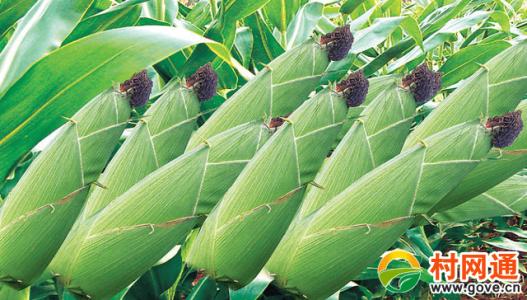
Field Management
1 Thinning and Final Thinning
After emergence, inspect the seedlings and fill gaps in time. Thin the seedlings when the young plants have 3 to 4 leaves, and carry out final thinning when they have 4 to 5 leaves. The principle of thinning and final thinning is to remove the large and small ones and keep the middle ones, ensuring that the seedlings throughout the field are uniform and consistent.
2 Topdressing by Stages and Timely Cultivation On the basis of applying sufficient base fertilizer, topdress early, and apply the ear-forming fertilizer early and heavily, to ensure that the sweet corn plants grow green all the way. This is the key to the success or failure of planting fresh-eating corn, and is also the main difference from common corn cultivation methods. Generally, apply 30 kg of urea per 667 sq m, with 15 kg applied at the jointing stage and 15 kg at the large trumpet stage respectively. Each topdressing should be applied as deeply as possible, and each fertilization should be combined with loosening the soil, earthing up, and clearing the ditches, while carrying out intertillage and weeding.
3 Drought Resistance and Watering
During the seedling stage and after heading and flowering, if the weather is dry, water in time. From the emergence of silks from the female ear to the harvest period is the key period for irrigation. When the soil surface is dry, irrigate in time to prevent missing grains at the tip of the ear.
4 Assisted Pollination
Under general climatic conditions, corn can set seed by natural pollination, but under special climatic conditions, such as continuous rainy weather or high temperature, or when plant growth is weak, artificial assisted pollination is needed. The time for artificial pollination is generally before 10 a.m. The pollination method is relatively simple: just gently place the pollen on the silks.
5 Integrated Control of Diseases, Insects and Weeds
5.1 Weed control. Usually, this can be combined with applying seedling fertilizer at the 3 to 4 leaf stage for shallow intertillage and weeding; at the jointing stage, combine with applying ear fertilizer for deep intertillage and weeding. Before planting, acetochlor herbicide may also be sprayed for weed control.
5.2 Disease and insect pest control.
① To control northern and southern leaf blight, spray the leaves with 400% Hinosan emulsion at 500 to 1000 times dilution or 50% thiophanate-methyl suspension at 500 to 800 times dilution;
② To control armyworms, spray with 20% fenvalerate emulsifiable concentrate at 2000 to 3000 times dilution;
③ To control corn borers, at the large trumpet stage mix 50% parathion with poisoned sand and broadcast it in the field;
④ To control red spiders, spray with 73% propargite emulsifiable concentrate at 1000 times dilution.
⑤ To control stalk rot during the jointing to tasseling stage of corn, choose metalaxyl-copper or DT and spray according to the specified amount. Spraying time should preferably be chosen after the dew has dried in the morning on a sunny day or from 4 to 6 p.m. The use of highly toxic, high-residue pesticides or agents with "three-causing" effects is prohibited.
6 Timely Detasseling
Detasseling allows the plant's limited water and nutrients to be concentrated on ear development. After detasseling, the harvested young ears have bright color, are fresh and tender, and have neat rows of kernels. Timely detasseling is the key to technical success. If detasseling is too early, it is easy to pull out the top leaves; if detasseling is too late, too many nutrients are consumed and detasseling loses its meaning. Generally, for harvesting baby corn, detasseling should best be done when the tassel has extended beyond the top but has not yet shed pollen; for harvesting tender sweet corn ears, detasseling is best done 2 to 3 d after the tassel sheds pollen. The best times for detasseling are 8 to 9 a.m. and 4 to 5 p.m., which is conducive to wound healing. Within the suitable period, generally detassel once every 1 to 2 d, completing it in 2 to 3 rounds.
7 Ear Removal
In order to produce high-quality ears with a high qualification rate, excess small ears must be removed, that is, only the largest ear is retained. Sweet corn has a relatively small leaf area; to ensure sufficient nutrient area, tillers may be retained rather than removed.
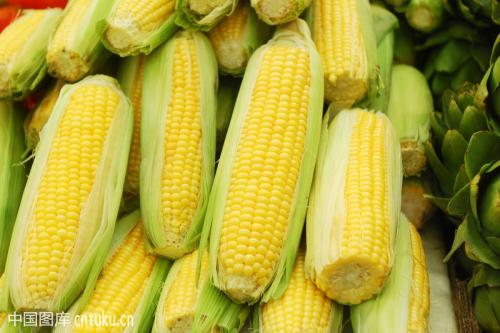
Timely Harvest
Generally, harvesting is appropriate when the grain moisture content is 66% to 71% (milk-ripe stage). In production practice, the harvest period of sweet corn greatly affects its commercial quality and nutritional quality. If harvested too early, the grains contain less material and the taste is not very good; if harvested too late, the pericarp becomes hard and loses the unique flavor of sweet corn. Generally speaking, the suitable harvest period is 17 to 23 d after silking; if the purpose is canning, it may be harvested 1 to 2 d earlier; if mainly for selling fresh ears, it may be harvested 1 to 2 d later, with a harvest period of about 6 d.