A Detailed Guide to Peace Lily Planting Methods and Key Techniques
Spathiphyllum kochii Engl. & K.Krause (peace lily / white sail plant), a perennial herb of the Araceae family. The plant grows 30 cm-40 cm tall, with no stem or a short small stem; the leaves are oblong or nearly lanceolate, with a distinct midrib and petiole, dark green. It flowers in spring and summer; the spathe is large and conspicuous, rising above the leaves, white or slightly green, and the spadix is creamy yellow.
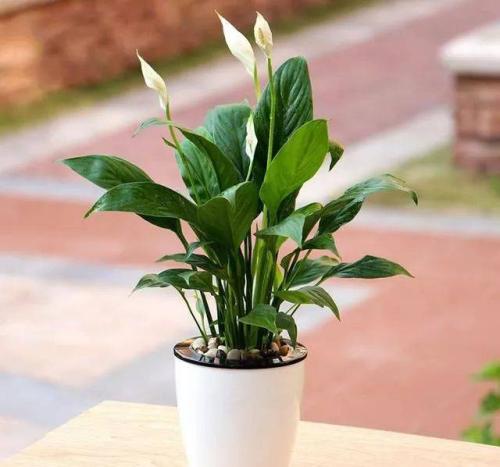
Peace Lily Planting Methods
The peace lily is fairly shade-tolerant; as long as there is about 60% scattered light, its growth needs are met, so it can be grown year-round indoors in a spot with bright, scattered light. In summer, 60%-70% of sunlight can be shaded out; direct strong light should be avoided, otherwise the leaves will turn yellow and, in severe cases, sunscald will occur. For greenhouse cultivation in northern winters, no shading or only slight shading is needed. If the light is too dim for a long time, it will be difficult for the plant to bloom.
The peace lily is a heat-loving species and should be grown in a high-temperature greenhouse. In winter, the nighttime minimum temperature should be 14-16°C, and the daytime temperature should be around 25°C. Prolonged low temperatures easily cause leaf drop or scorched-yellow leaves. During the growing period, the potting soil should be kept moist at all times, but overwatering should be avoided; if the potting soil stays wet for a long time, it easily causes root rot and the plant to wither and turn yellow.
In summer and dry seasons, water should often be sprayed onto the leaf surfaces with a fine-nozzle sprayer, and water should also be sprinkled on the ground around the plant to keep the air humid, which is very beneficial to its growth and development. When the climate is dry and air humidity is low, new leaves will become smaller and yellow, and in severe cases will wither, turn yellow and drop. In winter, watering should be controlled, and the potting soil should be kept slightly moist.
For potted peace lilies, the soil should be loose and well drained and aerated; heavy clay soil must not be used. Generally, a substrate can be made by mixing leaf mold and peat soil with a small amount of perlite; when planting, add a small amount of organic fertilizer as a base fertilizer. Because it grows quickly and has a relatively high fertilizer requirement, a liquid fertilizer must be applied once every 1-2 weeks during the growing season; at the same time, provide sufficient water and keep the potting soil moist at all times. During high-temperature periods, water should also be sprayed on the leaves and the ground to raise air humidity. If the surrounding environment is too dry, new leaves will become smaller and yellow, and in severe cases will wither, turn yellow and drop.
In late autumn and winter, the amount of watering should be reduced, and it is enough to keep the potting soil slightly moist. It requires semi-shade or scattered light conditions, and during the growing season it must be shaded at 60%-70%. If the light is too strong, the leaves are easily scorched and burned, the leaf color becomes dull, and it loses its luster; if the light is too dim for a long time, the plant grows weakly and does not bloom easily. The peace lily is a heat-loving species; prolonged low temperatures and dampness easily cause root rot and yellowing of the aboveground parts, so in winter attention should be paid to cold protection and heat preservation while keeping the potting soil moist.
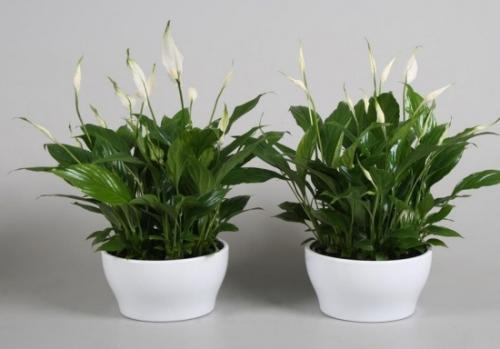
Precautions for Growing Peace Lilies
1. Improper light. Peace lilies need good light in winter and early spring and should not be kept in shade; when the light gradually strengthens, shade should be increased gradually. If the plant has been enjoyed in a shaded spot, it must not be placed directly in the sun to bake, otherwise it will become uncomfortable due to the sudden change in environment, showing wilting, yellow leaves, and even death.
2. Humidity: Peace lilies need relatively high growing humidity. If the air is too dry, the leaves will wilt. This can be solved by increasing spraying or sprinkling water on the ground around the plant. Covering it with a transparent plastic bag also works, but when the light is good, it should be ventilated slightly or a hole should be opened at the upper end of the plastic bag for ventilation, otherwise the temperature inside the bag will rise sharply.
3. Improper fertilizing. Fertilizer should be applied lightly; do not apply concentrated fertilizer or raw fertilizer, and after applying solid fertilizer, water once with clear water. It is best to use dilute fertilizer water instead of clear water for watering; this generally will not cause fertilizer burn, and the plant will grow luxuriantly.
4. Unsuitable temperature. This generally does not happen at this time; it mostly occurs easily when the temperature is below 5°C or above 35°C.
5. Pests. If harmful mites cause damage, the leaves will show adverse symptoms such as wilting, faded luster, and yellowing and withering. Acaricides can be sprayed for control, such as dicofol, hexythiazox, and pyridaben.