Detailed Explanation of Cabbage Planting Methods and Technical Points
Cabbage is a common name for head cabbage (simply called cabbage), and it is widely cultivated in both northern and southern parts of our country. It is a large-volume vegetable with high yield, widely used for fresh eating, processing, and its lower outer leaves can be used as feed. Cabbage can be cultivated in summer, autumn, and over winter. Its high-yield cultivation techniques are introduced below.
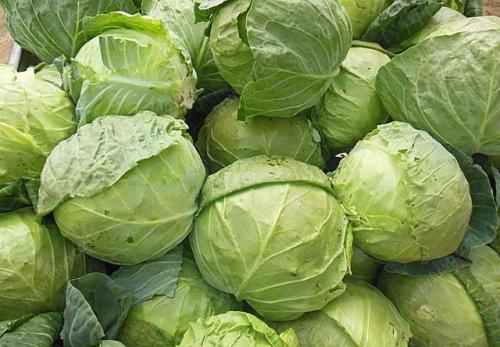
Sowing and seedling raising:
1. Sowing period: Xiaguang cabbage, sow from March to early July; Jingfeng No. 1 and autumn cabbage, sow in early to mid-July; overwintering cabbage, Jixin cabbage, Niuxin cabbage, Chunfeng, etc., sow from late October to early November. Seed dosage per mu is 50-75 grams.
2. Seedling raising: Choose fertile, well-drained vegetable soil. Before sowing, plow and sun-dry until it turns whitish, then break it up finely and level it. Apply 1500 kg of decomposed human manure urine liquid per mu as base fertilizer. After it dries, rake it evenly so that soil and fertilizer are blended, then sow, broadcasting 10 grams of seed per square meter. Then cover with a layer of sieved fermented coal ash soil (fine soil mixed fertilizer is also acceptable). In drought, set up a flat shed for shading (shade net is better), keep the soil moist for a long time, remove weeds and miscellaneous plants in time after emergence, and spray pesticides to control pests and diseases.
(3) Field cultivation:
1. Seedling age: between 25-30 days.
2. Transplanting: Choose seedlings that are robust, free of diseased leaves, free of damaged leaves, uniform in growth, and with good root bases, and transplant them with soil. Planting density is: Xiaguang cabbage, plant spacing 35 x 45 cm; autumn cabbage Jingfeng L No., plant spacing 40 x 45 cm; Jixin, Niuxin, Chunfeng overwintering spring cabbage, plant spacing 35 x 40 cm.
3. Field soil preparation: Apply base fertilizer. About 15-20 days before transplanting, first turn over and dig up the field, let it sun-dry for about 10 days, then prepare the soil. Do one rough preparation, then two days before transplanting do one fine preparation, then apply base fertilizer, applying 2000 kg of decomposed human manure urine liquid per mu, 25 kg of superphosphate, and 150-200 kg of plant ash or burnt soil ash. To concentrate fertilizer efficiency, the base fertilizer can be applied directly into the planting holes, and after it dries, mix the hole soil evenly, ready for transplanting. After transplanting, pour a little settling water on each seedling, 0.5 kg per plant, and thereafter water once a day until survival.
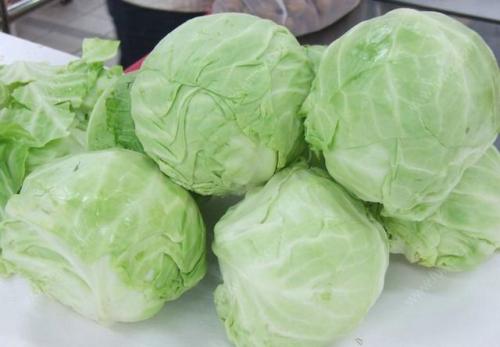
Under conditions of high temperature, strong sun, and long periods of clear weather without rain, corresponding measures can be taken to carry water to irrigate seedlings or irrigate to moisten seedlings for drought resistance. Irrigation should be done in the evening on sunny days. After the water reaches the ditch surface, immediately drain the remaining water in the ditch, so as to avoid root rot and affect growth.
In addition, the topdressing of spring cabbage is different from the above-mentioned topdressing of autumn cabbage. With the same base fertilizer, spring cabbage generally mainly uses clear water irrigation in winter for drought resistance and seedling preservation, but clear water should not be poured too much. As long as the vegetable seedlings grow well and do not show water shortage,
do not water. After the beginning of spring, spring cabbage grows rapidly. At this time, it is suitable to topdress 2-3 times with heavy fertilizer at about 40% concentration, once when the leaves between plants fill the field soil, called "row closing," and another 1-2 times before heading and at the middle stage. Apply about 1500 kg of human manure urine liquid per mu.
5. Pest and disease control:
Cabbage insect pests include: cabbage caterpillar, aphids, cabbage webworm, cotton leafworm, diamondback moth, striped flea beetle, etc. They can be controlled with 1000-fold dilute solution of Anlubao, 500-800-fold dilute solution of acephate, and 500-600-fold dilute solution of isofenphos-methyl.
Cabbage diseases include: soft rot, sclerotinia rot, black rot, etc. They can be controlled by spraying or pouring 500-fold dilute solution of 80% zineb, 600-fold dilute solution of chlorothalonil, and 600-fold dilute solution of Dexon original powder on diseased plants and the roots of surrounding healthy plants.