Chinese Milk Vetch Planting Methods and Key Technical Points
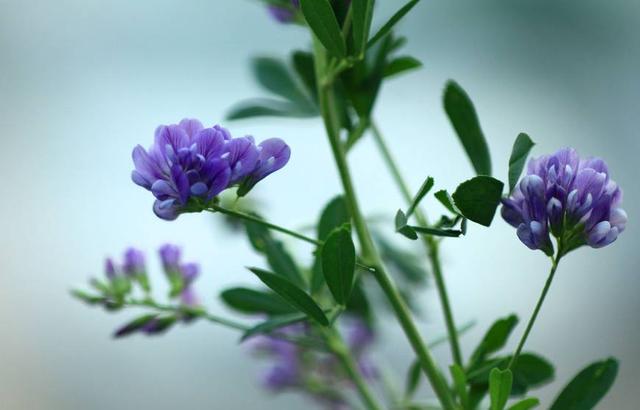
Chinese milk vetch is a biennial herbaceous plant in the legume family, Astragalus genus, prostrate and much-branched, reaching up to 30 cm in height, with odd-pinnate compound leaves, and petioles shorter than the leaf rachis. Stipules are free, leaflets obovate or elliptic, apex obtuse-rounded or slightly emarginate, base broadly cuneate, nearly glabrous above, sparsely covered with white pubescence beneath; racemose inflorescences, flowers arranged umbel-like; peduncles axillary, bracts triangular-ovate, pedicels short; calyx campanulate, calyx teeth lanceolate, corolla purplish-red or orange-yellow, standard petal obovate, wing petals oblong, pods linear-oblong, seeds kidney-shaped, chestnut-brown; flowers from February to June, fruits from March to July.
I. Seed treatment before sowing
Sunning and soaking seeds: Before sowing, choose a sunny midday and spread the green manure seeds out to sun for 4-5 hours; after sunning, add a certain amount of fine sand and rub the seeds to remove the waxy layer on the seed coat, so as to improve water absorption and germination rate. Then, use 5% salt water seed selection to remove diseased and empty shriveled seeds. Soak the selected seeds in decomposed dilute human urine for 8 hours, or place them in a 0.1-0.2% potassium dihydrogen phosphate solution for 10 hours, remove and air-dry, mix with calcium magnesium phosphate fertilizer, and then sow.
II. Sowing at the right time
Sow at the right time and in the right amount: Chinese milk vetch is generally sown from late September to early October. If sown too early, the rice-fertilizer symbiotic period is too long and the seedlings are thin and weak. If sown too late, it is susceptible to frost damage and there are insufficient seedlings for overwintering. Generally, 1.5-2 kg of seed is used per mu; when sowing, the amount must be determined according to the field, spread evenly by plot, and the seeds must fall uniformly.
Prevent freezing and weeds, protect and promote seedlings: When harvesting late rice, strictly avoid harvesting rice in muddy fields. After the late rice harvest, rice straw can be spread directly over the Chinese milk vetch to retain moisture and warmth, so as to promote seedling growth and the formation and development of branches. Weed control is a key measure for obtaining a full stand and sufficient seedlings; at the two-leaf-one-heart stage, use one packet of haloxyfop-R-methyl per mu, add 40-50 kg of water, and spray.
III. Open ditches for drainage, cover with rice straw
After the rice harvest, open "cross" ditches or "well"-shaped ditches as well as perimeter ditches at the field edges, so that all ditches connect and drainage and irrigation are unimpeded. The field surface should not accumulate water, and at the same time cover with rice straw to help retain moisture. In December, fertilizer should be applied promptly, that is, winter wax fertilizer; before winter, Chinese milk vetch planting mainly focuses on protecting seedlings, generally applying 5 kg of urea per mu and 5 kg of potassium chloride.
IV. Ploughing in at the right time to fertilize the field
For Chinese milk vetch, the full-growth period is the time of best quality and highest yield whether used as feed or fertilizer, so it should be harvested at full bloom, generally around late March.
Effects and functions of Chinese milk vetch
Ecological value
Chinese milk vetch has strong nitrogen fixation ability and high nitrogen use efficiency, and when its plant body decomposes it greatly stimulates soil nitrogen, so under equal nitrogen conditions its yield-increasing effect on the following crop is stronger than that of green manure crops such as common vetch and broad bean; it is of great significance for maintaining the farmland nitrogen cycle in the farmland ecosystems of southern China.
Livestock value
Besides being used as a green manure crop, Chinese milk vetch can also be used as forage for green feeding or made into hay; it has good palatability, is liked by all kinds of livestock, and has high nutritional value, so it can serve as a high-quality green feed and protein supplement feed for livestock, with even better results when fed to pigs. It can be cut 2-3 times per year; generally the fresh grass yield is 22500-37500 kg per hectare, with a maximum of 60000 kg. Chinese milk vetch can also be used both as green manure and forage grass, using the upper 2/3 as feed for pigs and the lower 1/3 and roots as green manure, and continuous cropping for 3 years can increase soil organic matter by 16%, far higher than winter fallow land.
Medicinal value of Chinese milk vetch
The roots, whole plant, and seeds of Chinese milk vetch can be used as medicine, with effects of dispelling wind and improving vision, strengthening the spleen and replenishing qi, and detoxifying and relieving pain.