Key Techniques for Sorghum Cultivation and Field Management Methods
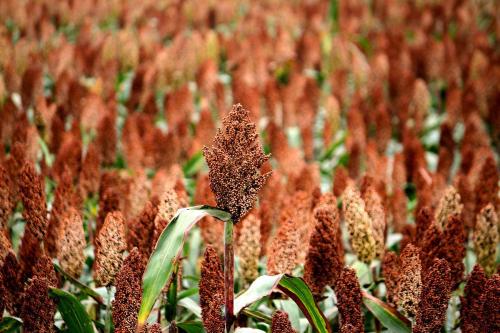
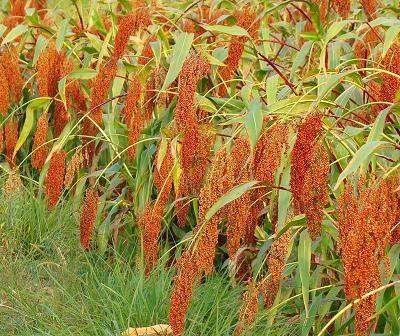
Sorghum (Sorghum bicolor (L.) Moench) is an annual herbaceous plant of the grass family. The stalk is relatively stout, erect, with supporting roots at the basal nodes. Leaf sheaths are hairless or slightly covered with white powder; the ligule is hard and membranous, with a rounded tip and ciliate edges. The panicle is loose, with a bare main axis, and the peduncle is erect or slightly curved; there are 3 stamens, with anthers about 3 mm long; the ovary is obovate; the styles are separate, and the stigma is broom-shaped. The caryopsis is flatly convex on both sides, pale red to reddish brown, 2.5-3 mm wide when mature, with the tip slightly exposed. The stalk of the pedicellate spikelet is about 2.5 mm long, and the spikelet is linear to lanceolate; the flowering and fruiting period is from June to September.
Cultivation Techniques
1. Land selection
For land selection, plow 23 cm in spring or autumn, and apply 5000 kg of base fertilizer per mu in autumn (farmyard manure); before sowing, apply fertilizer deeply (mountain land: 15 kg of diammonium and 20 kg of compound fertilizer) (flatland: 30 kg of diammonium and 30 kg of compound fertilizer) (irrigated land: 30 kg of diammonium and 40 kg of compound fertilizer), and prepare the soil finely so that it is loose on top and firm below.
2. Select good varieties
Select the brewing sorghum varieties Jinnuo 3 and Jinnuo 5. To prevent damage from underground pests, sow 0.8-1.2 jin of sorghum per mu (0.8-1.0 jin for manual dibbling, 1.0-1.2 jin for precision dibbling).
3. Sow at the right time
The best sowing time for sorghum is from April 20 to May 5, when the soil temperature is greater than or equal to 10 degrees, and the sowing depth is 3 cm. Before sowing, drying sorghum seeds in the sun for 3-5 hours can increase the germination rate.
4. Reasonable close planting
Plastic film mulching is required (for high yield and high quality), with wide and narrow row planting, wide rows 2 chi, narrow rows 0.8 chi, and plant spacing 0.6 chi. Keep seedlings per mu (3000 plants in mountain land, 4000-5000 plants in flatland, 5000-6000 plants in irrigated land).
5. Thinning and final singling
Thin seedlings when the young plants have 3-4 leaves, and finalize the stand when they have 5-6 leaves, and carry out timely intertillage and weeding.
6. Fertilizer and water management
Sorghum is watered 4 times during the whole growth period, respectively at the jointing, booting, heading and flowering, and grain-filling stages. On red clay land, combine with watering at the jointing stage and apply a heavy topdressing of 40 kg of urea at one time. On sandy loam, apply 30 kg of urea at the jointing stage, and apply 10 kg of urea at the booting and heading stages. Drain promptly during the rainy season.
7. Pest and disease control
Pay attention to pest forecasts, and use fenvalerate and deltamethrin to control armyworms, borers and aphids (the use of organophosphorus pesticides such as dichlorvos and trichlorfon is strictly prohibited).
8. Harvest at the right time
Sorghum is best harvested at the late wax-ripe stage of the grains, when the grains in the head have hardened, no milky liquid comes out when pierced with a fingernail, and the grains are bright and glossy. When threshing and drying, take good precautions against rain and moisture to avoid heating and molding or sprouting.
Main values
Food use
Sorghum rice is sweet in taste and warm and astringent in nature. It harmonizes the stomach and reduces food stagnation, warms the middle and astringes the intestines, stops cholera and calms disorder, and is mainly used for spleen deficiency with dampness retention, indigestion, damp-heat dysentery, difficult urination and other symptoms.
Nutrition
- The protein in sorghum rice is mostly alcohol-soluble protein, and essential amino acids for the human body such as tryptophan and lysine are relatively low, making it an incomplete protein that is not easily absorbed by the human body. If it is eaten mixed with other grains, its nutritional value can be improved.
- Among cereal proteins, the lysine content in sorghum rice protein is the lowest, so the protein quality is also the worst, and its niacin content is also not as high as that of corn, but it can be absorbed by the human body, so pellagra rarely occurs in areas where sorghum is the staple food.
- Sorghum rice contains minerals and vitamins. Among minerals, the calcium and phosphorus contents are comparable to corn, with phosphorus at about 40-70%. Among vitamins, the B1 and B6 contents are the same as corn, and the pantothenic acid, niacin and biotin contents are higher than corn, but the utilization rates of niacin and biotin are low.
- The fat content of sorghum rice is 3%, slightly lower than corn, and among fatty acids the saturated fatty acid content is also slightly higher, while the linoleic acid content is also slightly lower than corn. The crude fat content in processing by-products is relatively high, while the crude fat content in the grain is relatively low, at only about 3.6%.