Detailed Guide to Peperomia tetraphylla Planting Methods and Care Tips
Peperomia tetraphylla, also known as pepper elder, four-leaved peperomia, jade peperomia, green-leaf jade, bean-petal ruyi and yizhuxiang. It originates from the West Indies, Panama and northern South America. In China it is produced in Taiwan, China, Fujian, Guangdong, Guangxi, Guizhou, Yunnan, Sichuan, southern Gansu and southern Xizang. It is a succulent, clump-forming herb with creeping, much-branched stems, densely packed leaves and nearly ovoid berries, flowering from February to April and from September to December.
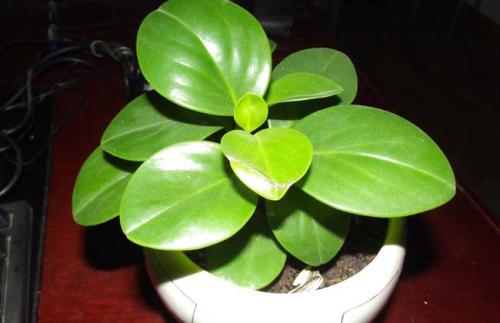
How to grow Peperomia tetraphylla
Peperomia tetraphylla is also called round-leaf peperomia or pepper elder; it belongs to the Piperaceae family as a year-round green plant. This plant is small and lovely, with a height under 30 cm, and it is grown mainly for its very beautiful leaves. It is also a good material for making hydroponic plants, with thick leaves that stay evergreen; each plant has 4-5 leaves, adapts very easily to a water environment, does not rot and is easy to grow, making it a lovely variety that boosts a beginner's confidence. Moreover, hydroponic Peperomia tetraphylla is fresh and distinctive, and placed on a desk or table it has a special charm.
1. Propagation methods
Peperomia tetraphylla is mostly propagated by cuttings and division.
Cuttings: in April-May, select healthy tip branches about 5 cm long as cuttings, keep 1-2 leaves on the upper part, and after the cut surface has dried, insert them into a moist sand bed. Leaf cuttings can also be used: cut off a leaf with its petiole with a knife, let it dry slightly, then insert it obliquely into the sand bed, and it will root in 10-15 days. In a greenhouse with temperature control equipment, this can be done all year round.
Division: mainly used for propagating variegated-leaf varieties. The potting soil can be made from leaf mold, peat soil plus some perlite or sand, with an appropriate amount of base fertilizer added. During the growing season, apply a top dressing once every half month; for watering, water that has been left standing in a tank for 1-2 days is best, and watering should be restricted in winter. Temperature changes directly affect leaf color: the suitable winter temperature for variegated-leaf types is 18-20°C; for green-leaf types it is about 15°C.
2. Hydroponic method
Hydroponic growing of Peperomia tetraphylla is best done in April and May. Take a soil-grown plant with a good shape, carefully rinse off the soil from the roots, and remove dead roots and dead leaves. Soak it in a 0.05% potassium permanganate solution for 10 minutes; after rinsing, plant it in a container, fix the root system with a medium, and pour in clean water, with an amount sufficient to submerge 1/2-2/3 of the root system. It is worth mentioning that the stems and leaves of Peperomia tetraphylla are tender in texture, so it is best not to let them touch the water. In the early stage of hydroponic growing, change the clean water once every 2-3 days; after one week new roots will grow, and when the new roots reach more than 5 cm, move the container together with the plant to a place with sufficient scattered light for care, switch to foliage plant nutrient solution for cultivation, and thereafter replace the nutrient solution once every half month.
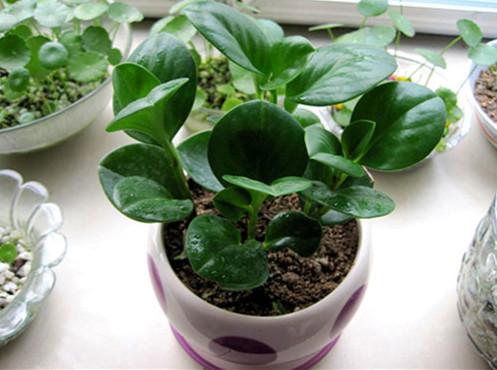
3. Care points
At the very beginning in April and May, when growing hydroponically, change the water once a day, clean off the sticky substances produced on the roots, add clean water, and continue for about 10 days; after new fibrous roots grow, the water can be changed once every 2-3 days. For watering Peperomia tetraphylla, river water, rainwater or tap water can be used; special varieties (such as Christmas flower, etc.) should be watered with rainwater or settled tap water, and well water is generally not used. Compared with other hydroponic plants, Peperomia tetraphylla needs fewer nutrients and basically does not need fertilizing; water that is too nutrient-rich instead easily causes microorganisms in the water to breed, which is not good for plant growth. Also, succulent and pulpy plants do not have high light requirements, and once new fibrous roots grow, later care is relatively simple. When the air is dry, spray more water on the leaf surface; frost is taboo. Peperomia tetraphylla has few pests and diseases; the diseases that generally appear are all caused by improper care and an unsuitable environment, and it can gradually recover after adjustments. The main pest is red spider mite, but it can be prevented by maintaining relatively high air humidity; when it occurs, it can be controlled by wiping the leaves with a wet cloth or spraying a specific pesticide.
Supplementary note: besides the above, the key is to keep spraying water on the leaves to prevent dust from accumulating, so as to prevent the invasion of diseases.
Peperomia tetraphylla is an excellent model of easy survival in hydroponics; each plant has 4-5 leaves, adapts very easily to a water environment, does not rot and is easy to grow, making it a lovely variety that boosts a beginner's confidence. It likes a warm, humid, semi-shaded environment, does not tolerate high temperatures and avoids direct sunlight; it is drought-tolerant, so watering should not be excessive, especially in autumn and winter when watering should be reduced. If the air is dry, spray more water on the leaves; frost is taboo. If grown in soil, the growing medium should be an organic medium with good air permeability and good water retention, such as peat soil plus perlite or vermiculite, at a ratio of about 6:1; avoid excessive moisture in the growing medium, and generally keep the growing medium at 40-60% water content.